Shin guards are mandatory protective equipment in organized football at every competitive level — FIFA Laws of the Game require all players to wear shin guards during competitive matches, and most organized training sessions enforce the same requirement for player safety. Despite this universal mandatory status, shin guard selection receives less attention from many players than boot selection, glove selection, or other equipment choices that feel more directly connected to performance enhancement. However, shin guard design significantly affects both protection quality and playing comfort, making informed selection genuinely important for every footballer who values both safety and unrestricted movement during training and competitive match play situations.
This comprehensive guide examines football shin guards across all design types and protection levels, covering the fundamental differences between slip-in and strap-on guard designs, material options and their protection characteristics, sizing and fit considerations that affect both comfort and protective coverage, position-specific recommendations, youth player considerations, care and maintenance guidance, and practical purchasing recommendations for players, parents, and coaches selecting shin guard equipment for individual or team use across all competitive levels and age groups.
Shin Guard Design Types
Slip-In Shin Guards
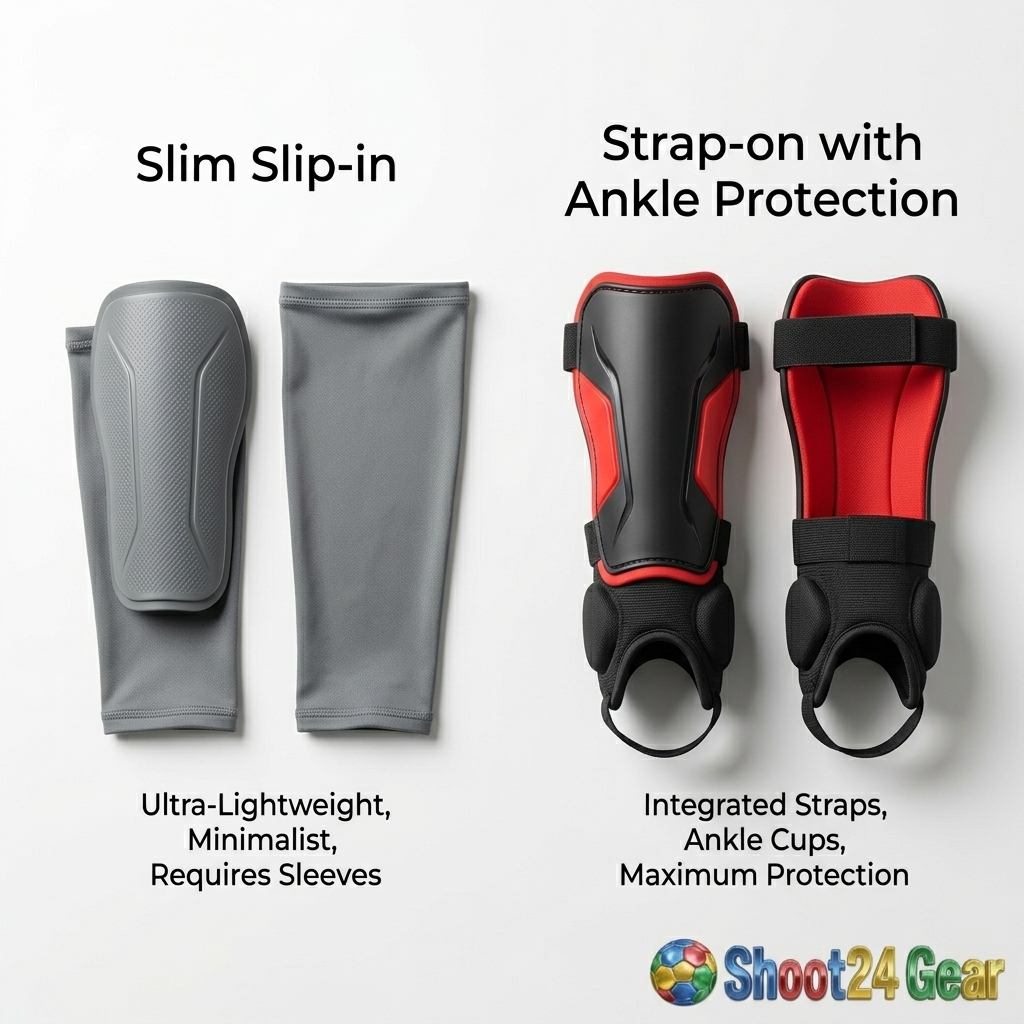
Slip-in shin guards are standalone protective shells without attached ankle protection or integrated straps. These guards slide beneath compression sleeves, tight-fitting socks, or dedicated shin guard sleeves that hold the guard in position against the shin during play. Slip-in guards are the dominant choice among professional and experienced amateur footballers because they provide the lightest weight, most minimal profile, and greatest freedom of ankle movement compared to any other shin guard design currently available on the market.
The primary advantage of slip-in guards is their unrestricted ankle mobility — without ankle cups or strapping systems, the ankle joint moves freely in all directions, providing the natural foot movement that technical players prioritize for dribbling, passing accuracy, and shooting technique execution. The minimal bulk of slip-in designs also reduces the visual and physical profile on the leg, creating a streamlined appearance and reduced interference with sock fit and boot contact that many experienced players prefer for both aesthetic and functional reasons.
The primary limitation of slip-in guards is the absence of ankle protection — the malleolus bones (ankle bumps) that are vulnerable to stud contact during tackles receive no protection from slip-in designs. Players who experience frequent ankle contact during matches or who prioritize comprehensive lower-leg protection over maximum mobility may prefer designs that include ankle coverage.
Strap-On Shin Guards with Ankle Protection
Strap-on shin guards integrate the protective shell with ankle cups and securing straps that wrap around the calf to hold the guard firmly in position. The ankle cups — typically foam-padded plastic shells — cover the malleolus bones on both sides of the ankle, providing impact protection for the ankle area that slip-in designs do not address. Velcro straps or elastic bands secure the guard against the leg, preventing movement during play without requiring compression sleeves or tight socks for positioning.
Strap-on designs are particularly popular among youth players, defenders who experience high-frequency tackle contact, and recreational players who prioritize comprehensive protection over the minimal profile that advanced players prefer. The integrated strapping system provides secure, reliable positioning without the additional purchase of compression sleeves or guard-holding accessories that slip-in designs require for proper retention.
Sleeve-Integrated Guards
Some manufacturers offer shin guards pre-integrated into compression sleeves — the protective shell is permanently attached within a full-length compression sleeve that covers the shin area. These integrated designs provide convenient one-piece application that simplifies equipment preparation, particularly for younger players or those who prefer the simplicity of a single-piece shin guard solution. However, integrated designs limit guard replacement flexibility — when the compression sleeve or the guard shell degrades, the entire unit requires replacement rather than individual component replacement.
Material Options
Fiberglass: Fiberglass shin guards provide excellent impact protection with lightweight construction. Fiberglass shells distribute impact forces effectively across the guard surface, reducing the concentrated force transmitted to the shin bone during direct stud or boot contact. Fiberglass is the most common shell material in mid-range to premium shin guards, offering the optimal balance of protection, weight, and cost for competitive football use.
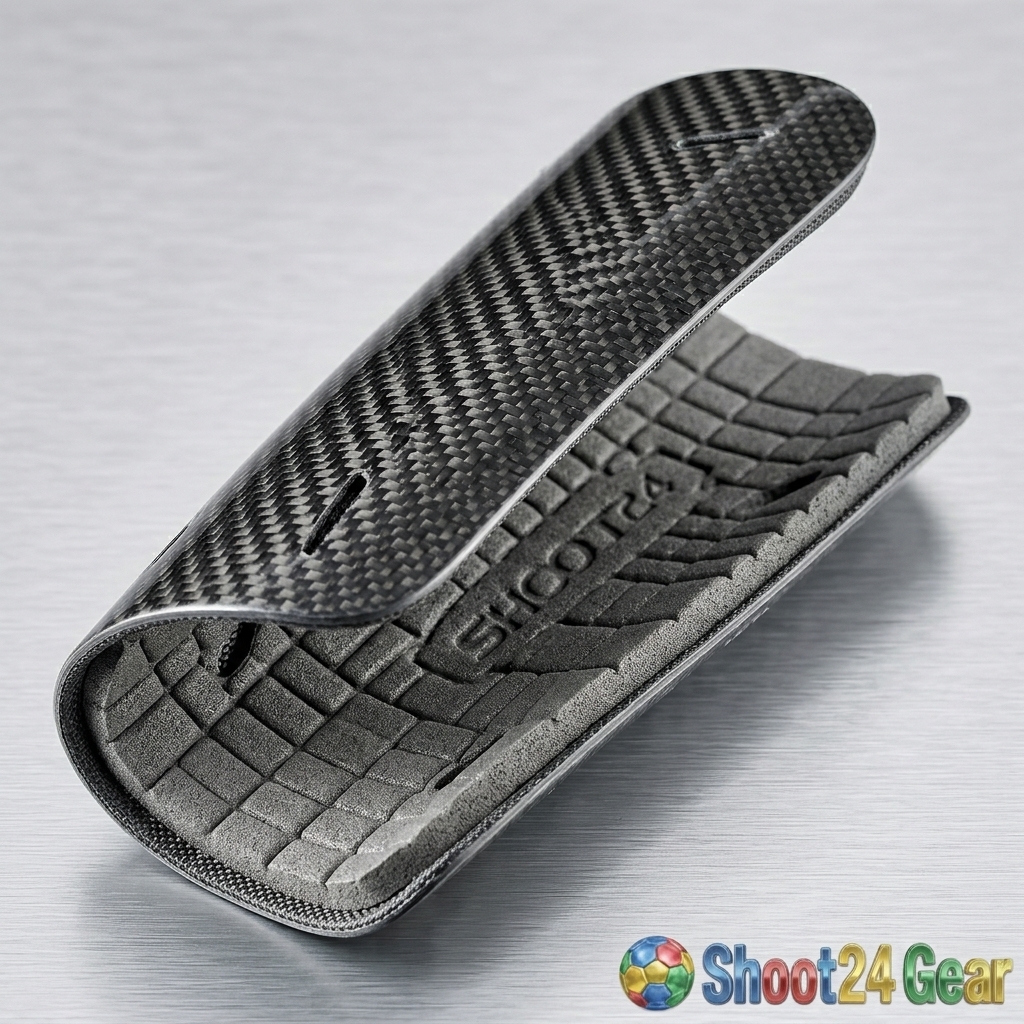
Carbon fiber: Carbon fiber shells provide the highest strength-to-weight ratio available in shin guard construction — maximum protection at minimum weight. Carbon fiber guards suit professional and serious amateur players who demand the lightest possible equipment without compromising protection quality. The premium pricing of carbon fiber construction reflects the advanced material and manufacturing costs involved.
Polyethylene (plastic): Basic polyethylene shells provide adequate protection at the lowest cost. Plastic guards are suitable for recreational play and youth training where budget considerations prioritize accessibility over premium protection. While less effective at distributing impact forces than fiberglass or carbon fiber, quality polyethylene guards meet the basic protection requirements that organized football mandates.
Foam backing: Most shin guards include foam padding between the hard outer shell and the skin surface. This foam layer absorbs residual impact energy that the shell distributes, reduces pressure points from the shell edge profile, and provides comfort against the skin during extended wear. Thicker foam provides better impact absorption but increases overall guard thickness and may feel bulkier during play.
Sizing and Fit
Length coverage: Properly sized shin guards should cover from approximately two to three centimeters below the knee to above the ankle bone, protecting the full tibial (shin bone) area that is vulnerable to impact during tackles and accidental contact. Guards that are too short leave the lower shin exposed, while guards that are too long restrict knee flexion and ankle movement.
Width coverage: The guard should wrap sufficiently around the shin to protect the medial (inner) and lateral (outer) shin surfaces where contact most commonly occurs during tackles and ball challenges. Narrow guards that only protect the front shin surface leave the vulnerable side areas exposed to contact that approaches from lateral angles.
Manufacturer sizing: Most manufacturers provide size charts based on player height or shin length measurement. Measure from below the knee to above the ankle to determine shin length, then select the guard size that provides coverage within this range. When between sizes, selecting the larger option provides more comprehensive coverage while the smaller option provides more mobility — prioritize based on your position and protection preference.
Position-Specific Recommendations
Defenders: Defenders experience the highest frequency of tackle contact and benefit from larger, more protective shin guards with comprehensive coverage. Fiberglass or carbon fiber shells with substantial foam backing provide the impact protection that defensive positioning demands. Many defenders prefer strap-on designs with ankle protection for the additional ankle coverage that frequent tackling situations warrant.
Midfielders: Midfielders require balanced protection and mobility. Medium-sized slip-in guards with fiberglass shells provide adequate protection for the moderate contact frequency midfield play involves while maintaining the movement freedom that passing, dribbling, and positional play demand.
Forwards: Attacking players typically prefer the lightest, most minimal shin guards available — small slip-in designs with carbon fiber or lightweight fiberglass shells that provide required protection with absolute minimum weight and bulk. The speed, agility, and technical precision that attacking play demands benefits from the minimal equipment interference that lightweight slip-in guards provide.
Goalkeepers: Goalkeepers face lower shin contact frequency than outfield players but still require shin guards for competitive play. Lightweight slip-in guards provide adequate protection for the goalkeeper’s reduced tackle exposure while maintaining the leg freedom needed for diving, footwork, and distribution movements.
Youth Player Considerations
Growth accommodation: Youth players outgrow shin guards as their legs lengthen during development. Plan for annual shin guard replacement during rapid growth periods rather than purchasing oversized guards that provide poor fit and inadequate protection. Properly fitted guards appropriate for current leg dimensions provide significantly better protection than oversized guards selected for future growth potential.
Comfort priorities: Youth players who find shin guards uncomfortable may remove or poorly position them during play, defeating the protective purpose entirely. Select guards with comfortable foam backing, smooth interior surfaces, and secure but non-restrictive retention systems that encourage consistent, proper wear throughout every training session and match.
Design preferences: Many manufacturers offer youth shin guards with colorful designs, character themes, and team branding that appeal to younger players. While protection quality should always take priority over aesthetic features, design appeal can positively influence consistent wear compliance among young players who might otherwise resist wearing equipment they consider unappealing or uncomfortable.
Care and Maintenance
Cleaning: Remove shin guards from socks and sleeves after every training session and match to allow thorough drying. Wipe the interior foam surface with damp cloth to remove sweat residue that causes odor buildup and material degradation over time. Allow guards to air dry completely in ventilated conditions before storing — never store damp shin guards in sealed bags that trap moisture and promote bacterial growth.
Odor management: Shin guards develop persistent odor from accumulated sweat bacteria. Regular cleaning after each use prevents odor buildup. For guards that have already developed significant odor, antibacterial spray treatment between washes can reduce bacterial activity. Replace foam backing or entire guards when odor becomes unmanageable despite cleaning — heavily contaminated foam retains bacteria that cleaning cannot fully eliminate.
Inspection: Check shin guard shells regularly for cracks, deformation, or structural damage that reduces protective capability. Cracked shells may fail to distribute impact forces effectively, potentially concentrating force on the shin rather than spreading it across the guard surface. Replace any guard showing visible shell damage immediately rather than continuing to rely on compromised protection.
Compression Sleeves for Slip-In Guards
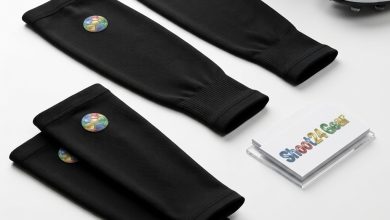
Slip-in shin guards require a retention system to hold them against the shin during play. Dedicated shin guard compression sleeves provide secure positioning through elastic compression that holds the guard firmly without tape, straps, or reliance on tight socks alone.
Sleeve selection: Choose sleeves with sufficient compression to hold guards securely without restricting blood flow or causing discomfort during extended wear. Sleeves should be long enough to cover the full guard length and maintain position throughout the range of leg movements football involves — running, jumping, sliding, and kicking all test sleeve retention during play.
Regulations and Compliance
FIFA Laws of the Game specify that shin guards must be covered entirely by the socks, made of rubber, plastic, or similar suitable material, and provide a reasonable degree of protection. Match officials have authority to prevent players from participating if their shin guard equipment does not comply with these requirements. Ensure shin guards are properly positioned and fully covered by socks before every match to avoid equipment compliance issues that could prevent participation.
Budget Tiers
Entry level: Basic polyethylene slip-in guards with thin foam backing provide minimum-standard protection at the most accessible price point. These guards suit recreational players, beginners, and youth players in early development stages where frequent replacement due to growth makes premium investment impractical. Entry-level guards meet competition requirements but provide less effective impact distribution than mid-range and premium alternatives.
Mid-range: Fiberglass shell guards with quality foam backing and comfortable interior finish represent the optimal value-for-money choice for competitive amateur footballers. Mid-range guards provide genuine protection improvement over entry-level alternatives through superior shell materials that distribute impact forces more effectively, reducing the force transmitted to the shin during contact situations. Most competitive amateur footballers find mid-range guards provide adequate protection quality without premium pricing.
Premium: Carbon fiber shells with advanced foam systems, anatomical shaping, and premium interior materials provide the highest protection-to-weight ratio available. Premium guards suit professional, semi-professional, and serious competitive amateur players who demand maximum protection with minimum weight and bulk. The premium pricing reflects advanced material costs and precision manufacturing processes that produce the lightest and most protective guards available in the current market.
Common Selection Mistakes
Prioritizing weight over protection: Selecting the lightest possible guards without adequate consideration for protection quality compromises safety for marginal weight savings. Even professional-level lightweight guards should provide genuine impact protection — avoid ultra-minimal guards that sacrifice protective capability for extreme weight reduction that provides negligible performance benefit compared to the protection compromise involved.
Incorrect sizing: Guards that are too small leave shin bone areas exposed to unprotected contact, while guards that are too large restrict movement and create uncomfortable pressure points. Take time to measure shin length accurately and try different sizes to find the optimal fit that maximizes coverage within comfortable movement parameters.
Neglecting replacement: Shin guards lose protective capability progressively through impact damage, foam compression, and material degradation. Guards that have absorbed multiple heavy impacts may have invisible micro-fractures in the shell that reduce impact distribution effectiveness. Replace shin guards annually for regular competitive players, or immediately after any particularly severe impact that may have compromised shell structural integrity.
Ignoring comfort: Uncomfortable shin guards that players constantly adjust, remove, or position incorrectly during play provide unreliable protection regardless of their material quality. Invest time in finding guards that feel comfortable during extended wear and remain securely positioned throughout the range of movements football involves — comfortable guards are worn consistently, providing the reliable protection they are designed to deliver.
Emerging Technology
Smart shin guards: Some manufacturers now offer shin guards with embedded sensors that track performance metrics — distance covered, sprint speed, and impact force data. These smart guards combine protective function with the GPS and accelerometer tracking capabilities traditionally found in dedicated performance monitoring equipment. While currently a niche product category, smart shin guard technology represents an emerging equipment convergence that may become more prevalent as sensor miniaturization and cost reduction continue to advance.
3D-printed custom guards: Custom-fitted shin guards produced through three-dimensional scanning and printing technology provide anatomically precise fit that standard mass-produced guards cannot match. The custom scanning process maps each player’s individual shin geometry, and the resulting guard matches the exact contours of the player’s leg for maximum comfort, coverage, and secure positioning. Custom-printed guards are currently available through specialist providers at premium pricing that reflects the individual manufacturing process.
Team Purchasing
Clubs purchasing shin guards for team or academy use should standardize on reliable mid-range options that provide consistent protection quality across the squad. Bulk purchasing from single manufacturers often provides volume discount pricing that improves per-unit value. Maintain spare guard inventory in common sizes to replace damaged or outgrown guards mid-season without requiring emergency individual purchases at full retail pricing.
For youth academies, budget for more frequent replacement cycles than adult programs require — growing players may need new guards every six to twelve months during rapid growth periods. Building this replacement frequency into annual equipment budgets prevents protection gaps when players outgrow their current guards during the competitive season.
Summary
Football shin guards are mandatory protective equipment available in slip-in and strap-on designs that serve different player preferences for mobility, protection coverage, and convenience. Select slip-in guards for maximum mobility and minimal profile, or strap-on designs with ankle protection for comprehensive lower-leg coverage. Choose shell materials based on the balance of protection quality, weight, and budget that suits your competitive level and playing position requirements.
Prioritize proper sizing that provides full shin coverage, comfortable foam backing that encourages consistent wear, and regular cleaning and maintenance that extends guard lifespan while maintaining hygienic conditions throughout the competitive season and training periods.