Football sleeves and wraps encompass a growing category of supportive compression garments and protective wraps that players wear on arms, calves, knees, and ankles to provide muscular support, joint stabilization, thermal regulation, and injury prevention during training and competitive match play. These accessories have transitioned from primarily rehabilitative equipment — worn after injury to support recovery — to increasingly preventative and performance-enhancing equipment adopted by healthy players seeking the proprioceptive, circulatory, and muscular support benefits that modern compression sleeve and wrap technology provides throughout demanding athletic activity.
This comprehensive guide examines football sleeves and wraps across all available types and applications, covering compression arm sleeves and their performance functions, calf compression sleeves and their circulatory benefits, knee support sleeves for joint stabilization and protection, ankle wraps and braces for stability and injury prevention, material technologies that optimize support and comfort characteristics, sizing and fit considerations for effective compression delivery, competition regulations governing sleeve and wrap use in organized football, injury rehabilitation applications, care and maintenance guidance, and practical purchasing recommendations for players seeking support equipment that enhances performance quality, injury prevention, and recovery efficiency throughout every competitive season and training cycle.
Compression Arm Sleeves
Functions and Benefits
Compression arm sleeves provide graduated compression around the forearm and upper arm muscles, supporting blood circulation, reducing muscle oscillation during vigorous physical activity, and providing proprioceptive input that enhances body awareness and movement coordination. While arm muscle function is less directly performance-critical than lower-body musculature in football, arm sleeves provide meaningful benefits including thermal regulation during cold-weather play, UV protection during summer training, abrasion protection during sliding and diving movements, and the psychological comfort that consistent equipment wearing provides to players who value comprehensive physical preparation.
Goalkeepers derive particular benefit from arm sleeves — the frequent ground contact involved in diving creates abrasion risk that arm sleeves mitigate by providing a protective fabric barrier between skin and playing surface. Cold-weather goalkeeping particularly benefits from arm sleeve thermal properties that maintain muscle warmth and flexibility in the arms and hands that goalkeeping performance critically depends upon for shot-stopping, catching, and distribution accuracy.
Material Options
Nylon-spandex blends: The most common arm sleeve material combining smooth, comfortable wearing feel with effective compression delivery. Nylon-spandex sleeves provide consistent compression across the sleeve surface, moisture-wicking capability that maintains dry skin conditions, and adequate durability for sustained competitive use across multiple seasons when maintained through proper washing and care.
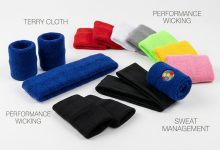
Moisture-wicking fabrics: Performance arm sleeves use advanced moisture transport technologies that move perspiration from the skin surface to the sleeve exterior for evaporation. Effective moisture management maintains dry, comfortable skin conditions that prevent the sticky, uncomfortable feeling that trapped perspiration creates beneath non-wicking compression garments during intensive physical activity.
Calf Compression Sleeves
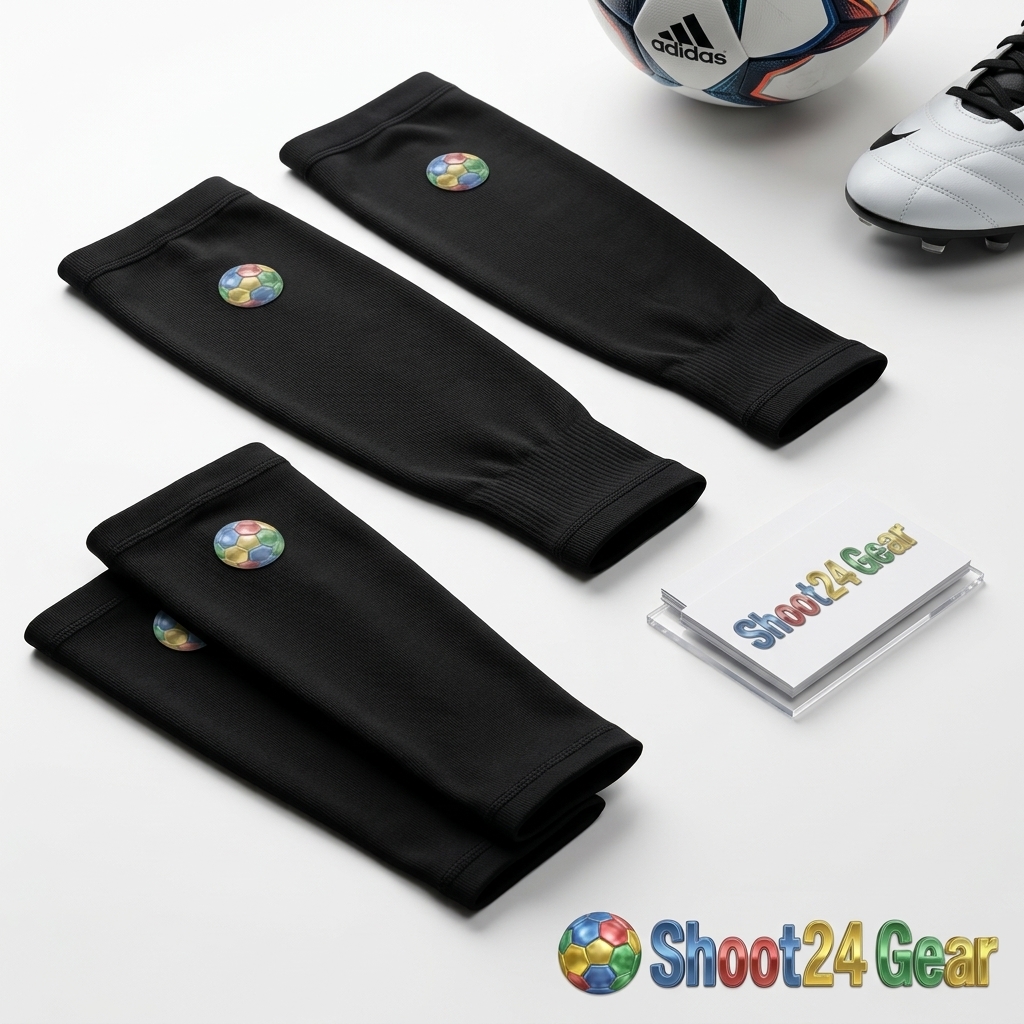
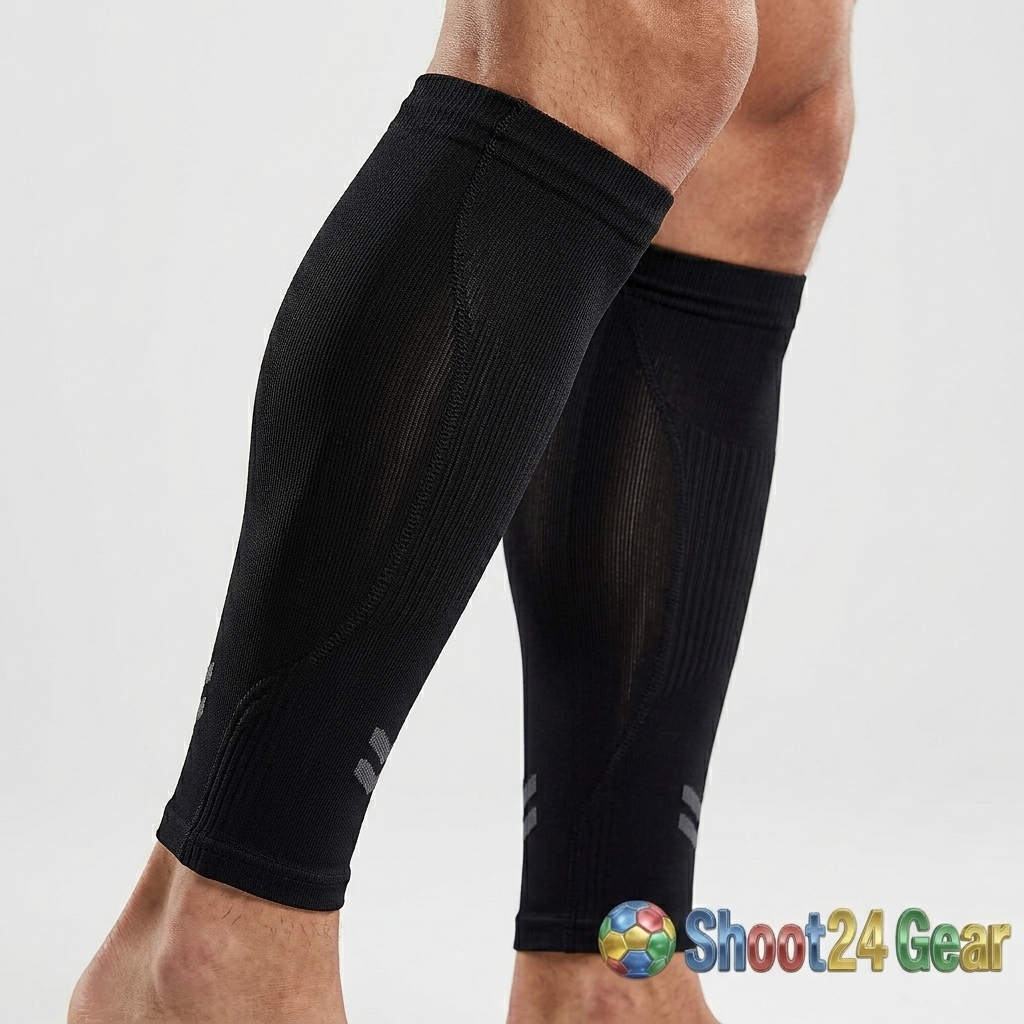
Calf compression sleeves represent the most performance-relevant sleeve type for outfield football players — the calf musculature is centrally involved in running, sprinting, jumping, and kicking that defines football physical performance. Graduated compression from ankle to knee supports venous blood return, reduces calf muscle oscillation during running, and provides proprioceptive input that contributes to balance and coordination precision during the rapid movement patterns that competitive football continuously demands.
Performance benefits: Calf compression during activity supports muscular endurance through improved circulation that delivers oxygen more efficiently and removes metabolic waste products more rapidly from working muscles. This circulatory support may reduce the fatigue accumulation rate during extended activity periods, potentially maintaining higher performance levels during the later stages of matches when uncompressed muscles experience greater fatigue-related performance decline.
Recovery benefits: Post-activity calf compression supports recovery processes through continued circulatory enhancement during the critical hours following intensive training and competition. Wearing calf compression sleeves for two to four hours after matches supports the physiological recovery that prepares players for subsequent training sessions with reduced residual fatigue and muscle soreness.
Knee Support Sleeves
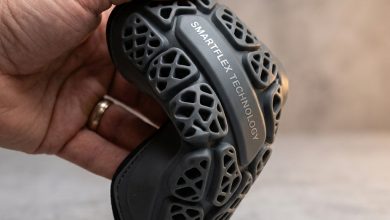
Joint stabilization: Knee sleeves provide compression and warmth around the knee joint that supports ligament and tendon function. The compression provides proprioceptive input that enhances the neuromuscular system’s awareness of knee joint position and movement, potentially improving the quality of movement control that protects the knee during the sudden directional changes, deceleration forces, and landing impacts that football involves.
Patella support: Some knee sleeves include reinforced patella support — gel or silicone rings that stabilize the kneecap positioning during activity. Patella-supporting sleeves suit players experiencing patellofemoral pain, patellar tracking issues, or general anterior knee discomfort that compression and stabilization may alleviate during athletic activity.
Post-injury use: Knee sleeves serve important rehabilitation functions following knee injuries — providing the compression, warmth, and psychological confidence that supports return-to-play progression after ligament, meniscal, or general knee injuries. Medical professionals may recommend specific knee sleeve types during rehabilitation protocols to support healing tissue while allowing progressive activity resumption.
Ankle Wraps and Braces
Preventative strapping: Ankle wraps and braces provide external support that restricts excessive ankle joint range of motion — particularly the inversion and eversion movements that cause the most common ankle sprains in football. Preventative ankle support is particularly valuable for players with previous ankle injury history, as previously sprained ankles have elevated re-injury risk due to ligament laxity and altered proprioceptive function that prior injury creates.
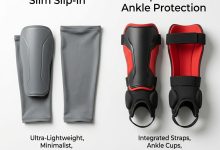
Types of ankle support: Ankle support options range from simple elastic wraps providing mild compression and proprioceptive input, through lace-up braces providing moderate stabilization, to rigid stirrup braces providing maximum restriction for severe instability. The appropriate support level depends on individual ankle stability, injury history, and the balance between restriction and mobility that each player’s position and playing style requires.
Elastic ankle wraps: Simple elastic wraps provide the lightest support level — mild compression and proprioceptive enhancement without meaningful movement restriction. Elastic wraps suit healthy ankles seeking preventative proprioceptive benefit and mild support without the mobility limitation that structured braces impose on ankle range of motion.
Sizing and Fit
Compression effectiveness: Proper sizing is essential for sleeves and wraps to deliver their intended compression benefits. Too-loose sleeves fail to provide meaningful compression, while too-tight sleeves restrict blood flow and create uncomfortable wearing conditions. Measure the relevant body part (calf circumference, knee circumference, arm circumference) accurately and cross-reference with manufacturer sizing charts to select the size that provides effective compression within comfortable parameters.
Length considerations: Sleeve length should cover the intended muscle group or joint completely — partial coverage reduces the effectiveness of compression and support. Calf sleeves should extend from above the ankle to below the knee, knee sleeves should center on the knee joint with adequate coverage above and below, and arm sleeves should cover the full forearm and upper arm sections being targeted.
Competition Regulations
FIFA Laws of the Game permit sleeves and wraps provided they match the color of the underlying shirt or shorts (for arm and leg sleeves respectively), are the same color for all players of the same team wearing them, and pose no danger to the wearer or other players. Compression sleeves have become sufficiently mainstream in professional football that competition compliance is rarely questioned, but players should verify that sleeve colors comply with their specific competition’s regulations before match-day use.
Injury Prevention Applications
Muscle strain prevention: Compression sleeves maintain muscle temperature and support blood circulation that may reduce the risk of muscle strains during cold-weather play and insufficient warm-up conditions. The thermal maintenance that sleeves provide keeps muscle tissue at optimal operating temperature, reducing the injury risk associated with cold, insufficiently warmed-up muscles performing explosive movements.
Joint protection: Knee and ankle supports provide external stabilization that supplements the natural ligament and tendon support systems around these vulnerable joints. Players with previous joint injuries or inherent joint laxity benefit from the additional stability that properly fitted supports provide during the high-force movements and contact situations that football involves.
Rehabilitation and Return to Play
Sleeves and wraps play important roles in injury rehabilitation — providing the graduated support that enables progressive return to activity after injury. Medical professionals prescribe specific support types, compression levels, and wearing protocols as part of comprehensive rehabilitation programs that systematically progress from protected movement to full competitive activity resumption.
Players should follow medical guidance regarding support use during rehabilitation rather than self-prescribing support types based on personal assessment. Inappropriate support selection — either too restrictive or insufficiently protective — can interfere with rehabilitation progress or expose recovering tissues to premature stress that risks re-injury.
Weather Applications
Cold weather: Compression sleeves provide meaningful thermal regulation during cold-weather football by maintaining muscle warmth that cold ambient temperatures threaten. Arm sleeves, calf sleeves, and full-length leg sleeves all contribute to temperature maintenance that supports muscle function, flexibility, and injury resistance during winter training and cold-weather competitive matches.
Hot weather: Moisture-wicking sleeves provide UV protection during summer training while maintaining skin-cooling moisture transport that prevents heat buildup beneath the sleeve surface. UV protection is a frequently overlooked benefit of arm sleeves during extended outdoor training sessions where cumulative sun exposure creates skin health concerns over extended playing careers.
Care and Maintenance
Washing: Machine wash compression sleeves on cold or warm settings with athletic detergent. Avoid bleach and fabric softener that damage elastic fibers and reduce compression effectiveness. Wash after every use to remove perspiration, skin oils, and bacteria that accumulate during athletic activity.
Drying: Air dry compression sleeves rather than machine drying — heat exposure degrades elastic fibers that provide compression, reducing the garment’s functional effectiveness. Lay flat or hang to dry in well-ventilated conditions to preserve elastic integrity and compression delivery throughout the garment’s useful lifespan.
Replacement: Replace compression sleeves when compression noticeably diminishes — fabric stretching beyond recovery creates sleeves that no longer deliver meaningful compression benefit. Regular competitive use typically requires sleeve replacement every four to eight months depending on usage frequency, washing practices, and individual perspiration chemistry that affects fabric degradation rates.
Budget Planning
Entry level: Basic compression sleeves and elastic wraps provide fundamental support at accessible pricing. Entry-level sleeves deliver adequate compression for general comfort and mild support purposes, though compression consistency and fabric quality may be inferior to premium alternatives. Budget sleeves suit players exploring whether compression support benefits their play before committing to premium product investment.
Mid-range: Quality compression sleeves with graduated compression engineering, moisture-wicking technology, and durable construction provide the optimal value combination for competitive amateur players. Mid-range sleeves deliver genuine compression benefits with adequate durability for multi-month competitive use, representing the best balance of performance and affordability for regular competitive use.
Premium: Medical-grade compression sleeves and professional support braces provide the highest compression consistency, advanced material technology, and superior construction quality available. Premium sleeves suit professional and serious competitive players who demand maximum compression effectiveness and durability, as well as players requiring medical-grade support for injury rehabilitation protocols prescribed by healthcare professionals.
Position-Specific Applications
Goalkeepers: Arm sleeves, elbow pads, and knee supports are particularly relevant for goalkeepers whose position involves frequent ground contact, diving impact, and extended arm positioning. Goalkeepers benefit from comprehensive sleeve use that provides abrasion protection, thermal maintenance, and joint support across the upper and lower body extremities that goalkeeping movements expose to impact and environmental stress.
Defenders: Defensive players benefit from calf compression that supports the sustained running and recovery sprinting that defensive positioning demands, combined with ankle support that stabilizes the joint during the frequent tackling and directional changes that defensive play involves. The combination of calf compression and ankle stabilization provides comprehensive lower-leg support for defensive positioning requirements.
Midfielders: Players covering the greatest match distances benefit most significantly from calf compression sleeves that support circulatory function during sustained running activity. The fatigue-reducing potential of calf compression is most relevant for midfield players whose performance depends on maintaining running capacity and decision-making quality throughout the full ninety minutes of competitive match play.
Forwards: Attacking players may benefit from ankle support that stabilizes the joint during the explosive accelerations, rapid directional changes, and forceful shooting movements that attacking play demands. Lightweight, minimal-restriction ankle support provides stability benefit without limiting the ankle mobility that technical finishing and creative dribbling require.
Psychological Confidence
Sleeves and wraps provide significant psychological benefits beyond their measurable physical effects — players wearing support equipment report feeling more secure, protected, and confident during physical activity. This confidence effect enables more committed physical performance without the subconscious movement restriction that injury anxiety can create in players who feel vulnerable without external support. The psychological confidence benefit is particularly pronounced for players returning from injury, where support equipment provides both physical protection and the mental reassurance needed to resume full competitive intensity progressively.
Common Mistakes
Over-reliance on support: Using sleeves and wraps as substitutes for proper warm-up, strength training, and injury prevention programming creates dependency on external support that does not address underlying physical deficiencies. Support equipment should complement comprehensive physical preparation rather than replacing it — strong, well-conditioned muscles and joints require less external support than weak, underprepared structures.
Wrong compression level: Wearing too-tight compression creates circulatory restriction that defeats the circulatory improvement purpose of compression use. Properly graduated compression enhances blood flow — excessive compression impedes it. Follow manufacturer sizing guidelines and consult medical professionals if unsure about appropriate compression levels for your individual requirements.
Ignoring medical advice: Players experiencing persistent pain or instability should seek medical assessment rather than self-managing through sleeve and wrap use alone. Support equipment can mask symptoms that indicate conditions requiring professional medical intervention — using supports to play through undiagnosed injuries risks worsening conditions that proper medical management would address more effectively.
Professional Football Use
Compression sleeves and support wraps are ubiquitous across professional football — virtually every professional squad includes players wearing various sleeve and support combinations during training and competitive matches. Professional adoption has normalized sleeve use across all competitive levels and contributed to the growing consumer market for football-specific compression and support equipment. The visible use of sleeves by high-profile professional players creates aspirational adoption among amateur and youth players who emulate professional equipment choices.
Integration with Other Equipment
Sleeves and wraps must integrate comfortably with other football equipment — calf sleeves must fit beneath socks without creating uncomfortable bunching, ankle wraps must accommodate boot fit without restricting the boot’s designed movement patterns, and knee sleeves must work within shorts length without impeding running mechanics. Test new sleeve and wrap equipment during training before competitive match use to ensure comfortable integration with existing equipment without unexpected interference or discomfort.
Long-Term Considerations
Players who adopt sleeve and wrap use should evaluate their equipment choices periodically — as fitness improves, injuries heal, and physical conditioning strengthens, support requirements may change. Gradually reducing support dependence as physical conditioning improves maintains natural strength and proprioceptive development while retaining support options for conditions and situations where external assistance provides genuine benefit. This balanced approach optimizes long-term musculoskeletal health while benefiting from support technology during periods when additional assistance enhances performance and injury protection.
Summary
Football sleeves and wraps provide compression support, thermal regulation, injury prevention, and rehabilitation assistance that serve both healthy players seeking performance optimization and injured players progressing through recovery protocols. Select sleeve and wrap types based on your specific support needs, ensure proper sizing for effective compression delivery, and maintain garments through appropriate washing and replacement cycles that preserve functional properties.
Consult medical professionals regarding support use for injury rehabilitation and prevention — appropriate professional guidance ensures that sleeve and wrap selection addresses individual physical needs effectively while complying with competition regulations and supporting long-term musculoskeletal health throughout extended competitive football participation careers.