Football socks serve multiple critical functions beyond simple foot covering — they provide cushioning that absorbs impact forces, compression that supports blood circulation and muscle stability, moisture management that maintains foot comfort and hygiene, and the protective barrier between skin and boot that prevents friction-related injuries including blisters. Despite their seemingly simple nature, football sock technology has advanced significantly through developments in material science, knitting techniques, and compression engineering that have transformed basic hosiery into genuinely functional performance equipment with measurable effects on comfort, recovery, injury prevention, and overall playing experience throughout the physically demanding requirements of competitive football training sessions and match play at every competitive level.
This comprehensive guide examines football socks across all performance dimensions, covering cushioning systems and their impact absorption benefits, compression technology and its physiological effects, material options and their moisture management characteristics, sizing and fit considerations, team sock requirements and customization options, comparison between standard and premium sock options, care and maintenance guidance, and practical purchasing recommendations for players, coaches, and clubs selecting sock equipment that optimizes comfort, performance, and durability across all competitive levels, training environments, and seasonal weather conditions throughout the complete football calendar year.
Cushioning Technology
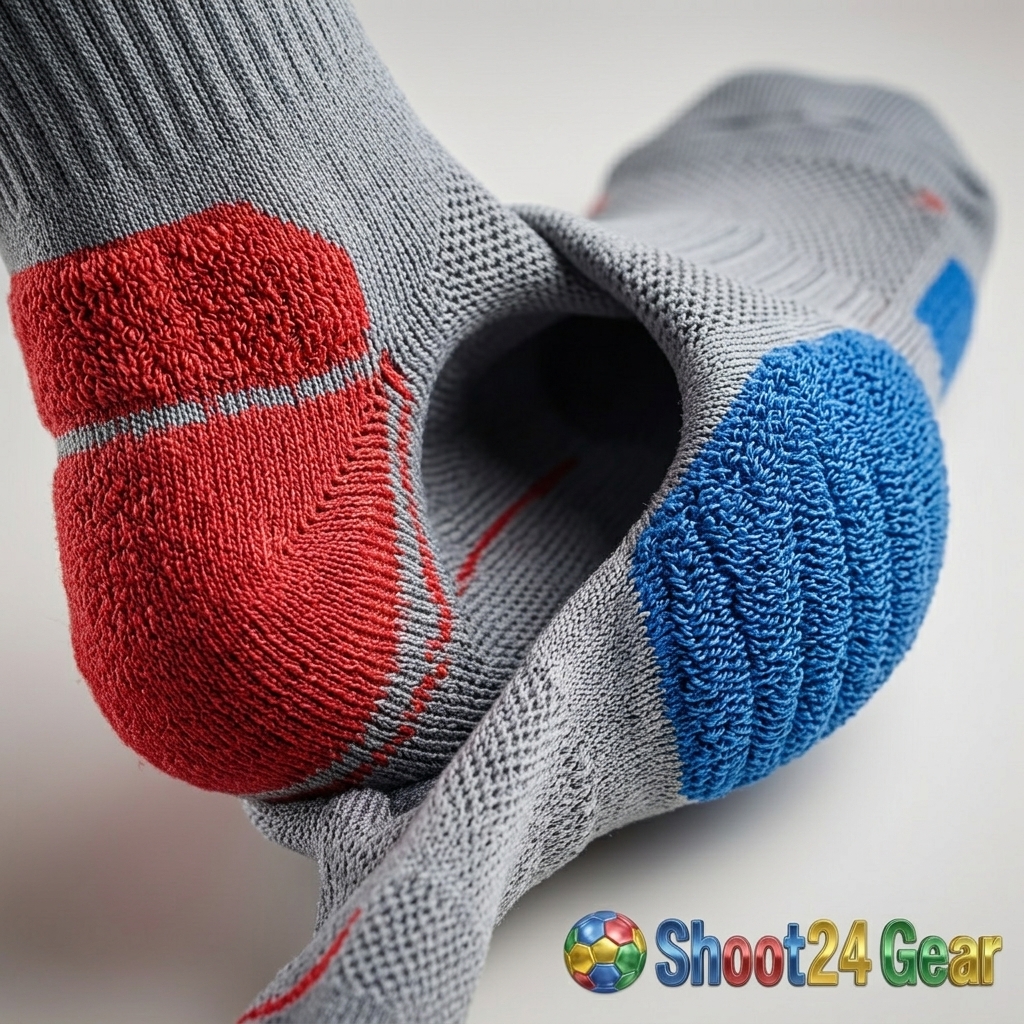
Strategic Cushioning Zones
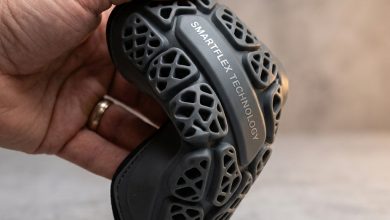
Modern football socks use targeted cushioning placement — thicker padding positioned at specific high-impact zones rather than uniform thickness throughout the sock. Key cushioning zones include the ball of the foot (primary ground contact area during running and cutting), the heel (impact absorption during deceleration and landing), and the toe box (protection during ball striking and accidental contact). Strategic cushioning provides impact protection where needed while maintaining thin, responsive sock feel in areas where close boot contact and proprioceptive feedback are more important than cushioning — particularly the important instep and arch regions that interact most directly with the ball during precise technical execution and first-touch control situations.
Cushioning Thickness Options
Thin cushioning: Minimal cushioning provides the closest boot contact and most responsive foot feel. Thin-cushioned socks suit players who prioritize maximum touch sensitivity and boot responsiveness over impact protection. Technical players, particularly those wearing tight-fitting modern boots, often strongly prefer thin cushioning that maintains the intimate boot-to-foot connection they rely upon for precise ball manipulation during competitive play.
Medium cushioning: Balanced cushioning provides meaningful impact absorption while maintaining adequate boot feel and responsiveness. Medium cushioning represents the optimal choice for most football players — sufficient protection for typical training and match-play impact without the bulky feel that thick cushioning creates within standard football boot sizing.
Thick cushioning: Maximum cushioning provides the highest impact absorption for players experiencing significant foot-impact stress — typically on hard playing surfaces, during high-volume training periods, or for players with pre-existing foot sensitivity or recovering from foot injuries. Thick cushioning reduces boot interior volume noticeably, potentially requiring boot sizing adjustment to accommodate the additional material within the boot.
Compression Technology
Graduated compression: Quality football socks incorporate graduated compression — tighter compression at the ankle that progressively decreases toward the calf. This graduated pressure profile promotes venous blood return from the lower leg toward the heart, supporting blood circulation during and after physical activity. Improved circulation delivers oxygen and nutrients to working muscles more efficiently and removes metabolic waste products more rapidly, potentially reducing fatigue accumulation and supporting recovery between training sessions and matches.
Muscle stabilization: Compression around the calf musculature provides external support that reduces muscle oscillation (vibration) during running and jumping movements. Reduced muscle oscillation measurably decreases the cumulative micro-damage that repetitive vibration creates in muscle tissue, potentially reducing post-exercise muscle soreness. This muscle stabilization effect is most beneficial during high-volume running activities — precisely the physical demands that football training and match play impose on the lower leg musculature.
Proprioceptive enhancement: Compression against the skin surface provides enhanced proprioceptive input — the body’s awareness of limb position and movement — that contributes to improved balance, coordination, and movement precision. the consistent and reliable pressure input from well-fitted compression socks provides valuable additional sensory information that the neuromuscular system uses for movement control, potentially improving the precision of football-specific movements that depend on lower-leg proprioception.
Material Technologies
Moisture-wicking synthetics: Polyester, nylon, and proprietary synthetic blends engineered to transport moisture away from the skin surface to the sock exterior for evaporation. Effective moisture wicking maintains dry foot conditions that reduce blister risk, prevent bacterial growth, and maintain comfort throughout extended activity periods. Premium synthetic blends effectively combine superior wicking performance with remarkably soft hand-feel that closely rivals natural fiber comfort while maintaining the durability advantages that synthetic construction provides.
Merino wool blends: Natural merino wool provides exceptional moisture management, temperature regulation, and natural antimicrobial properties that resist odor development. Merino blended with synthetic fibers combines wool’s natural performance with synthetic durability and shape retention. Merino blend socks suit players who prioritize natural fiber comfort and odor resistance, though merino options are typically considerably more expensive than fully synthetic alternatives and require more careful washing and maintenance procedures.
Cotton blends: Cotton provides familiar comfort but inferior moisture management — cotton absorbs and stubbornly retains moisture rather than efficiently wicking it away from the skin surface for evaporation. Cotton-dominant socks become wet and heavy during intense activity, increasing blister risk and discomfort. Modern high-performance football socks have largely and deliberately moved away from high-cotton content in favor of technologically superior synthetic and natural fiber alternatives that provide superior moisture management.
Sizing and Fit
Length options: Football socks are available in crew (below knee), knee-length (standard competition height), and over-the-knee lengths. Competition regulations typically require knee-length socks that cover shin guards completely. training socks may be worn at any preferred length unless specific training ground requirements mandate competition-style sock wearing.
Fit considerations: Properly fitting football socks should feel snug without constricting — the sock should conform to the foot and leg contour without bunching, sliding, or creating pressure points. Too-loose socks bunch inside boots creating uncomfortable lumps, while too-tight socks uncomfortably restrict blood circulation and create persistent discomfort during extended wear throughout full training sessions and ninety-minute matches. Most manufacturers provide size charts based on foot length or shoe size for accurate size selection.
Team Sock Selection
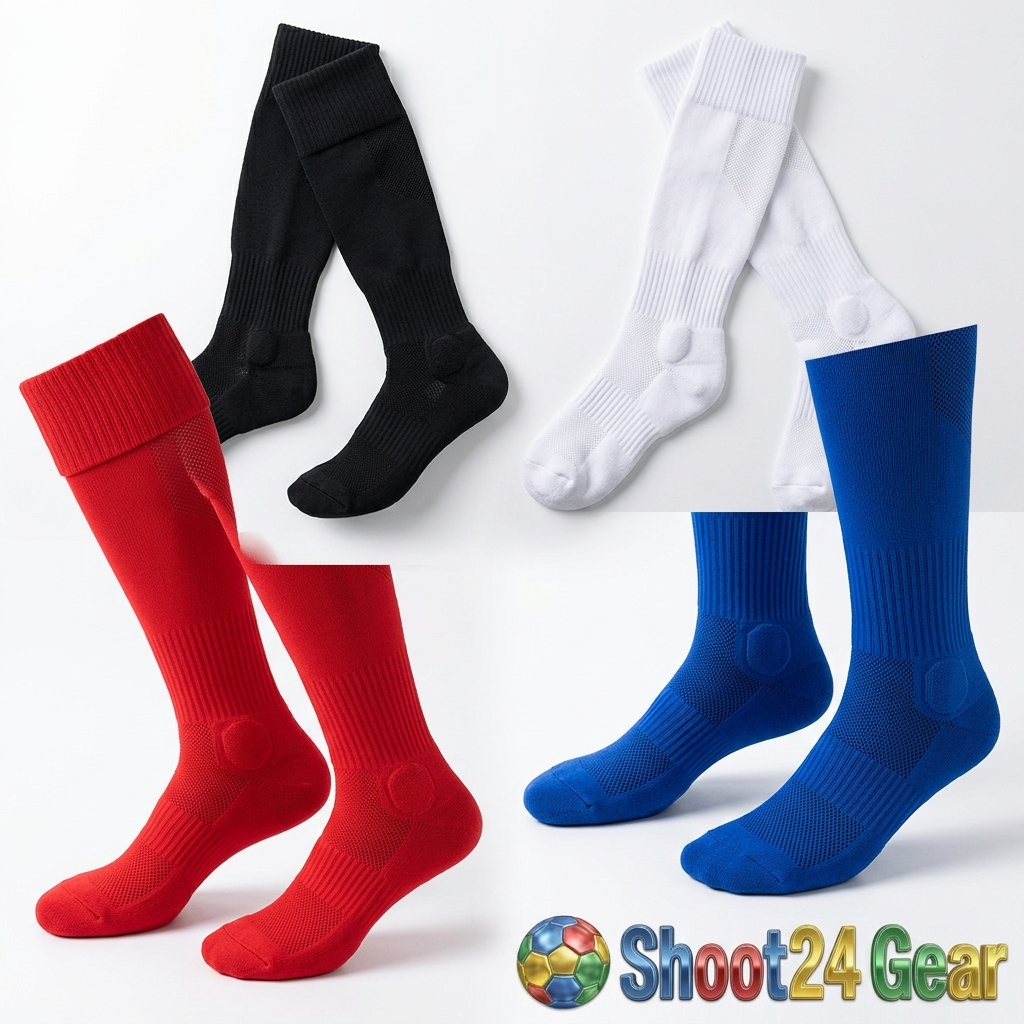
Color requirements: Competition regulations require uniform sock color across the team, with the specific required color typically defined by the team’s registered kit specifications. Home and away kit sock colors frequently differ, requiring teams to maintain separate sock inventory in both color options.
Customization: Team sock customization options include embroidered club logos, player numbers, and custom color combinations that enhance team identity and professional appearance. Custom orders typically require minimum order quantities that make them practical for clubs and organized teams rather than individual player purchases.
Grip sock integration: The growing popularity of grip socks like Trusox has created a standard practice of cutting team socks and wearing them as sleeves over grip socks. When purchasing team socks, consider whether players will use this cut-sock arrangement — Some specific sock designs accommodate cutting significantly better than others, and reinforced ankle construction in some socks provides cleaner cutting results.
Standard vs Premium Comparison
Standard socks: Basic team-issue football socks provide adequate performance for recreational and casual competitive play. Standard socks use basic synthetic blends with uniform construction that provides general comfort without targeted cushioning or meaningful compression. these socks meet all competition requirements at accessible pricing suitable for very cost-effective bulk team purchases across full squad requirements.
Premium socks: Performance football socks from specialized manufacturers provide targeted cushioning, graduated compression, advanced moisture wicking, and construction quality that meaningfully improves comfort and potentially enhances performance. Premium socks cost significantly more per pair but provide genuine functional advantages that competitive players value alongside their improved durability that partially offsets the price premium through extended replacement intervals.
Care and Maintenance
Washing: Machine wash football socks after every use on warm settings with athletic detergent. Turn socks inside out before washing to expose the interior surface that accumulates sweat and bacteria to direct cleaning. Avoid fabric softener that can coat moisture-wicking fibers and reduce their moisture transport capability. Wash compression socks on gentle cycles that preserve elastic fiber integrity.
Drying: Air dry football socks whenever possible — machine drying accelerates elastic degradation that reduces compression effectiveness and sock shape retention. Lay socks flat or hang to dry rather than wringing or twisting that can deform elastic fibers permanently. If machine drying is necessary, use low heat settings to minimize elastic damage.
Replacement timing: Replace football socks when elastic compression noticeably diminishes (socks no longer stay up without assistance), cushioning areas become compressed and thin, or fabric integrity shows visible degradation. For regular competitive players, plan for sock replacement every three to six months depending on usage frequency and washing practices.
Youth Considerations
Youth football socks should prioritize comfort and proper fit that encourages consistent wear. Many youth players find thick, uncomfortable socks distracting — lightweight construction with moderate cushioning provides adequate protection without the bulk that young players may resist wearing. Age-appropriate sizing ensures proper coverage of shin guards without excess material bunching that creates discomfort inside boots during play.
Weather-Specific Sock Selection
Hot weather: Thin, maximally breathable socks with aggressive moisture-wicking capability maintain the driest possible foot conditions during hot-weather play. Look for mesh ventilation panels in non-cushioned zones that promote airflow through the sock structure. Light-colored socks absorb less radiant heat than dark colors, providing noticeable temperature benefit during bright sunlight conditions compared to traditional dark-colored alternatives.
Cold weather: Thicker construction with enhanced insulation properties maintains foot warmth during cold-weather training and matches. Merino wool blends provide superior cold-weather performance through natural temperature regulation that maintains warmth without overheating. Avoid cotton-dominant socks in cold weather — wet cotton provides no insulation and accelerates heat loss from the foot surface compared to synthetic and wool alternatives that maintain warmth when damp.
Wet weather: Quick-drying synthetic materials maintain performance through sustained rain conditions better than natural fibers. Water-resistant treatments on sock exteriors can reduce water penetration during moderate rain, though heavy rain will eventually saturate any sock material regardless of treatment. The critical factor in wet conditions is moisture management — socks that transport moisture rather than retaining it maintain better comfort and blister resistance throughout rainy matches and training sessions.
Recovery and Post-Match Socks
Compression sock technology extends beyond match-day use into post-match and recovery applications. Dedicated recovery compression socks — typically providing higher compression levels than playing socks — promote blood circulation during the recovery period following matches and intensive training sessions.
Post-match compression: Wearing compression socks for two to four hours after intense activity supports the circulatory system’s removal of metabolic waste products from the lower leg muscles. This accelerated waste removal may reduce post-match muscle soreness and support faster recovery between closely scheduled training sessions and matches during congested fixture periods.
Travel compression: Extended travel — bus or air — to away fixtures involves prolonged seated positions that compromise lower-leg blood circulation. Compression socks worn during travel maintain circulatory function that supports player readiness upon arrival. Professional teams increasingly provide travel compression socks as standard team equipment for away fixture logistics and international tournament preparation.
Budget Planning
Individual players: Maintain a minimum of three to four pairs of quality football socks to enable rotation that allows thorough washing and drying between uses. Players using grip socks need fewer team socks since only the cut sleeve portion contacts the skin, but still require adequate team sock supply for clean rotation across training and match schedules.
Team purchasing: Clubs should budget for two to three pairs per player per season for training socks, plus dedicated match-day socks maintained separately from training wear to preserve appearance quality for competitive fixtures. Team sock budgets should account for inevitable loss, damage, and replacement throughout the season — purchasing slightly above estimated needs prevents frustrating and disruptive mid-season stock shortages that force emergency purchasing at full retail prices.
Common Sock Mistakes
Wrong sizing: Oversized socks bunch inside boots creating uncomfortable lumps and potential blister development sites. Undersized socks uncomfortably constrict the foot and compromise circulation. Take time to determine correct sizing using manufacturer charts rather than estimating based on general shoe size assumptions.
Using fabric softener: Fabric softener coats moisture-wicking fibers with a hydrophobic layer that prevents moisture transport. Socks washed with fabric softener lose their wicking capability and trap moisture against the skin, negating the performance benefit that moisture-wicking materials are designed to provide.
Ignoring wear indicators: Continuing to use socks with compressed cushioning, failed elastic, or thinning fabric provides diminished protection and comfort. Replace worn socks proactively rather than waiting for catastrophic failure that leaves players without adequate sock equipment at critical competition moments.
Seam Construction
Flat-seam toe construction: Premium football socks use flat-seam or seamless toe construction that eliminates the raised seam ridge across the toe area. Traditional raised seams create pressure points and friction against toes that can cause blisters and discomfort, particularly during extended activity. Flat-seam construction provides smooth interior surfaces that reduce friction-related foot irritation significantly.
Linked toe closure: The most advanced sock construction uses linked toe closure — a completely flat joint that creates no discernible seam ridge against the toes. This specialized construction method is notably more expensive than standard overlock seaming but provides the smoothest, most comfortable interior surface available in sock construction for players who regularly experience toe-area irritation and discomfort from conventional raised seam designs during extended competitive play.
Sustainability and Environment
Sock manufacturers are increasingly incorporating sustainability initiatives into football sock production — recycled polyester from post-consumer plastic, organic cotton blends, and reduced-waste manufacturing processes address environmental concerns within the athletic hosiery market. While sustainability features do not directly affect on-pitch performance, environmentally conscious players and clubs may consider manufacturer environmental commitments as supplementary selection criteria alongside primary performance, comfort, and durability considerations when making purchasing decisions.
Extending sock lifespan through proper care — gentle washing, air drying, and timely rotation — represents the most impactful individual sustainability action regardless of sock material composition, by meaningfully reducing replacement frequency and the associated manufacturing, packaging, and waste disposal implications of unnecessarily frequent equipment turnover throughout competitive seasons and training periods.
Summary
Football socks provide critical cushioning, compression, moisture management, and protective functions that directly affect playing comfort and foot health throughout competitive seasons. Select socks with appropriate cushioning thickness for your specific impact protection needs, graduated compression technology for meaningful circulatory and muscular support benefits, and advanced moisture-wicking materials that maintain consistently dry, comfortable foot conditions during sustained athletic activity across all seasonal conditions and playing environments.
Invest in genuinely premium sock quality for competitive match play where comfort and performance matter most and every advantage contributes to optimal performance, while standard options serve perfectly adequately for recreational use and routine training sessions where premium features provide less consequential overall benefit to the player during general practice activities. Maintain all socks through consistently proper washing and drying practices that preserve functional properties and extend useful lifespan beyond what careless maintenance practices would otherwise allow.