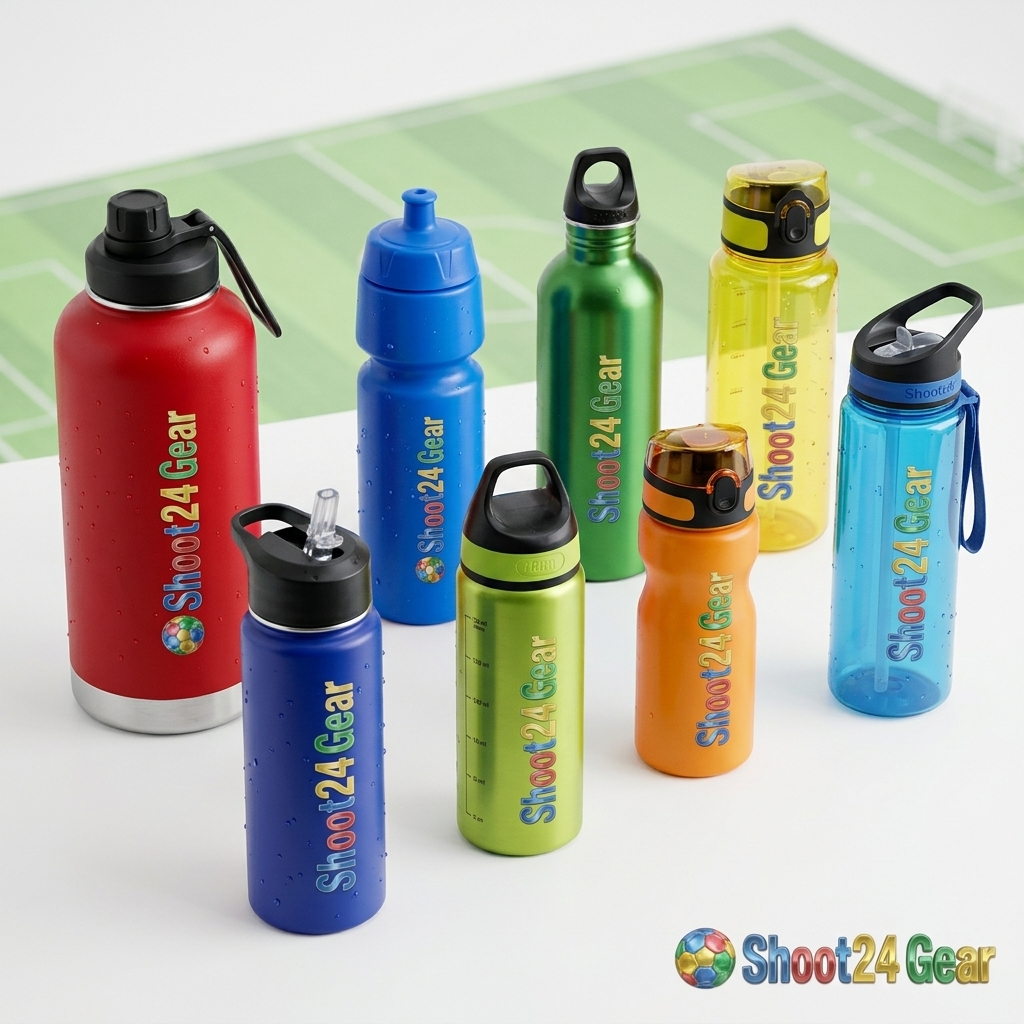
Proper hydration is fundamental to football performance — even mild dehydration of just two percent body weight loss reduces endurance, impairs decision-making, increases injury risk, and diminishes the physical and cognitive performance that competitive football demands throughout ninety minutes of intensive athletic activity. Football water bottles serve this critical hydration function by providing convenient, hygienic, and rapid fluid access during training breaks, match stoppages, and half-time intervals where efficient hydration replenishment directly supports sustained competitive performance quality throughout the complete duration of training sessions and competitive matches.
This comprehensive guide examines football water bottles and hydration equipment across all available types and configurations, covering the different bottle designs suited to football’s specific hydration requirements, capacity considerations for adequate fluid volume, squeeze bottle mechanisms and their practical advantages during competitive play, hygiene and cleaning considerations for shared and personal bottle use, team hydration systems and bottle carrier solutions, water temperature management, electrolyte and sports drink considerations, youth player hydration guidance, environmental sustainability considerations, and practical purchasing recommendations for players, coaches, and clubs selecting hydration equipment that optimizes fluid access and consumption throughout every training session and competitive match.
Bottle Types for Football
Squeeze Bottles
Squeeze bottles are the dominant water bottle type in football — soft-sided bottles that dispense water when the body is compressed by hand grip. The squeeze mechanism enables rapid fluid delivery without requiring the user to tilt, sip, or manipulate complex lids — simply aim the nozzle toward the mouth and squeeze for immediate water access. This hands-free drinking capability is particularly valuable during brief match stoppages where players need rapid hydration without removing gloves, adjusting equipment, or interrupting their focus on the ongoing match situation.
Football-specific squeeze bottles typically feature angled or extended nozzles that direct water flow toward the mouth from comfortable holding positions. The nozzle design enables drinking without full head tilting — important for players maintaining awareness of play resumption during water breaks at the pitch side. Professional-grade squeeze bottles use durable, BPA-free polyethylene construction that withstands the repeated compression cycles, temperature variations, and physical handling that regular football use demands across intensive training and competitive schedules.
Sports Cap Bottles
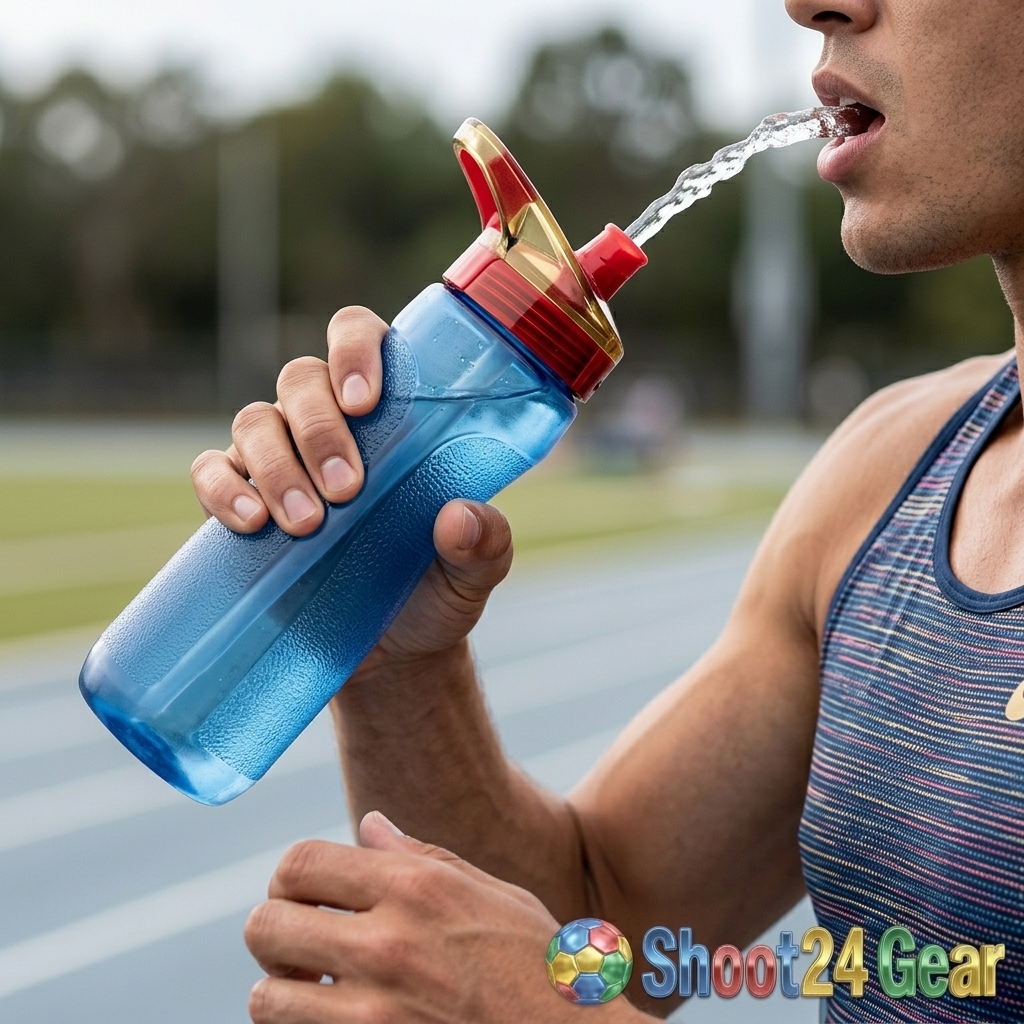
Sports cap bottles with pull-up drinking spouts provide an alternative to squeeze bottles for players who prefer traditional drinking mechanisms. Sports caps seal securely to prevent spillage during transport but require deliberate opening and conventional drinking action that takes marginally longer than squeeze bottle dispensing. Sports cap bottles suit personal use during training where drinking pace is less time-pressured than during brief match stoppages.
Insulated Bottles
Double-walled insulated bottles maintain water temperature during extended training sessions and matches — keeping cold water cold in hot weather and preventing excessive chilling in cold conditions. Temperature-maintained water is more palatable and encourages greater fluid consumption compared to water that has reached ambient temperature during extended outdoor exposure. The insulation benefit is most significant during summer training and hot-weather matches where water left in direct sunlight becomes unpalatably warm within thirty to forty-five minutes of outdoor exposure.
Capacity Considerations
Individual training bottles: Five hundred to seven hundred fifty milliliter capacity suits individual training use — sufficient fluid for a typical ninety-minute training session when supplemented by post-training hydration. Smaller bottles are lighter and more convenient for pitch-side placement but may require refilling during extended or high-intensity training sessions in hot conditions where fluid loss rates increase significantly.
Match day bottles: Seven hundred fifty milliliters to one liter capacity provides adequate fluid volume for pre-match, match-play, and half-time hydration needs. Larger capacity bottles reduce the need for mid-match refilling but increase size and weight that may be impractical for pitch-side placement in restricted technical area spaces.
Team water carriers: Large-capacity water carriers (five to ten liters) with multiple dispensing nozzles serve team hydration needs during organized water breaks and training sessions. Team carriers provide centralized fluid access that simplifies hydration management for coaching staff and reduces the individual bottle inventory needed for large squad training sessions.
Hygiene Considerations
Personal versus shared bottles: Individual-use bottles eliminate the hygiene concerns associated with multiple players sharing drinking equipment. Shared bottles can transmit viral and bacterial infections between players — a significant concern during cold and flu seasons when respiratory illness spreads readily through shared fluid contact. Best practice is individual-labeled bottles for each player to prevent cross-contamination during team training and match activities.
Cleaning protocols: Wash water bottles thoroughly after every use with warm water and mild dishwashing detergent. Use bottle brushes to clean interior surfaces that hand washing cannot reach effectively. Pay particular attention to nozzle and cap components where bacteria accumulate in the moisture-retaining crevices of dispensing mechanisms. Allow bottles to air dry completely with caps removed before storage to prevent bacterial growth in sealed, moisture-containing bottles.
Replacement schedule: Replace squeeze bottles every three to six months during regular competitive use. Squeeze bottle plastic degrades through repeated compression cycles, developing micro-cracks that harbor bacteria resistant to normal cleaning. Clear bottles enable visual inspection for discoloration and residue buildup that indicate cleaning inadequacy or material degradation requiring replacement.
Team Hydration Systems
Bottle carriers: Folding bottle carriers hold six to twelve individual bottles in organized racks that simplify pitch-side placement and player access during organized water breaks. Carriers keep bottles upright, prevent ground contamination, and enable coaching staff to manage team hydration efficiently during training sessions and competitive matches.
Bottle identification: Label individual bottles with player names or squad numbers to maintain personal hygiene standards and prevent bottle sharing confusion. Colored bottle caps, numbered markers, or custom printed names provide quick identification that enables players to locate their personal bottle rapidly during brief water break opportunities.
Refilling logistics: Establish refilling procedures for extended training sessions — designate a staff member or player responsible for refilling bottles from tap or cooler sources during sessions where fluid consumption exceeds initial bottle capacity. Consistent refilling ensures adequate fluid availability throughout entire training sessions without players experiencing restricted access during later training phases when dehydration risk is highest.
Temperature Management
Cold water benefits: Research demonstrates that cold water (approximately five to ten degrees Celsius) promotes greater fluid consumption than room-temperature water during exercise — the palatability of cold water encourages players to drink more, improving hydration compliance during training and match play. Cold water also provides minor internal cooling benefit during hot-weather activity that may contribute to thermal comfort and performance maintenance in high-temperature environments.
Cooling strategies: Pre-fill bottles with ice and water before hot-weather training sessions. Use insulated bottles or insulated bottle carriers that maintain temperature during extended outdoor exposure. Place bottles in shade rather than direct sunlight when pitch-side positioning allows. Freeze bottles partially the night before early morning summer training to provide extended cold water availability throughout morning sessions.
Electrolyte and Sports Drinks
During intensive training and competitive matches lasting ninety minutes or more, particularly in hot conditions, plain water may be insufficient for optimal hydration — electrolyte replacement (sodium, potassium, magnesium) becomes important when sweat losses are significant. Sports drinks containing electrolytes and carbohydrates support sustained performance during prolonged intense activity by replacing the minerals lost through perspiration and providing supplementary energy substrate that supports muscular function during extended exercise.
However, for typical training sessions of sixty to ninety minutes in moderate conditions, plain water provides adequate hydration for most players. Reserve sports drink use for high-intensity match play, extended training sessions, and hot-weather conditions where electrolyte and carbohydrate supplementation provides meaningful performance benefit beyond what plain water delivers.
Youth Player Hydration
Hydration education: Young players often need reminding to drink regularly during training — children are less reliable at recognizing and responding to thirst signals than adults. Coaches should implement structured drinking breaks every fifteen to twenty minutes during youth training sessions, particularly during warm weather, rather than relying on young players to self-regulate their fluid intake based on thirst perception alone.
Appropriate bottles: Select youth-appropriate bottle sizes (three hundred to five hundred milliliters) that are manageable for smaller hands and lighter to carry. Leak-proof designs prevent the bag-soaking spillage that poorly sealed bottles create during transport in school bags and kit bags. Fun, age-appropriate bottle designs encourage youth players to bring and use their personal bottles consistently at every training session and match throughout the competitive season.
Environmental Sustainability
Reusable water bottles represent significantly more environmentally responsible hydration than single-use plastic bottles that create substantial waste at training facilities and match venues. Clubs should implement reusable bottle policies that eliminate single-use plastic from training and match-day operations. Quality reusable bottles provide months of service that replaces hundreds of single-use plastic bottles over their functional lifespan, representing meaningful environmental impact reduction alongside practical cost savings compared to ongoing single-use plastic bottle purchasing.
When reusable bottles reach end-of-life, recycle the materials appropriately according to local recycling guidelines for the specific plastic type. Most football squeeze bottles are manufactured from recyclable polyethylene that can be processed through standard plastic recycling channels when eventually replaced at the end of their useful functional lifespan.
Match Day Hydration Protocol
Pre-match: Players should begin hydrating well before kick-off — consuming four hundred to six hundred milliliters of water in the two hours preceding match time. This pre-loading ensures adequate hydration status before the match begins, providing the fluid foundation that in-match hydration maintains throughout competitive play.
During match: Utilize every natural stoppage — goal kicks, injuries, substitutions — for brief hydration opportunities. Designated pitch-side bottle positions should be established pre-match so players know exactly where to access water during stoppages without losing match-awareness searching for hydration equipment.
Half-time: Half-time provides the most significant in-match hydration opportunity. Players should consume three hundred to five hundred milliliters during the half-time interval, ideally within the first five minutes to allow absorption before the second half begins. Coaching staff should ensure full bottles are available and accessible as players enter the changing room.
Post-match: Continue hydrating for two to four hours after the match concludes — consuming approximately one and a half times the fluid volume lost during the match. Post-match hydration supports recovery processes that begin immediately after the final whistle and continue throughout the hours following competitive exertion.
Goalkeeper-Specific Hydration
Goalkeepers face unique hydration challenges — their position near the goal provides convenient access to bottles placed behind the goal line, but the intermittent activity pattern of goalkeeping (periods of minimal activity followed by explosive bursts) creates different hydration needs than outfield positions. Goalkeepers should take advantage of their proximity to the goal-line bottle position by drinking small amounts frequently during natural play stoppages rather than consuming large volumes infrequently, maintaining consistent hydration levels throughout the match without the stomach discomfort that large fluid intakes can cause before sudden explosive diving or kicking movements.
Goal-line bottle positioning must comply with competition regulations — bottles placed behind the goal must not obstruct play or create hazards for goalkeepers diving toward the goal-line area. Positioning bottles at the goal-post base or slightly behind the goal-line in approved locations ensures accessibility without regulatory or safety concerns during competitive match play.
Travel Hydration
Pre-match travel: Players traveling to away fixtures should maintain hydration throughout the journey rather than attempting to hydrate exclusively upon arrival. Carry personal water bottles during bus, car, or air travel to match venues, consuming regular small amounts throughout the journey. Dehydration accumulated during extended travel is difficult to reverse in the limited time between arrival and kick-off, making journey hydration essential for optimal match readiness at away venues.
Tournament hydration logistics: Multi-day tournament participation requires comprehensive hydration planning — sufficient bottle inventory, access to clean water refilling sources, electrolyte supplementation for multiple-match schedules, and consistent hydration monitoring across the tournament duration. Coaching staff should designate hydration responsibility to ensure tournament hydration management receives adequate attention alongside tactical and physical preparation priorities.
Budget Planning for Clubs
Individual bottles: Budget for one squeeze bottle per player plus twenty percent additional bottles for replacements and new player arrivals during the season. Squeeze bottles are inexpensive individually, but equipping full squads across multiple age groups requires planned purchasing that accounts for the regular replacement cycle every three to six months.
Infrastructure: Bottle carriers, cleaning equipment (bottle brushes, sanitizing solution), and labeling supplies represent supplementary hydration infrastructure costs beyond individual bottle purchasing. While individually modest, these infrastructure costs contribute to the overall hydration management budget that clubs should plan for systematically within annual equipment spending.
Common Hydration Mistakes
Insufficient pre-match hydration: Players who arrive at matches inadequately hydrated cannot compensate through in-match drinking alone — absorption limitations prevent rapid rehydration during active competition. Establish pre-match hydration protocols that begin several hours before kick-off to ensure adequate hydration status before the match demands begin.
Over-relying on sports drinks: Excessive sports drink consumption introduces unnecessary sugar and caloric intake during activities where plain water provides adequate hydration. Reserve sports drinks for situations where the duration, intensity, and environmental conditions genuinely warrant electrolyte and carbohydrate supplementation beyond what plain water delivers.
Ignoring bottle hygiene: Using bottles that have not been properly cleaned between uses risks introducing bacteria into the drinking water supply. The warm, moist environment inside unwashed bottles promotes rapid bacterial multiplication — bottles left unwashed overnight can harbor significant bacterial populations that compromise player health when consumed during subsequent training sessions.
Sharing bottles: Despite the convenience, sharing water bottles between players creates direct cross-contamination risk that can spread illness through the squad. Implement strict individual-bottle policies, particularly during illness seasons, to protect squad health and minimize the risk of infectious illness spreading through the team through shared hydration equipment.
Bottle Material Comparison
Polyethylene (PE): The standard squeeze bottle material — flexible, durable, BPA-free, and suitable for repeated compression cycles. Polyethylene bottles provide the best combination of squeezability, durability, and safety for football-specific squeeze bottle applications. Most professional team squeeze bottles use polyethylene construction for its optimal performance characteristics in football hydration contexts.
Polypropylene (PP): Rigid plastic used in sports cap bottles and some insulated designs. Polypropylene provides superior temperature resistance and is dishwasher-safe, but lacks the flexibility needed for squeeze bottle applications. PP bottles suit players who prefer rigid, traditional drinking bottles over squeeze-dispensing alternatives.
Stainless steel: Premium insulated bottles use stainless steel construction that provides superior temperature maintenance, exceptional durability, and complete chemical inertness that eliminates any plastic taste or material leaching concerns. Stainless steel bottles command premium pricing but provide years of reliable service when maintained properly through regular cleaning and appropriate use.
Competition Regulations
Competition regulations governing pitch-side hydration equipment vary between leagues and governing bodies. Most competitions permit designated water bottle positions along the touchline and behind the goal-line, with specific restrictions on bottle placement during active play. Coaching staff should verify competition-specific hydration regulations before match days to ensure bottle placement and hydration access procedures comply with the relevant competition’s operational requirements and do not result in penalty or restriction during competitive fixtures.
Summary
Football water bottles provide the essential hydration access that sustains physical and cognitive performance throughout training and competitive match play. Select squeeze bottles for rapid pitch-side drinking, appropriate capacity for your hydration needs, and establish hygienic cleaning and replacement protocols that maintain safe drinking equipment throughout the competitive season.
Implement team hydration systems with individual labeled bottles, organized carriers, and structured drinking break protocols that ensure adequate fluid consumption across the full squad. Prioritize reusable bottles over single-use plastic alternatives for environmental responsibility alongside practical convenience and cost-effectiveness.