Training cones are the most fundamental and versatile piece of football training equipment — used in every training session from grassroots youth development through professional clubs to mark areas, create drill boundaries, designate running channels, and structure almost every training activity that coaches deliver. Despite their simplicity, training cones vary meaningfully in type, size, material, and design, with different cone types serving different training purposes more effectively. Understanding which cone types suit which training applications, and building a comprehensive cone inventory that covers all training requirements, helps coaches deliver significantly better-organized and more effective training sessions that maximize player development and engagement.
This guide covers the main types of football training cones, their specific applications, material and durability considerations, purchasing guidance, and practical tips for organizing, maintaining, and transporting cone inventories for consistently effective training delivery at every competitive level from youth grassroots through senior professional football.
Cone Types
Flat Disc Cones (Saucer Cones)
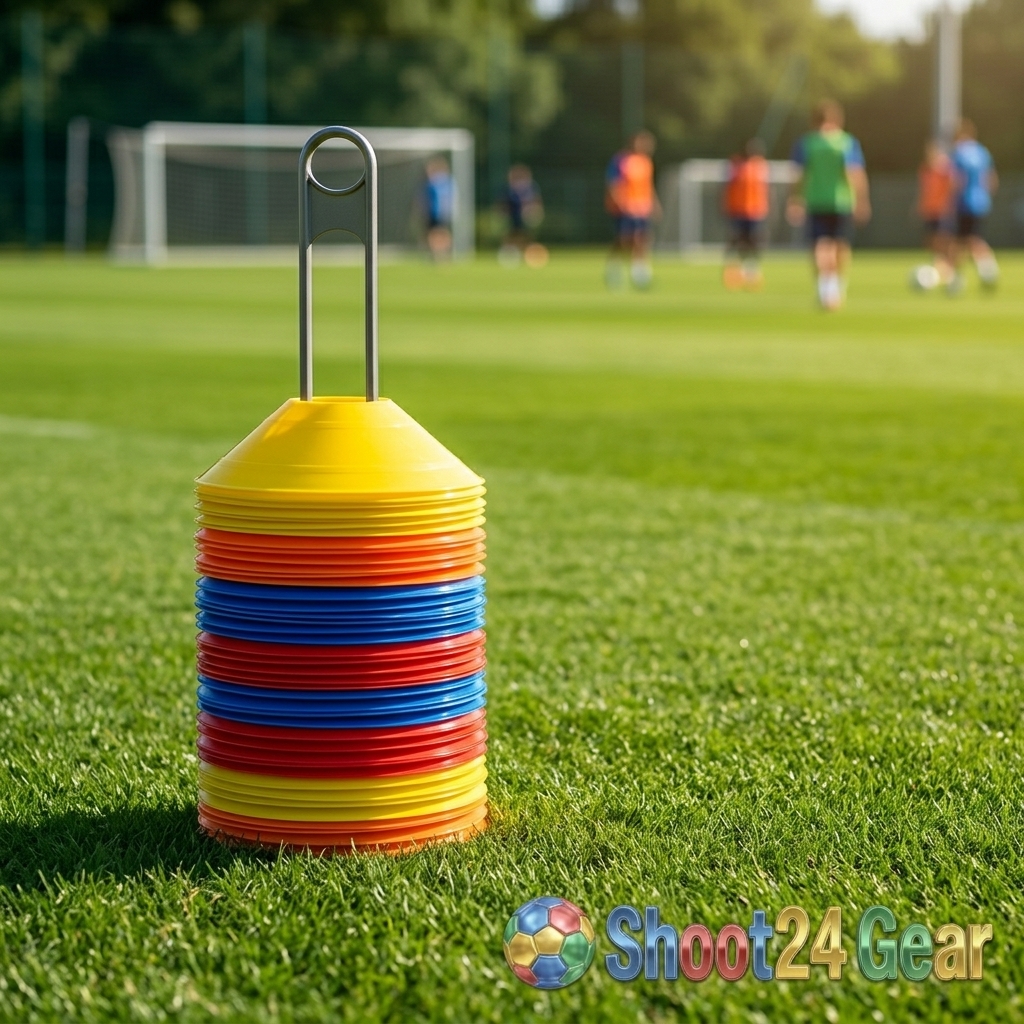
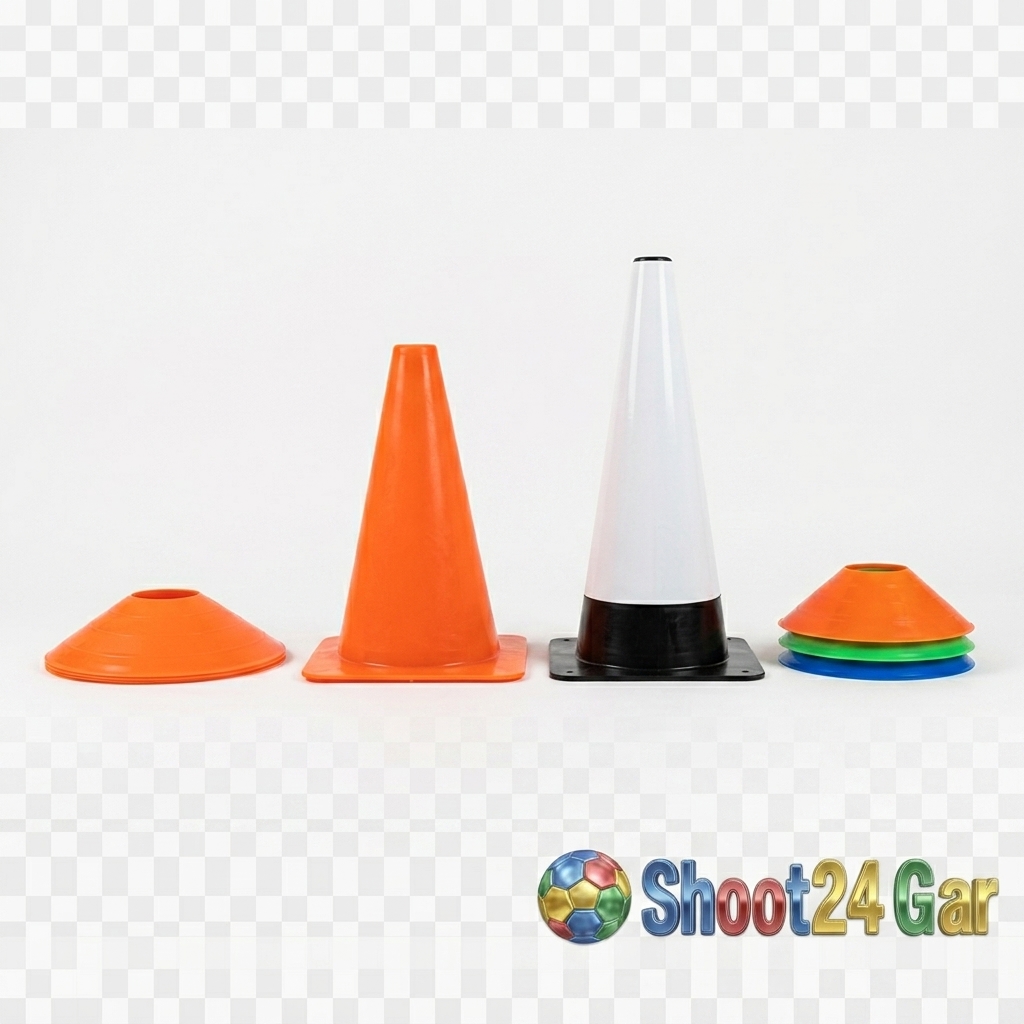
Flat disc cones — often called saucer cones — are the most versatile and widely used training cone type in football. Standing approximately three to five centimeters tall, these practical low-profile markers provide clear visual reference without creating trip hazards when players run over or through marked areas. Their flat profile makes them ideal for dribbling drills where players must navigate through tight spaces, as accidental contact with a disc cone does not disrupt the player’s stride or risk injury.
Disc cones are available in multiple colors, enabling coaches to create color-coded drill designs — different colors for different stations, routes, or player groups. A comprehensive disc cone set with four to six colors provides the visual differentiation needed for complex multi-station training sessions. Standard disc cone diameters range from eighteen to twenty centimeters, providing adequate visibility from playing distance while remaining compact enough for detailed drill layouts.
Tall Marker Cones
Tall marker cones — typically twenty-three to thirty centimeters in height — provide greater visibility than disc cones, making them suitable for marking larger areas where visual reference from distance is important. These cones are commonly used for marking pitch boundaries, goal areas, playing zones, and any drill setup where participants need to identify cone positions from significant distance.
The taller profile creates a trip hazard that disc cones do not, making tall cones less suitable for drills where players run through or around tightly spaced markers. They are best positioned at the periphery of drill areas where player contact is unlikely rather than within the active playing space where collisions may occur.
Witches’ Hats (Sport Cones)
Witches’ hat cones — the classic triangular cone shape standing approximately thirty to forty-five centimeters tall — provide maximum visibility and are the traditional choice for marking larger training areas, match warm-up zones, and field boundaries. Their height makes them visible from anywhere on a full-sized pitch, serving as permanent reference markers during complex training sessions involving multiple groups across large areas.
The rigid construction of witches’ hat cones means they do not compress when stepped on, creating a potential stumble risk if positioned in active running areas. Reserve witches’ hat cones for boundary marking, zone designation, and any application where their superior visibility justifies their larger footprint and trip risk compared to lower-profile alternatives.
Mini Cones (Agility Cones)
Mini cones stand approximately ten to fifteen centimeters tall, providing a middle ground between flat disc cones and taller marker cones. Their moderate height makes them visible during agility drills and footwork exercises while maintaining a relatively low trip hazard. Mini cones are particularly useful for marking agility courses, ladder drill boundaries, and short-distance sprint channels where participants need clear visual markers at close range without the trip risk of taller cones.
Material Considerations
Flexible polyethylene: The most common material for disc cones and mini cones. Flexible polyethylene cones compress when stepped on and return to shape, eliminating injury risk from cone contact. This material is durable enough for regular training use on grass, artificial turf, and hard surfaces, and typically provides several seasons of use before replacement is needed.
Rigid plastic: Used for tall marker cones and witches’ hats. Rigid plastic provides structural stability that maintains the cone’s upright position in wind — a significant practical advantage for outdoor training in exposed locations. Higher-quality rigid cones use UV-stabilized plastic that resists color fading from sun exposure, maintaining visibility over multiple seasons of outdoor use.
Rubber-weighted bases: Some premium tall cones feature rubber-weighted bases that prevent wind displacement without requiring pegging or anchoring. These weighted cones are particularly valuable for exposed training grounds where standard lightweight cones require constant repositioning during windy conditions — a significant time-wasting disruption during training delivery.
Color Selection Strategy
Cone color is not merely aesthetic — it directly affects training drill clarity and coaching communication efficiency.
High visibility colors: Bright yellow, fluorescent orange, and bright red provide the best visibility across all lighting conditions and playing surface colors. These high-visibility colors should form the primary cone inventory for general training use.
Multi-color sets: Having four or more cone colors enables visual drill coding — players can be instructed to “sprint to the blue cone,” “turn at the red cone,” or “pass when you reach the yellow zone.” This color-coding reduces verbal explanation time and improves drill comprehension, particularly with younger players who respond well to visual cues.
Surface contrast: Consider playing surface color when selecting cone colors. Orange and red cones may be less visible on red clay or autumnal grass surfaces. White cones are ineffective on snow-covered pitches. Ensure your primary cone colors provide adequate and immediately obvious contrast against the specific surfaces you train on most frequently throughout the entire season.
Training Applications
Dribbling courses: Disc cones arranged in slalom patterns, grids, and channels create structured dribbling practice that develops close control, directional change, and spatial awareness. The low profile of disc cones allows players to navigate without hesitation, encouraging aggressive dribbling technique rather than overly cautious cone avoidance.
Passing drills: Cones positioned as passing targets, gate markers, and area boundaries structure passing practice with clear visual reference. Color-coded cones can designate different passing targets or indicate the required passing technique for each gate.
Fitness circuits: Cone-marked stations create organized fitness circuits with clear start and end points for each exercise. Sequential color coding guides players through the circuit stations in the correct order, reducing coaching intervention requirements and enabling self-paced independent circuit completion during conditioning sessions.
Small-sided games: Cones as goal markers and boundary lines enable flexible small-sided game setup on any available space. Two cones define each goal, additional cones mark pitch boundaries, and different colored cones can designate different playing zones within the small-sided game area.
Tactical positioning: Cones placed on the pitch represent player positions, movement triggers, and tactical reference points during tactical coaching sessions. Moving cones to demonstrate positional adjustments provides clear visual communication of tactical concepts that verbal instruction alone may not convey effectively.
Purchasing Guidance
Minimum inventory: A fully equipped training cone inventory for a single football team requires approximately fifty to sixty disc cones in multiple colors, twelve to twenty tall marker cones, and four to eight witches’ hat cones. This inventory covers most training session requirements without cone shortages that force drill compromises.
Quality over quantity: Cheap cones that crack after limited use, lose color rapidly, or lack sufficient weight to stay positioned in light wind are false economy. Invest in quality cones from recognized training equipment manufacturers that provide UV-stabilized plastic, durable construction, and consistent sizing across the set. The modest premium for quality cones pays for itself through extended usable lifespan and reduced replacement frequency.
Storage and transport: Purchase cones with compatible stacking or storage systems. Disc cones stack on carrying poles, tall cones nest inside each other, and organized storage systems prevent cone loss and simplify transport between storage and training locations. A well-organized and accessible cone storage system saves setup and pack-down time at every single training session, cumulatively saving significant time over a season.
Maintenance and Replacement
Training cones require minimal maintenance but benefit from basic care that extends their usable lifespan.
Cleaning: Rinse muddy cones with water after training on wet pitches. Accumulated mud reduces color visibility and adds unnecessary weight to cone storage bags. A quick rinse after wet-weather sessions maintains visibility and prevents mud transfer to other stored equipment.
Storage: Store cones in dry, shaded locations. Extended UV exposure during storage accelerates color fading, and wet storage promotes mold growth that can make cone handling unpleasant. Indoor or covered storage extends cone visibility and lifespan.
Replacement indicators: Replace cones when they crack, lose significant color visibility, or permanently deform from repeated compression. Cracked cones can create sharp edges that risk hand cuts during pickup, and faded cones that lack visual contrast against the playing surface compromise drill clarity and training quality.
Integration with Other Training Equipment
Training cones work most effectively when combined with complementary training equipment to create comprehensive training setups that address multiple development objectives simultaneously.
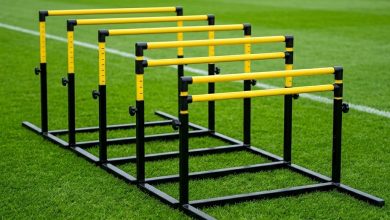
With agility ladders: Cones marking the start and end points of agility ladder stations, plus transitional running zones between ladder exercises, create structured agility circuits that combine ladder footwork with cone-directed running patterns. Color-coded cones at each station designate the specific ladder exercise to perform, enabling multiple players to work through the circuit independently.
With rebounders: Cones marking player starting positions, passing angles, and receiving zones create structured rebounder practice that develops specific passing and receiving skills rather than unstructured wall-passing repetition.
With training hurdles: Cones designating hurdle approach zones, landing areas, and transitional running channels create comprehensive plyometric circuits that combine hurdle exercises with cone-directed movement patterns for complete lower-body development sessions.
Budget Considerations
Starter set: A basic training cone starter set sufficient for individual or small-group training includes twenty disc cones in two colors and four tall marker cones. This minimal set covers basic dribbling drills, simple passing exercises, and fitness station marking at a modest investment that suits individual coaches, parents, and youth coaching groups beginning their equipment inventory.
Complete team set: A comprehensive team training cone set includes fifty or more disc cones in four or more colors, twenty tall marker cones, eight witches’ hat cones, and appropriate carrying and storage equipment. This comprehensive investment provides the flexibility to deliver complex, multi-station training sessions for full squads without the cone shortages that frequently force drill modifications, simplification, or unacceptable compromises in training quality.
Bulk purchasing: Buying cones in bulk quantities directly from training equipment manufacturers typically provides pricing fifteen to thirty percent below individual retail purchases. For clubs establishing or replacing cone inventories, bulk purchasing provides meaningful savings while ensuring consistency in cone size, color, and quality across the entire set.
Surface-Specific Considerations
Natural grass: Standard disc cones and marker cones perform well on natural grass surfaces. In wet conditions, lightweight disc cones may slide when contacted by players — consider slightly heavier disc cones or lightly textured base surfaces that grip wet grass more effectively if wet-weather training is frequent at your facility.
Artificial turf: Cones on artificial turf surfaces experience different wear patterns than grass use. The abrasive surface of artificial turf can wear down cone base surfaces faster, reducing lifespan compared to grass use. Select cones with thicker base material if artificial turf is your primary training surface. Avoid using metal-spiked cone anchors on artificial turf, which can damage the turf surface and infill material.
Hard surfaces (indoor/futsal): Training on indoor hard courts or futsal surfaces requires cones with smooth base surfaces that do not scratch or mark the playing surface. Some cone materials leave marks on polished indoor surfaces — verify cone compatibility with your indoor surface before using large quantities that could cause visible damage requiring cleaning or repair.
Age Group Adaptations
Under-8s and younger: Younger children benefit from larger, more colorful cones that are easy to see and identify. Bright, oversized disc cones and appropriately short witches’ hat cones in primary colors provide clear visual reference for young players who are still developing spatial awareness and drill comprehension. Wider spacing between cones accommodates developing coordination and spatial judgment.
Under-12s: Intermediate-aged players can work with standard adult-sized cones at progressively reduced spacing as their technical skills develop. This age group responds particularly well to color-coded drill designs that use different cone colors for different tasks, developing important cognitive processing skills alongside physical and technical development.
Under-16s and adults: Full-sized cones at competition-appropriate spacing provide realistic training conditions that prepare players for match environments. At these levels, cone positioning precision becomes more important — accurately measured cone distances ensure drill speeds and technical demands match competition requirements.
Smart and LED Cones
Technology-enhanced cones with LED lights and electronic triggers represent the latest development in training cone technology, providing reactive training stimuli that traditional cones cannot offer.
LED cones illuminate in different colors on command, creating reactive training drills where players must respond to color changes by running to specific cones, performing specific actions, or making decisions based on visual stimuli. This reactive element adds cognitive demand to physical training, developing the decision-making speed alongside the physical capabilities that football requires.
Smart cone systems are significantly more expensive than traditional cones and require charging, software management, and careful handling that traditional cones do not need. They serve as supplementary training tools for specific reactive training objectives rather than replacements for traditional cone inventories that cover the majority of everyday training requirements.
Common Mistakes
Insufficient cone quantity: Training sessions frequently suffer from insufficient cone numbers that force drill simplification or area reduction. Invest in more cones than you think you need — fifty cones disappear quickly across a multi-station session for a full squad.
Single color inventory: Using only one cone color limits coaching communication options and prevents the color-coded drill designs that improve training delivery efficiency and player comprehension of complex drill patterns.
Neglecting replacement: Continuing to use faded, cracked, or deformed cones compromises training quality through reduced visibility and creates unnecessary injury risk from sharp edges on damaged plastic. Budget for annual or biannual cone inventory assessment and timely replacement of all damaged or faded units.
Summary
Training cones are fundamental football training equipment that significantly affects training session quality, organization, and delivery efficiency. Build a comprehensive cone inventory with disc cones for versatile close-quarters marking, tall marker cones for visible area designation, and witches’ hat cones for large-area boundary marking. Invest in quality, UV-stabilized cones in multiple high-visibility colors to support color-coded drill designs that improve training communication and player comprehension.
Maintain cone inventory through regular cleaning, appropriate storage, and timely replacement of damaged or faded units. A well-maintained, comprehensive cone set is genuinely the most cost-effective investment in training quality improvement available to any football coaching setup at any competitive level. The modest financial investment in quality cones delivers disproportionate improvement in training organization, drill clarity, and overall coaching delivery efficiency throughout every training session of every season.