Football compression tops have evolved from specialist athletic garments into standard football equipment worn by players at every level. What was once exclusive to professional athletes is now commonplace at Sunday league training sessions and youth academy practices alike. The widespread and continuing adoption reflects the genuine and practical benefits these specialized garments provide to footballers — improved moisture management, perceived muscle support, temperature regulation, and the genuine psychological confidence and mental readiness that comes from wearing professionally purpose-designed performance apparel during competitive situations.
But the compression top market has expanded dramatically, and the range of options available now creates genuine and understandable confusion for footballers trying to select the right garment for their needs. This comprehensive guide examines every significant feature of football compression tops in thorough detail, explains what genuinely matters for performance versus what is primarily marketing positioning, and helps you navigate the increasingly crowded options to find the specific base layer that best supports your football training and competitive match performance.
How Compression Tops Work
Compression tops apply pressure to the upper body through elasticated fabric that fits tighter than standard sportswear. This pressure creates several effects that contribute to the garment’s performance profile during athletic activity.
Muscle support: The fabric pressure reduces muscle vibration during high-impact movements like sprinting and jumping. Reduced muscle vibration during play is associated with decreased muscle fatigue over time and potentially lower risk of soft tissue micro-damage during intense activity. While the scientific evidence for performance improvement through compression is modest, the support feeling is valued by many athletes for comfort and confidence benefits.
Moisture transport: Compression tops use synthetic fabrics — typically polyester-elastane blends — that wick sweat away from the skin surface through capillary action. The moisture travels through the fabric to the outer surface where it evaporates, keeping the skin noticeably and consistently drier than cotton, bamboo, or other natural fiber alternatives that absorb and retain moisture against the skin. This moisture management prevents the heavy, cold feeling of sweat-soaked fabric during extended exercise.
Temperature regulation: By managing moisture effectively, compression tops help regulate body temperature in both warm and cold conditions. In warmth, effective sweat evaporation provides cooling. In cold weather, keeping the skin dry prevents the chilling effect that occurs when wet fabric contacts cold air, maintaining core body temperature more effectively and consistently than moisture-retaining natural fiber alternatives.

Sleeve Length Options
Short Sleeve
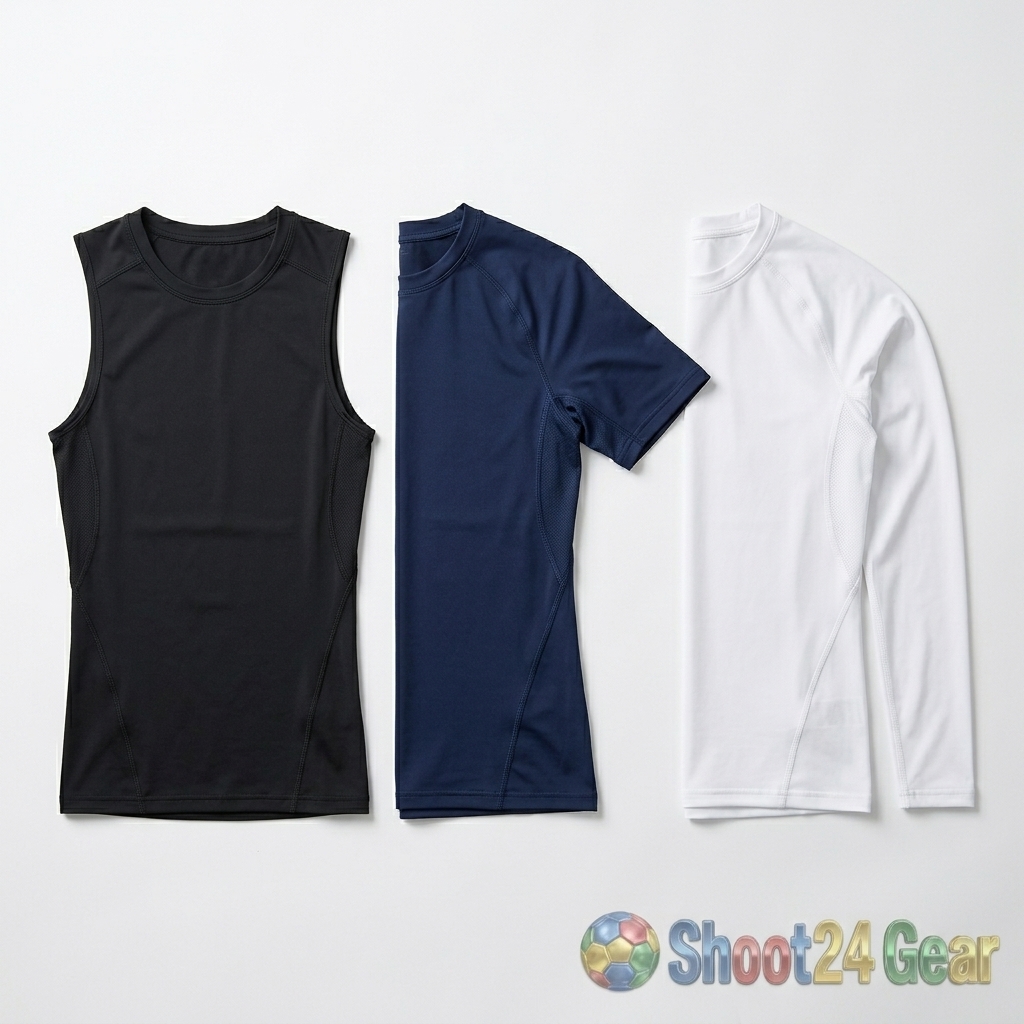
Short-sleeve compression tops provide core and shoulder coverage while leaving the arms uncovered. This configuration suits warm weather play where arm coverage adds unnecessary insulation. Short sleeves also avoid the regulatory complications that long-sleeve base layers can create regarding color matching requirements, since the short sleeves remain hidden under the match kit’s short sleeves.
Short-sleeve compression is the most popular choice for summer football and indoor training where temperature management favors maximum skin exposure. The garment provides the moisture management and core compression benefits while maintaining the lightweight, unrestrictive feel that warm-weather training demands.
Long Sleeve
Long-sleeve compression tops extend coverage to the wrists, providing compression and moisture management across the entire upper body and arms. Long sleeves are essential for cold weather football, where the full-arm coverage provides both thermal protection and moisture management from shoulders to wrists.
Long-sleeve compression tops must comply with football’s base layer color regulations during matches. FIFA and most national associations require that base layer sleeves match the predominant color of the team’s shirt sleeves. This means footballers wearing long-sleeve base layers in matches need compression tops in colors that match their team kit — typically requiring multiple colors for home and away matches.
Sleeveless
Sleeveless compression tops — essentially compression vests — provide core-only coverage. These garments suit goalkeepers who want core compression without any arm restriction, and training situations where maximum arm freedom is prioritized. Sleeveless compression also works as a base layer under training jackets where arm compression is unnecessary because the jacket provides its own arm coverage.
Fabric Technologies
Major brands use proprietary fabric technologies that, while marketed differently, all achieve similar fundamental functions through comparable technical approaches.
Nike’s Dri-FIT and Adidas’s AEROREADY represent the two most widely used technologies in football compression tops. Both use polyester microfiber construction to transport moisture from the skin to the fabric surface for evaporation. Dri-FIT has the longest market presence and widest recognition, while AEROREADY incorporates recycled materials without performance compromise.
Under Armour’s HeatGear technology was among the first commercial compression technologies and continues to provide competitive moisture management and compression. Puma’s dryCELL and New Balance’s NB DRY provide equivalent functionality through their own brand-specific fabric constructions and proprietary moisture management systems.
The practical performance differences between these technologies are minimal at the consumer level. All provide effective moisture wicking, all use polyester-elastane blends, and all maintain compression through similar elastane mechanisms. Brand selection should be based on fit preference and pricing rather than claimed technological superiority.
Fit Profiles
Compression tops are available in multiple fit profiles that affect how the garment feels and performs during football activity.
Tight fit: The tightest compression option, designed to sit flat against the skin with zero movement between fabric and body. Tight fit maximizes the compression effect and provides the most effective moisture wicking by maintaining constant fabric-to-skin contact. Some footballers find this tight fit level too restrictive for comfortable football play, particularly through the chest area during deep breathing recovery after intensive sprints and sustained high-intensity running periods.
Fitted: Slightly less compression than tight fit, providing a form-following silhouette without the full-body pressure of maximum compression. Fitted compression suits footballers who want compression benefits with greater comfort, particularly for extended wear during longer training sessions where tight compression can become uncomfortable.
Athletic fit: The most relaxed compression profile, providing light compression with more room for movement. Athletic fit approaches standard sportswear fit while still offering better moisture management than non-compression alternatives. This profile suits footballers new to compression who want to experience the moisture management benefits without the unfamiliar sensation of tight-fitting fabric.
Temperature-Specific Options
Beyond standard compression, brands offer temperature-specific variants designed for extreme conditions that standard compression does not adequately address.
Thermal compression: Cold-weather variants incorporate brushed interior fabric that traps warm air against the skin while maintaining moisture-wicking properties. Thermal compression tops are heavier than standard models and provide genuine insulation for winter training and matches. The added weight and insulation make them unsuitable for warm-weather use, positioning them as seasonal additions rather than year-round options.
Cooling compression: Some brands offer warm-weather compression with enhanced ventilation features — mesh panels, lighter fabric weights, and strategic ventilation zones that increase airflow while maintaining effective compression in key muscle-support areas throughout the garment. These cooling options suit footballers training in hot climates where standard compression can feel too insulating despite effective moisture wicking.
Compression for Recovery
Some footballers wear compression tops after training and matches as a recovery aid. The theory is that compression promotes blood flow and reduces post-exercise swelling, which may accelerate the recovery process between sessions.
Scientific evidence for compression-aided recovery is mixed. Some studies show modest improvements in perceived muscle soreness and recovery speed, while others show no significant effect. The evidence is strongest for wearing compression during the immediate post-exercise period (one to three hours after activity) rather than for extended overnight wear.
Whether compression genuinely aids your personal recovery process is best determined through honest individual experimentation and self-assessment rather than reliance on scientific consensus, which remains inconclusive and contradictory across published studies. Many footballers report subjective benefits from post-exercise compression wear that, regardless of mechanism, positively influence their perception of readiness for subsequent training sessions.
Care Guidelines
Proper care maximizes the effective lifespan of compression tops by preserving both the fabric’s moisture-wicking properties and the elastane’s compression characteristics.
Wash after every use in cold water on a gentle cycle. Sweat contains salts and acids that degrade elastane fibers, and prompt washing removes these corrosive substances before they cause lasting damage. Avoid hot water and aggressive wash cycles — both accelerate elastane breakdown.
Never use fabric softeners. Softeners coat the microfiber structure that enables moisture wicking, effectively waterproofing the fabric against sweat transport. A single use of fabric softener can noticeably reduce moisture-wicking performance, and the coating is difficult to remove completely once applied.
Air dry rather than tumble dry. Heat from dryers damages elastane fibers more than any other single factor, causing compression loss and fabric relaxation. Hang or flat dry at room temperature. The minimal inconvenience of air drying is justified by significantly extended garment lifespan and maintained compression performance.
Sizing for Compression Tops
Compression top sizing requires different consideration than standard football apparel because the garment must fit tighter than conventional sportswear to function correctly.
Measure your chest circumference and consult the specific brand’s compression sizing chart — not their standard apparel chart. Compression sizing accounts for the stretch of the fabric under tension, meaning a compression medium provides different coverage than a standard medium from the same brand. Using standard sizing for compression purchases typically results in garments that are too loose to provide effective compression.
When between sizes, select based on your fit preference: the smaller size for tighter compression, the larger size for more comfortable compression. Neither option is incorrect — the choice depends on your personal balance between maximum compression benefit and wearing comfort.
Brand-specific sizing differences apply to compression just as they do to standard apparel. Nike tends slimmer through the torso, Adidas provides marginally more room, Under Armour fits true to their published compression chart, and Puma runs slightly larger in the chest area. These tendencies are consistent across each brand’s compression range and help predict fit when purchasing online without trying garments on.
Position-Specific Considerations
Different football positions create different demands that affect compression top selection.
Goalkeepers: Goalkeepers benefit from compression that does not restrict arm movement during diving and catching. Long-sleeve compression is particularly popular among goalkeepers for elbow protection during ground contact, and the compression provides mild support during the repeated impact of diving saves. Goalkeepers should select fitted rather than tight compression through the arms to ensure full range of catching motion without restriction.
Defenders: Central defenders involved in frequent physical contact benefit from the body armor effect of tight compression tops that hold the torso firmly during aerial challenges and physical duels. The compression provides mild but noticeable protection against impact and helps maintain proper posture and body positioning during intense defensive situations and physical confrontations.
Midfielders: Midfielders covering large distances benefit from compression’s moisture management properties, which become increasingly important during high-intensity matches where sweat production is highest. The extensive distance-coverage demands of modern midfield positions make lightweight, highly breathable compression tops particularly relevant and beneficial for players in these roles.
Forwards: Attackers prioritize freedom of movement and lightweight feel over maximum compression. Fitted or athletic fit profiles suit forward players better than tight compression, providing effective moisture management benefits without the physical restriction that tight torso compression can create during rapid directional changes and sprint acceleration.
Match Day vs Training Use
How you use compression tops differs between match and training contexts, and managing your compression wardrobe across both situations extends overall garment lifespan.
Match compression: Use your best-condition compression tops for matches where color compliance with kit regulations matters and where the garment will be visible under your match kit. Match compression tops should be in approved colors and in good cosmetic condition. Reserve these for competitive matches only to maintain their appearance and compression performance.
Training compression: Training sessions are more frequent and create more wear than matches. Designate older compression tops or budget alternatives for training use, where color compliance is unnecessary and cosmetic condition is less important. The compression still provides moisture management and muscle support benefits during training without depleting your match-day garments.
Budget Management
Building a functional compression wardrobe does not require purchasing exclusively from premium brands. Strategic purchasing provides comprehensive coverage at manageable cost.
Start with two compression tops — one for match use and one for training. The match top should be from a reputable brand in a color that matches your team kit. The training top can be a budget alternative from any brand that provides basic moisture wicking and compression.
Add seasonal variants as needed — a thermal compression top for winter and a lightweight option for summer training. These seasonal additions can absolutely be from different brands than your primary compression tops; maintaining brand consistency across your entire compression wardrobe is purely a personal preference and convenience factor, not a functional requirement that affects performance.
Replace compression tops when the compression noticeably diminishes — the fabric no longer snaps back after stretching, the garment feels loose during activity, or the moisture-wicking performance degrades despite proper care. For regular users training three or more times per week, expect to replace primary compression tops every six to twelve months.
Common Compression Top Mistakes
Wearing cotton under compression: Some footballers wear cotton undershirts beneath compression tops, negating the moisture management benefit. Compression tops are designed to work directly against the skin — the cotton layer absorbs and retains sweat, creating the exact problem the compression top is designed to solve.
Using standard sizing: Buying compression tops in standard apparel sizes rather than compression-specific sizes results in loose-fitting garments that provide neither effective compression nor optimal moisture wicking.
Ignoring color regulations: Wearing compression sleeves in non-compliant colors during matches results in being asked to remove or change the base layer by match officials. Always check your specific league’s regulations regarding permitted base layer colors and sleeve length requirements before purchasing any compression tops intended for match-day use.
Expecting performance miracles: Compression tops improve comfort and moisture management. They do not make you run faster, jump higher, or play better in any measurable way. Setting realistic expectations about what compression provides prevents disappointment and helps you evaluate your compression top based on appropriate criteria.
Summary
Football compression tops provide genuine benefits — effective moisture management, perceived muscle support, and improved temperature regulation — that justify their place in every serious footballer’s equipment collection. The key selection factors that should guide your purchasing decision are sleeve length appropriate for your primary playing conditions and climate, fit profile that matches your personal comfort preference and playing position demands, and temperature specification that aligns with the seasonal climate in which you most frequently train and compete.
Brand technology differences are minimal in practical performance. Select based on fit, availability, pricing, and personal preference rather than claimed technological advantages. Proper care — cold wash, no softener, air dry — extends compression performance significantly and represents the best investment in long-term garment value.
Product ranges, fabric technologies, available options, sizing systems, and color selections all change between retail seasons and product generations as brands continue developing their compression apparel ranges. Always verify current compression top offerings, specifications, and pricing on official brand websites before making any purchasing decisions.