Football training mannequins — also called training dummies, defensive wall figures, or free kick walls — are life-sized or near-life-sized figures used to simulate defensive players during training exercises. Their primary application is forming defensive walls for free kick practice, but mannequins serve broader tactical training purposes including simulating opponents during positional play exercises, creating visual obstacles for dribbling and passing drills, and representing defensive structures during set piece rehearsal. The static physical presence of mannequins creates highly realistic spatial challenges that simple cones and poles cannot adequately replicate because mannequins approximate the visual profile, physical dimensions, and spatial occupation of actual opposing players significantly more closely than any alternative training marker or substitute equipment available.
This comprehensive guide examines football training mannequins in detail, covering the different types available, their specific training applications beyond basic free kick wall practice, material and construction considerations that affect durability and functionality, proper setup and positioning guidance, and detailed purchasing recommendations for clubs, academies, and coaching programs investing in mannequin equipment designed for realistic tactical and technical training delivery at all competitive levels from youth development through professional football.
Types of Training Mannequins
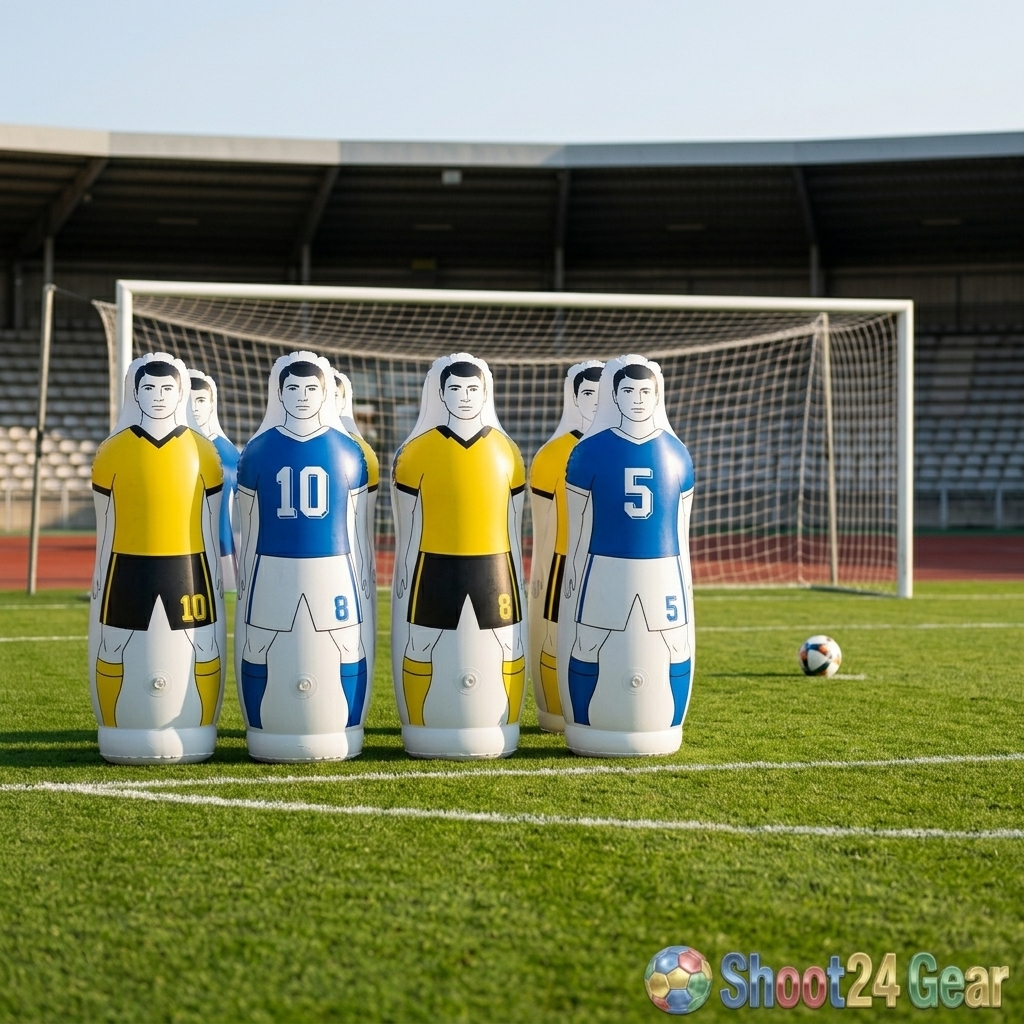
Inflatable Mannequins
Inflatable training mannequins are lightweight, portable, and easy to set up — Simply inflate them with a standard ball pump and position on a weighted base or ground spike. Deflated mannequins fold flat for compact storage and transport, making them the most practical option for coaching setups that transport equipment between training locations. However, inflatable mannequins are susceptible to puncture damage, deflation over time, and instability in wind conditions that can blow lightweight inflated figures out of position during training sessions.
Quality inflatable mannequins use puncture-resistant materials and reinforced seams that extend usable lifespan beyond budget alternatives. Even with quality construction, plan for occasional puncture repair or replacement — inflatable mannequins are consumable equipment with inherently limited lifespan compared to rigid alternatives.
Spring-Loaded Mannequins
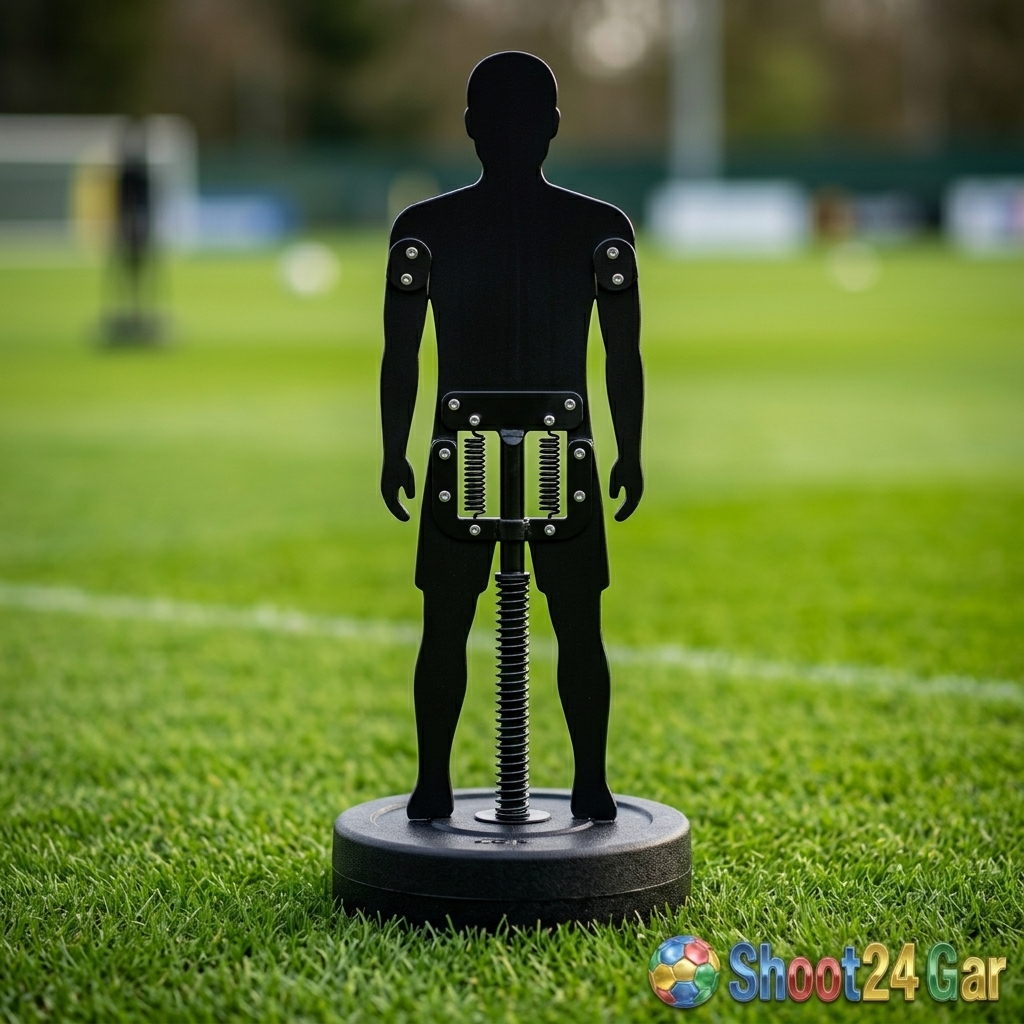
Spring-loaded mannequins use a rigid or semi-rigid body mounted on a spring-loaded base that allows the figure to deflect when contacted by the ball and return to upright position automatically. This self-righting mechanism enables continuous practice without interruption for manual repositioning after each free kick contact. The spring mechanism also creates realistic wall behavior — defensive wall players naturally flinch and move when struck by shots, and spring-loaded mannequins approximate this movement pattern.
Spring-loaded mannequins are significantly heavier and more expensive than inflatable alternatives but provide superior durability, wind resistance, and training realism. The considerably higher initial investment is typically justified for permanent training ground installations where durability and convenience outweigh portability requirements.
Rigid Flat Panel Mannequins
Flat panel mannequins use rigid plastic or metal silhouettes shaped like standing players. These highly durable, wind-resistant figures provide long-lasting permanent training fixtures that require virtually no ongoing maintenance. Panel mannequins lack the three-dimensional body profile of inflatable or spring-loaded alternatives, which slightly reduces visual realism, but their significantly superior durability and comprehensive weather resistance make them practical choices for outdoor training grounds where equipment remains exposed to weather conditions permanently.
Free Kick Training Applications
Defensive wall positioning: Position mannequins as a defensive wall — typically three to five figures shoulder-to-shoulder — at the regulation ten-yard distance from the free kick position. Correct wall positioning teaches free kick takers to visualize and execute shots that bend around or over the wall, developing the specific and precisely measured shot trajectories needed for consistent match-play free kick success at all distances and angles.
Wall gap exploitation: Deliberately positioning slight gaps between mannequins challenges free kick takers to identify and exploit wall gaps — a valuable tactical free kick option that requires precise low-trajectory shots through gaps that defensive walls sometimes present during matches. This training scenario develops an additional free kick option beyond the traditional over-the-wall approach.
Goalkeeper training integration: Mannequin walls provide realistic visual obstruction for goalkeeper free kick training — goalkeepers must position themselves to cover the exposed goal areas around and over the wall, then react to shots that appear from behind the visual obstruction that the wall creates. This visual obstruction during free kick practice develops the specific positioning and reactive skills that goalkeepers need during match-play free kick situations.
Tactical Training Applications
Positional play exercises: Mannequins positioned as static opponents create realistic spatial challenges during positional play training. Players must find passing lanes around mannequin obstacles, adjust body position to receive passes with mannequins simulating pressing opponents, and develop spatial awareness of opponent positions that cones alone cannot adequately represent because of their small visual profile.
Set piece rehearsal: Corner kick, free kick, and throw-in routines benefit from mannequin positioning that simulates opponent defensive structures. Attacking players rehearsing set piece runs can practice timing and positioning relative to realistic opponent representations rather than imagining opponent positions during practice of choreographed set piece movements.
Dribbling and close control: Mannequins positioned as defenders create more realistic dribbling challenges than cones, as the life-sized visual profile requires players to navigate around obstacles that occupy realistic amounts of space rather than the minimal footprint that cones present. This increased spatial challenge develops the body positioning and ball manipulation skills needed to dribble past actual opponents during match situations.
Material and Construction
UV resistance: Outdoor mannequins require UV-stabilized materials that resist color fading and material degradation from prolonged sun exposure. Budget mannequins without UV protection fade rapidly, losing visual realism and structural integrity within a single season of outdoor exposure. Ensure UV resistance specifications before purchasing mannequins destined for permanent outdoor installation.
Base stability: Mannequin base design must provide adequate stability against wind displacement and ball impact without creating trip hazards for players running near the mannequins during training exercises. Weighted bases, ground spike attachments, and broad footplate designs all address stability, with the optimal solution depending on training surface type and local wind conditions.
Height options: Training mannequins are available in different height options — youth size (approximately one hundred forty centimeters), standard adult size (approximately one hundred eighty centimeters), and adjustable-height models that accommodate different training scenarios and age group requirements. Select heights appropriate for your primary training group’s competitive level.
Setup and Positioning
Free kick wall setup: Position the wall at ten yards (nine point one five meters) from the free kick position, measured from the center mannequin. The wall should cover the near-post angle that the goalkeeper does not protect, with the goalkeeper positioning to cover the remaining exposed goal area. Standard wall sizes: three mannequins for central free kicks around thirty meters, four to five mannequins for closer free kicks where more goal coverage is needed.
Tactical positioning: For positional play exercises, place mannequins in the positions that opponents would typically occupy within the tactical scenario being trained. Adjust mannequin positions between exercises to create different spatial challenges that reflect different opposition tactical structures and formations.
Budget and Purchasing
Minimum set: Five mannequins provide the minimum quantity for a functional free kick wall and basic tactical training positioning. Five figures enable a standard wall width with flexibility for additional isolated positioning in tactical exercises.
Recommended set: Eight to ten mannequins provide comprehensive free kick wall capability (full five-person wall) plus additional figures for tactical training positioning, set piece rehearsal, and simultaneous multi-station training where mannequins are needed at multiple exercise locations within the same session.
Quality versus quantity: Purchasing fewer high-quality mannequins that last multiple seasons is generally more cost-effective than buying larger quantities of budget alternatives that require frequent replacement. Spring-loaded mannequins with UV-resistant construction, while expensive initially, provide the longest service life and the lowest total cost of ownership across a five-year equipment planning horizon.
Maintenance
Inflatable mannequin care: Check inflation pressure before each session and top up as needed — gradual air loss is normal for inflatable equipment. Carry a pump and puncture repair kit during training for immediate field repair of minor punctures. Store deflated mannequins in dry, protected locations away from sharp objects and extreme temperatures that can damage inflation materials.
Rigid mannequin care: Inspect bases, springs (for spring-loaded models), and structural joints periodically for wear, corrosion, or damage. Lubricate spring mechanisms according to manufacturer recommendations to maintain smooth self-righting function. Clean dirt and grass buildup from base mechanisms that can inhibit proper spring function over time.
Common Mistakes
Using mannequins only for free kicks: Limiting mannequin use to free kick practice wastes the broader training value they provide. Incorporate mannequins into positional play, set piece rehearsal, and dribbling exercises to maximize return on the equipment investment.
Incorrect wall distance: Positioning walls closer or further than the regulation ten yards creates unrealistic free kick practice that does not transfer to match situations where walls are positioned at the correct distance by match officials. Always measure wall distance accurately for realistic practice conditions.
Insufficient quantity: Attempting free kick wall practice with too few mannequins creates unrealistically narrow walls that do not challenge free kick technique appropriately. Invest in sufficient mannequins to form a realistic wall width before expanding inventory for tactical training applications.
Youth Training Applications
Scaled-down mannequins: Youth-sized mannequins (one hundred twenty to one hundred fifty centimeters) provide age-appropriate wall heights and spatial challenges for youth free kick practice. Full adult-sized mannequins create unrealistically tall walls for young players whose free kick trajectories are naturally lower than adult equivalents, potentially developing inappropriate shot selection habits.
Introduction to set pieces: Mannequins introduce youth players to the structured set piece concepts — wall positioning, wall exploitation, and defensive wall organization — that become increasingly important and tactically relevant as players progress through competitive youth football into senior football at higher competitive levels. Early exposure to mannequin-based training develops tactical awareness and understanding that provides foundational knowledge for more complex set piece work in later development stages.
Visual spatial development: Mannequins help young players develop spatial awareness of opponent positioning and proximity. The life-sized visual reference that mannequins provide develops the scanning and spatial processing skills that distinguish tactically aware youth players from peers who struggle to interpret the spatial environment during match play situations.
DIY and Budget Alternatives
For coaching setups where commercial mannequin investment is not feasible, several alternative approaches provide partial mannequin functionality at reduced cost.
Spring-loaded poles with tops: Vertical poles with horizontal crossbar tops at shoulder height create simplified opponent silhouettes for free kick wall practice. While lacking the visual realism of full mannequins, pole-based walls provide spatial reference and trajectory challenges at a fraction of commercial mannequin cost.
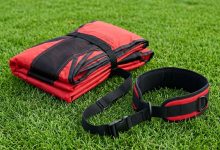
Popup mannequins: Lightweight popup mannequin designs using fabric panels on collapsible frames provide portable, budget-friendly alternatives that approximate mannequin functionality for coaches operating within tight equipment budgets. These practical popup designs deliberately sacrifice long-term durability for immediate affordability and extreme portability convenience.
Considerations: Budget alternatives trade visual realism, durability, and convenience for cost savings. For clubs with long-term equipment planning, investing in quality commercial mannequins provides superior training value and lower total cost of ownership compared to repeatedly replacing budget alternatives that wear out quickly under regular training use.
Technology Integration
Modern training mannequin systems increasingly incorporate technology features that enhance training realism and provide performance measurement capabilities beyond what static mannequins offer.
Sensor-equipped mannequins: Some premium mannequin systems include impact sensors that measure shot speed and contact location when the ball strikes the mannequin. This data provides objective feedback on free kick accuracy and power that helps players refine their technique based on measurable performance metrics rather than subjective observation alone.
Electronic pop-up systems: Automated systems that raise and lower mannequin figures on command create reactive training scenarios where the defensive wall configuration changes unpredictably. The free kick taker must assess the wall arrangement and select shot trajectory in real time rather than rehearsing against a static, predictable wall configuration. These systems represent the premium equipment tier and are primarily found in professional club training facilities.
Surface and Weather Considerations
Natural grass: Ground spike base attachments work effectively on natural grass, providing stable positioning that resists wind displacement. Ground spikes may damage grass surfaces with repeated insertion at the same location — rotate mannequin positions periodically to prevent localized turf damage at frequently used free kick practice areas.
Artificial turf: Weighted base designs are essential on artificial turf surfaces where ground spikes cannot be used without risking turf surface damage. Ensure base weights are sufficient for local wind conditions — lightweight bases on exposed artificial turf pitches may be inadequate in moderate to strong wind conditions.
Wind management: All mannequin types except the heaviest rigid panel models are susceptible to wind displacement during exposed outdoor training. Position mannequins with wind direction in mind — facing into the wind creates maximum wind resistance. For consistently windy training environments, spring-loaded or rigid panel mannequins with weighted bases provide the most reliable positioning stability across all weather conditions.
Storage Solutions
Inflatable storage: Deflate mannequins after each session and store flat in dry, cool environments. Dedicated storage bags protect deflated mannequins from accidental puncture during storage alongside other training equipment. Label storage bags clearly to prevent misidentification and ensure mannequins are easily located when needed for session setup.
Rigid mannequin storage: Rigid and spring-loaded mannequins require dedicated storage space that accommodates their size. Wall-mounted racks or dedicated equipment storage areas prevent mannequins from being damaged by other equipment stacking. Some premium spring-loaded models include integrated folding mechanisms that significantly reduce the storage footprint required when the mannequins are not in active use.
Structured Free Kick Training Drills
Progressive distance drill: Set a five-mannequin wall at regulation distance and practice free kicks from progressively increasing distances — twenty meters, twenty-five meters, thirty meters. This progression develops shot power and trajectory adjustment skills across the range of free kick distances that occur during competitive matches.
Wall variation drill: Change wall size (three, four, and five mannequins) and position (central, left-side, right-side) between free kick sets to develop adaptable shot selection and trajectory adjustment. This variation prevents the predictable routine that static wall configurations create and develops the adaptive decision-making that match-play free kicks demand.
Competitive free kick challenge: Players compete to score from designated free kick positions with mannequin walls and goalkeeper, tracking conversion rates across sessions. Competitive pressure during organized practice develops the essential composure and consistent technique execution needed for crucial match-day free kick situations when the consequences of failure and the psychological pressure on the taker are significantly elevated compared to training environments.
Summary
Football training mannequins provide realistic opponent simulation for free kick practice, tactical training, and set piece rehearsal. Select mannequin types carefully based on specific portability requirements, available budget constraints, and training ground conditions — inflatable for portable coaching setups, spring-loaded for permanent training ground installations. Invest in UV-resistant construction and stable base designs for outdoor durability.
Maximize mannequin training value by using them beyond free kick walls — incorporating mannequins into positional play exercises, dribbling challenges, and set piece rehearsal that exploit their realistic spatial presence for comprehensive tactical and technical training development across all training sessions.