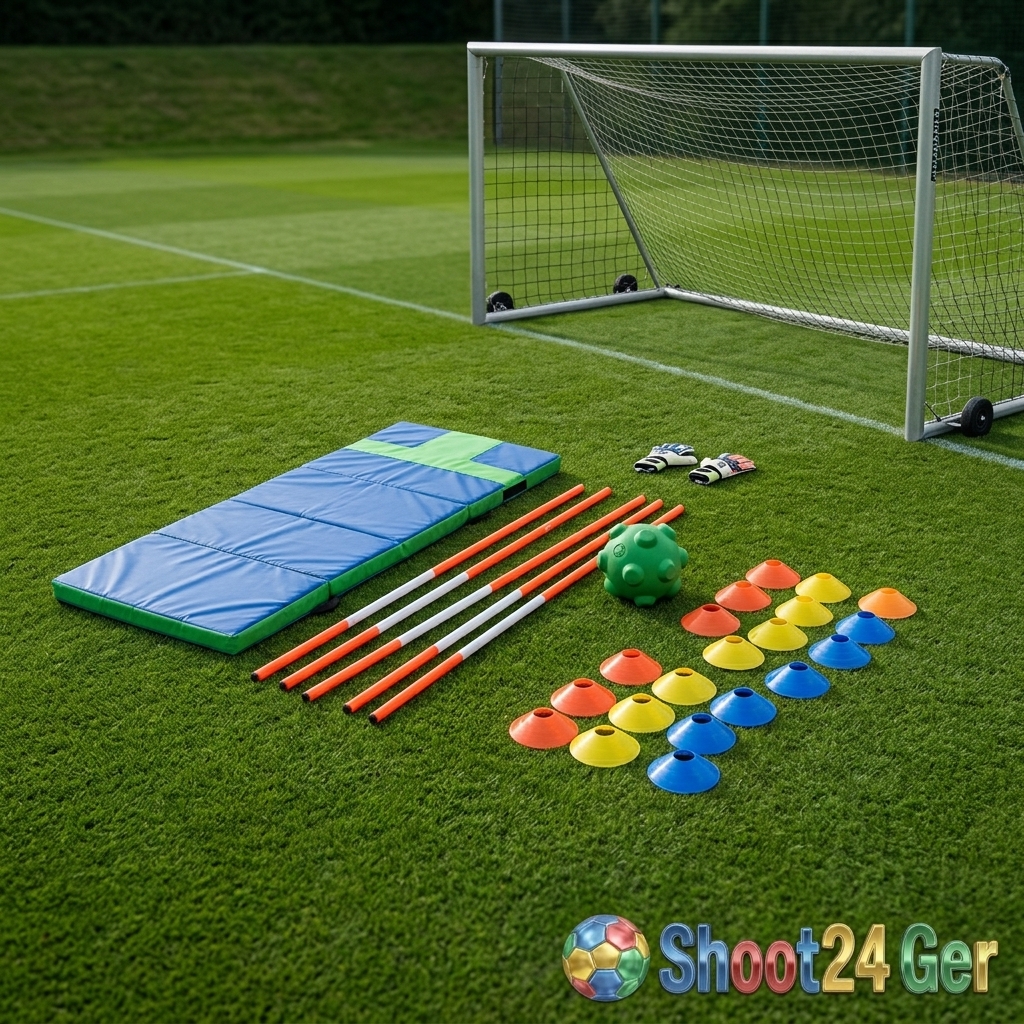
Goalkeeper training requires specialized equipment that addresses the unique physical and technical demands of the position — reactive shot-stopping, explosive diving, aerial handling, distribution accuracy, and the rapid decision-making that determines whether saves are made or goals conceded. While outfield training equipment focuses primarily on running, agility, and ball manipulation, goalkeeper training equipment must develop reflexes, diving technique, handling under pressure, and the explosive lateral movement that enables goalkeepers to cover the goal effectively across the full width and height of the target area they are responsible for protecting.
This comprehensive guide examines the specialized equipment available for goalkeeper training, covering reaction and reflex development tools, diving safety equipment, target and accuracy training aids, integration with standard training equipment, practical setup guidance for goalkeeper-specific training sessions, and purchasing recommendations for clubs, coaches, and individual goalkeepers investing in position-specific development equipment designed for effective and comprehensive goalkeeper training delivery at every competitive level from youth academy development programs through professional goalkeeper coaching environments and elite performance centers.
Reaction Training Equipment
Reaction Balls
Reaction balls are irregularly shaped balls — typically with six protruding knobs that create unpredictable bounce patterns — used to develop the reflexive catching and handling skills that goalkeepers need when shots take deflections, unexpected trajectories, or awkward bounces during match play. Throwing a reaction ball against a wall or floor produces unpredictable bounces that the goalkeeper must read and respond to reactively, developing the same essential anticipatory and reflexive skills required to confidently handle deflected shots, bobbling crosses, and the unpredictable ball movements that regularly occur during competitive matches at every level of football.
Reaction balls are available in different sizes — smaller balls increase difficulty by providing less catching surface and faster movement, while larger balls suit beginning goalkeepers developing basic reactive handling skills. Progressive size reduction as skill develops provides structured difficulty progression within this simple but effective training tool.
Irregular Bounce Rebounders
Irregular bounce rebounders with segmented or uneven surfaces produce unpredictable ball returns that simulate the deflected shots and unexpected ball trajectories that goalkeepers must handle during matches. These rebounders can be used for both throwing drills (goalkeeper throws ball at rebounder and handles the unpredictable return) and shooting drills (server shoots at rebounder while goalkeeper reacts to the deflected trajectory).
The intensity and unpredictability of rebounder training can be adjusted by varying the distance from the rebounder, the speed of the initial throw or shot, and the angle at which the ball contacts the rebounder surface. This wide adjustability enables carefully progressive difficulty that challenges goalkeepers meaningfully at every development level from youth beginners through experienced professional shot-stoppers seeking continued reflexive improvement.
Reflex Training Aids
Specialized reflex training aids include light-based reaction systems that flash different colored lights requiring the goalkeeper to respond to visual stimuli with specific movements — diving left for red, diving right for blue, staying central for green. These systems develop the visual processing speed and reactive decision-making that underpin effective shot-stopping. While more expensive than simple reaction balls, light-based reflex systems provide precise measurable reaction time data that enables objective and quantifiable tracking of reflex development improvement over training periods and competitive seasons.
Diving Safety Equipment
Goalkeeper Diving Mats
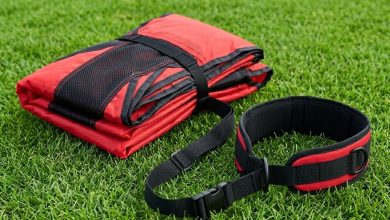
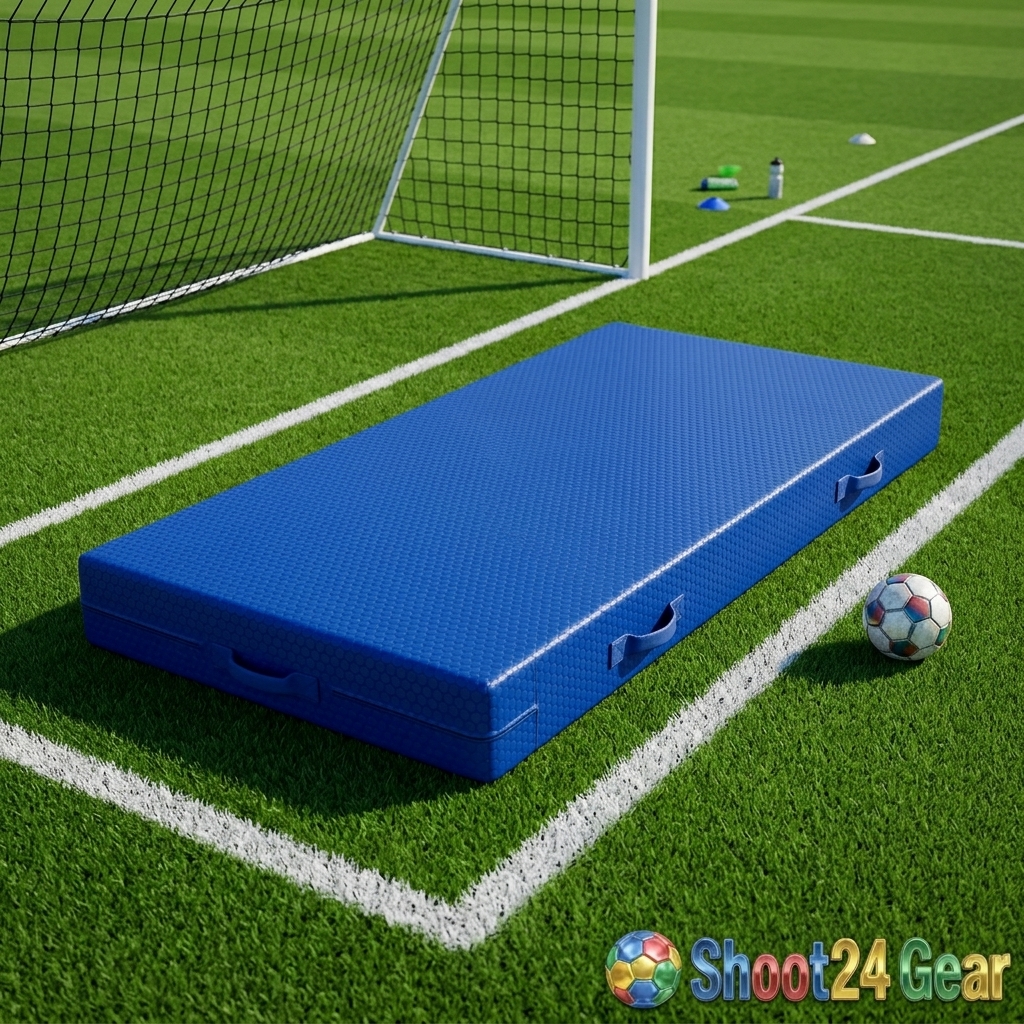
Diving mats provide cushioned landing surfaces that enable goalkeepers to practice full-extension diving saves without the impact stress of landing on natural grass or hard training surfaces. Regular diving practice on hard surfaces creates cumulative impact stress on shoulders, hips, and knees that can cause chronic soreness and overuse injury over time. Quality diving mats eliminate this unnecessary impact stress entirely, enabling significantly higher diving repetition volumes during dedicated goalkeeper sessions without the physical cost and cumulative injury risk of repeated hard-surface landings on inadequate training surfaces.
Quality goalkeeper diving mats use dense foam construction that absorbs impact without bottoming out, with durable covering material that withstands the abrasion of repeated sliding contact. Mats should be large enough to provide landing surface for full-extension dives in both directions — typically two to three meters in length and at least one meter in width. Thicker mats (eight to twelve centimeters) provide superior impact absorption for aggressive dive training compared to thinner exercise mats that compress too quickly under diving impact.
Training Surface Considerations
Natural grass provides reasonable shock absorption for diving practice during regular training but becomes inadequate during intensive goalkeeper sessions with high diving repetition counts. Artificial turf surfaces provide less shock absorption than natural grass and can cause skin abrasion during sliding dives — goalkeeper-specific diving mats are particularly important on artificial turf training surfaces. Indoor training on hard floors absolutely requires dedicated diving mats for any diving practice beyond the most basic footwork and positioning exercises that do not involve ground contact.
Target and Accuracy Training
Goal Target Sheets
Target sheets that attach across the goal frame create defined target zones for goalkeeper distribution accuracy training — punting, throwing, and goal kicks aimed at specific target areas. These targets develop the precise distribution that modern football increasingly demands from goalkeepers at every competitive level, who must now be capable of delivering accurate and purposeful distribution to teammates under significant opposition pressure rather than simply clearing the ball without directional intent.
Reduced-Size Goals
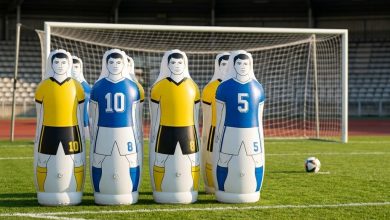
Smaller training goals focus shooting practice into compact target areas that challenge goalkeeper positioning, reaction speed, and handling in condensed spaces. Reduced-size goals suit one-versus-one training scenarios, close-range reaction drills, and footwork exercises where the goalkeeper works in a smaller area that demands faster lateral movement and more precise positioning than full-sized goal training.
Agility and Footwork Tools
Goalkeeper agility demands differ from outfield player agility — goalkeepers require lateral speed, explosive diving reach, and rapid recovery positioning rather than the multi-directional running agility that outfield agility training typically addresses.
Agility poles: Vertical poles positioned around the goal area create obstacles that goalkeepers must navigate during movement drills, developing the spatial awareness and body control needed for positioning adjustments around the goalmouth during corner kicks, free kicks, and open play situations where obstacles (defenders and attackers) restrict the goalkeeper’s movement path.
Agility ladders: Ladder footwork drills adapted for goalkeeper-specific movement patterns — lateral shuffles, crossover steps, and rapid directional changes — develop the precise footwork that underpins effective goalkeeper positioning. Position the ladder perpendicular to the goal line for lateral movement drills that replicate the sideways adjustments goalkeepers make during shot-stopping sequences.
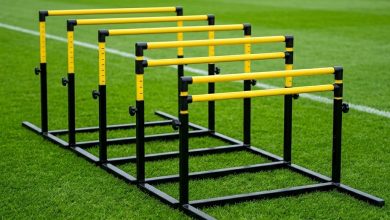
Training hurdles: Low hurdle exercises develop the explosive lateral and vertical power that goalkeepers need for diving saves and high-ball handling. Lateral hurdle jumps followed immediately by a diving save combine plyometric power development with position-specific skill execution for maximum training transfer.
Session Structure
Warm-up (15 minutes): Progressive handling exercises starting with ground-level saves, progressing through waist-height catches, then high catches and punching practice. Include footwork activation through ladder drills and low hurdle exercises that prepare the neuromuscular system for the explosive movements that follow.
Reaction and reflex block (15 minutes): Reaction ball exercises, irregular rebounder drills, and rapid-fire close-range save sequences that develop reflexive shot-stopping. This block should be performed early in the session when the goalkeeper is fresh and neural processing speed is at its highest.
Diving technique block (15 minutes): Structured diving practice on diving mats focusing on technique fundamentals — hand positioning, body shape, landing mechanics, and recovery speed. Progress from static starting positions to moving dive sequences that replicate match-play shot-stopping scenarios.
Distribution block (10 minutes): Target-based distribution practice — punting, throwing, and goal kicks aimed at specific targets or teammates. This block develops the distribution accuracy that modern goalkeeping demands while providing valuable lower-intensity active recovery from the significant physical demands of the preceding diving technique block.
Match-scenario integration (15 minutes): Game-realistic scenarios that combine multiple goalkeeper skills — positioning, shot-stopping, aerial handling, and distribution — in sequences that replicate match situations. This integration block ensures that individually developed skills transfer to the complex, unpredictable demands of competitive match play.
Equipment Inventory for Clubs
Essential equipment: Every club with dedicated goalkeeper coaching should invest in reaction balls (minimum three different sizes), a quality diving mat, twelve to eighteen training cones for goalkeeper-specific drill layouts, and a sufficient supply of footballs for continuous repetition without excessive ball retrieval interruption.
Recommended additions: An irregular bounce rebounder, goal target sheet, agility poles (six to eight), and low training hurdles (six adjustable) complete a comprehensive goalkeeper training equipment inventory that supports professional-quality goalkeeper coaching at any competitive level.
Premium additions: Light-based reflex training systems, additional diving mats for multiple goalkeeper simultaneous training, and video recording equipment for technique analysis represent premium investments that enhance goalkeeper development programs beyond the essential equipment baseline.
Individual Goalkeeper Equipment
Individual goalkeepers investing in personal training equipment for self-directed practice should prioritize equipment that enables productive solo training sessions when dedicated goalkeeper coaching is not available.
Priority purchases: A reaction ball and a football rebounder provide the most versatile solo goalkeeper training capability — reaction ball handling drills develop reflexes independently, while rebounder work enables solo diving practice, shot-stopping repetition, and handling exercises without requiring a server or training partner.
Secondary purchases: A personal diving mat enables intensive diving practice at any location without relying on club facilities providing appropriate landing surfaces. Portable and foldable mats designed specifically for transport enable productive dive training in garden, park, and indoor environments where surface conditions would otherwise prevent diving practice.
Youth Goalkeeper Development Equipment
Youth goalkeeper development requires age-appropriate equipment adaptations that support skill acquisition while maintaining the safety standards that developing athletes require.
Smaller equipment: Use appropriately sized reaction balls, lower hurdles, and scaled-down rebounders for youth goalkeepers whose physical dimensions and reflexive capabilities are still developing. Equipment scaled to youth proportions ensures training challenges are achievable and motivating rather than overwhelming, maintaining the engagement and confidence that sustained goalkeeper development requires.
Foam and soft equipment emphasis: Prioritize foam hurdles, soft reaction balls, and cushioned diving mats for youth goalkeeper training. The injury prevention benefits of soft equipment are particularly important for developing bodies that are more susceptible to impact stress than mature adult physiology. Investing in quality youth-appropriate equipment demonstrates commitment to player welfare that builds trust with players and parents.
Fun-based training: Design youth goalkeeper training sessions that use equipment in game-based and competitive formats rather than isolated repetitive drills. Competition-based reaction ball games, team diving challenges, and goalkeeper-specific small-sided games that use specialized equipment maintain the enjoyment and intrinsic motivation that sustains long-term goalkeeper development throughout the formative youth years.
Common Equipment Mistakes
Insufficient diving surface protection: Training diving repetitions without adequate surface protection — particularly on artificial turf or hard ground — creates cumulative impact injury that reduces goalkeeper availability and discourages the aggressive diving that effective goalkeeping demands. Invest in proper diving mats rather than expecting goalkeepers to perform high-volume diving on inadequate surfaces.
Over-relying on shot-stopping drills: Goalkeeper training that focuses exclusively on shot-stopping neglects the broader skill set — distribution, positioning, communication, aerial handling, and decision-making — that modern goalkeeping requires. Equipment selection and session design should support comprehensive skill development rather than narrowly focusing on save-making repetition at the expense of other essential goalkeeper capabilities.
Neglecting footwork equipment: Agility ladders, cones, and hurdles are often considered outfield player equipment, but they provide critical footwork development for goalkeepers whose positioning and lateral movement determine their ability to be in position to make saves. Include footwork equipment as standard components of every goalkeeper training session equipment setup.
Ignoring distribution practice: Target sheets and distribution accuracy practice equipment receives less attention than reaction and diving tools, yet distribution accuracy increasingly determines goalkeeper value in modern football systems that demand goalkeepers contribute to possession play. Ensure equipment inventories include distribution training aids alongside the more visually exciting reaction and diving equipment.
Equipment Maintenance
Diving mat care: Clean diving mat surfaces regularly to remove mud, grass, and moisture that accelerate surface material degradation. Store mats flat or loosely rolled — avoid folding that creates permanent creases weakening the foam structure. Inspect mat covering material for tears or abrasion damage that could expose the internal foam to moisture absorption and deterioration.
Reaction ball care: Reaction balls require minimal maintenance beyond cleaning after muddy-surface use. Replace reaction balls when the irregular protrusions become worn smooth, as this reduces the bounce unpredictability that provides the training benefit. Quality rubber reaction balls maintain their shape and bounce characteristics for several seasons of regular use.
General equipment inspection: Before each goalkeeper training session, inspect all equipment for damage, wear, or safety concerns. Rebounders with loose net tension, hurdles with cracked bases, and diving mats with torn surfaces should be repaired or replaced before use to maintain safe training conditions throughout every session.
Cross-Training Equipment Integration
Goalkeeper training benefits from integration with general fitness and conditioning equipment that develops the physical qualities underlying goalkeeper performance.
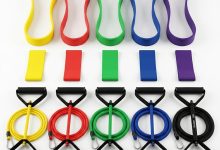
Resistance bands: Band-resisted lateral movements develop the hip and leg strength that powers explosive diving and lateral shuffling. Band-resisted reaching exercises develop the shoulder and core stability that enables controlled full-extension saves. Resistance bands provide portable, position-specific strength training that complements goalkeeper skill work within the same training session.
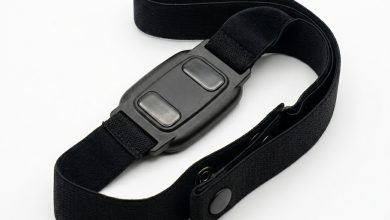
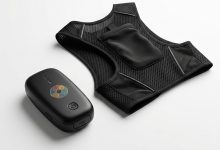
Heart rate monitors: Monitoring goalkeeper heart rate during training provides physiological load data that helps coaching staff manage training intensity, session demands, and recovery requirements effectively. Goalkeeper training involves intermittent high-intensity bursts (diving, sprinting, jumping) interspersed with lower-intensity periods (positioning, walking, waiting), creating a distinctive heart rate profile fundamentally different from outfield player training patterns that requires careful position-specific interpretation and goalkeeper-appropriate training load assessment.
Mental Training Integration
Goalkeeper equipment should support mental skill development alongside physical and technical training. Reaction training equipment inherently develops concentration, focus, and anticipatory reading of visual cues that are fundamentally mental skills expressed through physical responses. Designing training sequences that require goalkeepers to make decisions (which direction to dive, whether to come forward or stay on the line) under time pressure develops the decision-making capability that distinguishes outstanding goalkeepers from technically competent but mentally slower alternatives.
Progressive pressure increases — faster reaction ball throws, closer rebounder positioning, multiple simultaneous stimuli — develop the concentration maintenance and composure under pressure that goalkeepers must demonstrate during the most critical match situations when consequences for errors are highest and pressure is most intense.
Summary
Goalkeeper training equipment addresses the specialized demands of the position through reaction development tools, diving safety equipment, accuracy training aids, and agility equipment adapted for goalkeeper-specific movement patterns. Build comprehensive goalkeeper equipment inventories that enable structured, progressive development across all goalkeeper skill areas — reflexes, diving technique, handling, distribution, and positioning.
Prioritize reaction training tools and quality diving safety equipment as the foundational initial investments for any goalkeeper training program, adding accuracy training aids and agility equipment as budgets and program requirements allow for expanded capabilities. The quality of goalkeeper training is directly influenced by equipment availability — adequate equipment enables higher repetition volumes, more varied training stimuli, and safer practice conditions that collectively accelerate goalkeeper development at every competitive level.