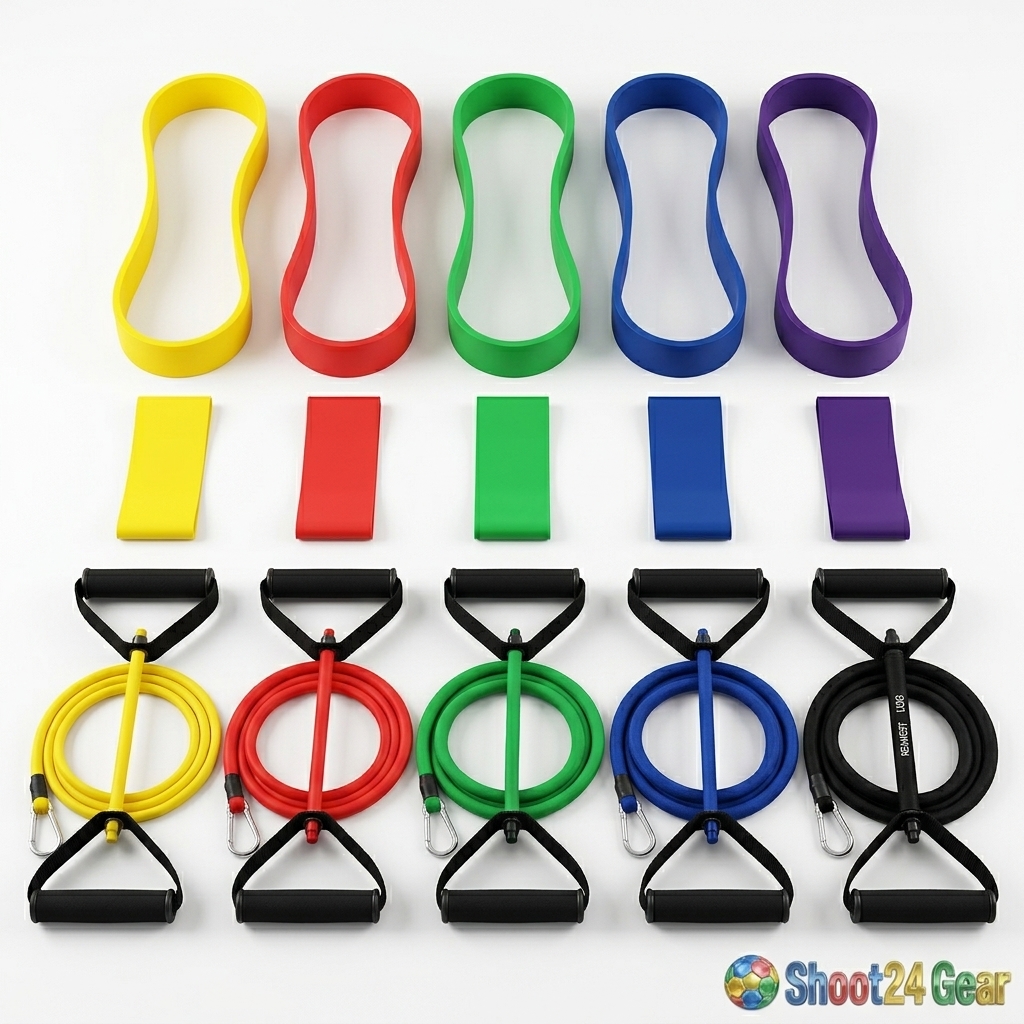
Resistance bands are among the most versatile and portable strength training tools available for football players, providing progressive resistance through elastic tension that develops muscular strength, power, stability, and flexibility without the bulk, weight, and facility requirements of traditional gym equipment. Their portability enables strength training in any location — training ground, hotel room, home, or pitch-side — making resistance bands invaluable for maintaining strength training consistency throughout travel schedules, pre-season camps, and periods when gym access is unavailable or impractical for football-specific conditioning work.
This comprehensive guide examines resistance bands for football-specific applications, covering the different band types and resistance levels available, football-specific exercises that develop position-relevant physical qualities, injury prevention and rehabilitation applications, proper band selection for different training objectives and experience levels, maintenance and safety guidelines, and practical purchasing recommendations for individual players, coaches, and clubs building resistance training equipment inventories for comprehensive football strength development programs.
Types of Resistance Bands
Loop Bands (Power Bands)
Loop bands — continuous circular bands of varying widths and thicknesses — are the most versatile resistance band type for football strength training. These large loops can be used for lower-body exercises (squats, deadlifts, lateral walks), upper-body exercises (pull-apart, rows, presses), and full-body compound movements that develop the integrated strength football demands. Loop bands are available in resistance levels from light (approximately five to fifteen kilograms of resistance) through extra-heavy (over forty-five kilograms), enabling progressive loading across the full strength development spectrum.
Mini Bands (Hip Circles)
Mini bands — small loop bands typically placed around the thighs or ankles — specifically target hip stabilizer muscles (gluteus medius, hip external rotators) that are critical for knee stability, lateral movement power, and single-leg strength in football. Mini band exercises are widely used in football warm-up routines and injury prevention programs because the hip stabilizer muscles they target directly influence knee tracking, landing mechanics, and directional change stability — all movement qualities that affect injury risk during football’s dynamic and unpredictable movement demands.
Tube Bands with Handles
Tube bands with attached handles provide comfortable grip points for upper-body exercises and rotational movements. The handle attachment enables exercise variations that loop bands do not accommodate as ergonomically — cable-style rows, chest presses, shoulder rotations, and woodchop movements that develop the rotational core strength relevant to kicking power, throwing, and physical duelling in football.
Flat Therapy Bands
Flat therapy bands — wide, flat sheets of elastic material — are primarily used in rehabilitation and flexibility applications. These bands provide the gentlest resistance available and are standard equipment in physiotherapy and rehabilitation settings where injured players require carefully controlled, low-resistance exercise progression during return-to-play programs. Flat bands are also useful for dynamic stretching routines that combine flexibility development with light resistance activation.
Resistance Level Selection
Light resistance (yellow/red bands): Suitable for warm-up activation exercises, rehabilitation exercises, and beginners developing proper exercise technique. Light bands provide enough resistance to activate target muscle groups without creating fatigue that compromises exercise form. Use light bands for mini band warm-up routines, shoulder stabilization exercises, and early-stage rehabilitation movements.
Medium resistance (green/blue bands): Appropriate for the majority of football-specific strength exercises for intermediate-level athletes. Medium bands challenge muscular strength and endurance while allowing controlled movement quality throughout full exercise ranges. This resistance level suits most players for regular strength maintenance and development work.
Heavy resistance (purple/black bands): Suitable for strong, experienced athletes performing heavy compound exercises — banded squats, deadlifts, and pressing movements that develop maximum strength. Heavy bands require established exercise technique and adequate baseline strength to use safely and effectively. Progress to heavy bands only after demonstrating consistent technique quality with medium resistance.
Extra-heavy resistance: Specialist bands for advanced strength training applications — heavy squats, assisted pull-ups with substantial body weight offset, and partner-resisted sport-specific exercises. Extra-heavy bands suit professional and semi-professional athletes with significant strength training experience and established exercise competency.
Football-Specific Exercises
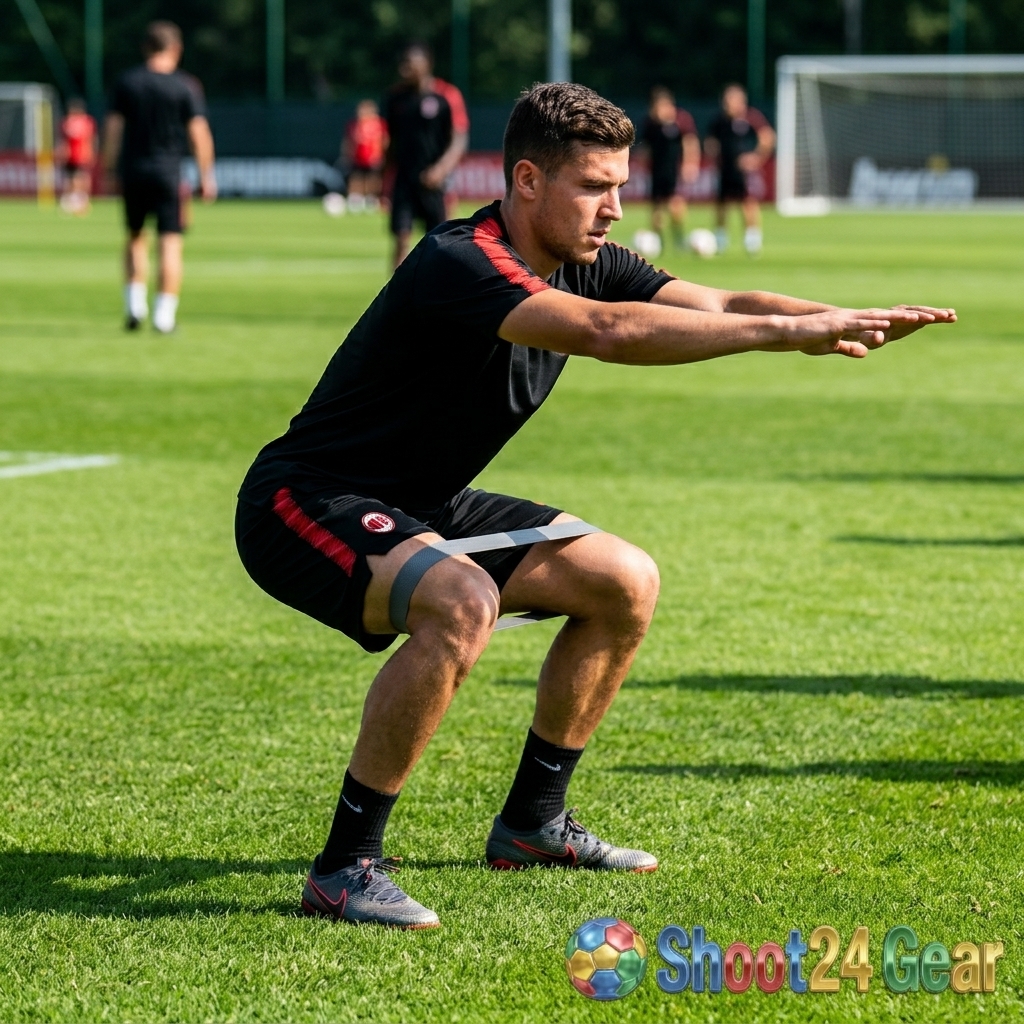
Banded lateral walks: Place a mini band around the thighs just above the knees and perform lateral walking steps maintaining band tension throughout. This exercise develops hip abductor strength and gluteal activation critical for lateral movement stability, directional changes, and knee protection during the cutting and turning movements football demands throughout every training session and match.
Banded squats: Loop a power band around both thighs during squat exercises to create outward resistance that challenges the hip stabilizers alongside the primary squat muscles. This combination develops integrated lower-body strength with hip stability — directly relevant to the loaded squat positions that occur during acceleration, deceleration, and directional change in football movement patterns.
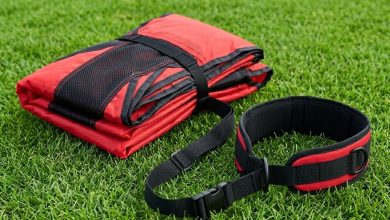
Resisted sprints: Attach a loop band around the waist with a partner or anchor point providing resistance during sprint starts and acceleration drills. Band-resisted sprints develop explosive acceleration power — similar to speed parachute training but with the added versatility of adjustable resistance through band selection and stretch distance. Band resistance increases with distance (as the band stretches further), providing progressive overload during the acceleration phase of each sprint repetition.
Rotational core exercises: Anchor a tube band at waist height and perform rotational movements — woodchops, Pallof presses, rotational holds — that develop the core rotational strength and anti-rotation stability that powers kicking, throwing, and maintains trunk stability during physical contact situations in football.
Shoulder stabilization: External rotation exercises using light tube bands develop the rotator cuff strength that protects the shoulder joint during goalkeeper diving, outfield throwing, and physical contact. These exercises are particularly important as prehabilitation for goalkeepers whose diving and handling demands place significant stress on shoulder structures.
Injury Prevention Applications
Warm-up activation: Mini band exercises during warm-up activate the hip stabilizer muscles that protect the knee during dynamic football movements. Research consistently demonstrates that hip stabilizer activation before football activity reduces the risk of anterior cruciate ligament (ACL) injuries and other knee injuries that result from inadequate hip and gluteal muscle activation during rapid directional changes and landing movements.
Hamstring injury prevention: Nordic hamstring exercise progressions using resistance bands for assisted eccentric lowering develop the eccentric hamstring strength that protects against the hamstring strains that are among football’s most common and recurrent injuries. Band-assisted Nordic exercises enable gradual eccentric loading progression that builds the hamstring resilience needed for the high-speed running demands football involves.
Ankle stability: Resistance band exercises targeting the muscles that control ankle inversion and eversion develop the dynamic ankle stability that reduces ankle sprain risk — football’s most frequent acute injury. Simple band-resisted ankle exercises performed regularly during warm-up or cool-down periods provide protective benefit that significantly reduces time lost to ankle injury across competitive seasons.
Rehabilitation Applications
Resistance bands are standard rehabilitation equipment used by physiotherapists and sports medicine professionals for managing football injury recovery programs.
Early-stage rehabilitation: Flat therapy bands provide gentle, controlled resistance for the earliest stages of post-injury exercise progression when heavier resistance would risk re-injury or compromise healing tissue. The continuous, smooth resistance profile of elastic bands is inherently safer than weight-based resistance for recovering structures because the resistance reduces proportionally as the band returns to resting length, preventing sudden load peaks that could damage healing tissue.
Progressive loading: The availability of multiple resistance levels enables systematic loading progression through rehabilitation milestones — from initial gentle movement with light bands through moderate strengthening with medium bands to full return-to-play conditioning with heavy bands. This progressive loading capability within a single equipment type simplifies rehabilitation programming and equipment requirements.
Integration with Football Training
Pre-training activation: Five to eight minutes of mini band exercises before football training activates hip stabilizers, gluteal muscles, and core musculature that support safe and effective movement during the main session. This activation routine reduces injury risk and improves movement quality from the first training activity. Incorporate band activation as a standard component of every training warm-up protocol throughout the entire season.
Pitch-side strength circuits: Resistance band exercises as circuit stations within football training sessions enable strength development without leaving the training ground for gym facilities. Band squats, lateral walks, core rotations, and shoulder exercises can be performed between football-specific drills, combining strength and skill development within a single cohesive session format.
Recovery session inclusion: Light resistance band exercises during recovery sessions promote blood flow to recovering muscles while providing low-intensity strength stimulus that maintains muscle activation without creating additional fatigue. This active recovery approach supports faster recovery between demanding training sessions and competitive matches throughout the congested fixture periods.
Maintenance and Safety
Band inspection: Inspect resistance bands before each use for nicks, tears, thin spots, or discoloration that indicates material degradation. Band failure during exercise — when a worn band snaps under tension — creates significant injury risk from the sudden elastic recoil. Replace any band showing visible wear immediately rather than continuing to use degraded equipment.
UV and temperature protection: Store bands away from direct sunlight and extreme temperatures that accelerate latex and rubber degradation. Indoor, cool, dry storage maximizes band lifespan. Outdoor storage in hot or sunny conditions can reduce band lifespan by fifty percent or more compared to protected indoor storage conditions.
Cleaning: Wipe bands with damp cloth after use to remove sweat and dirt. Excessive moisture and perspiration residue can degrade band material over time. Allow bands to dry completely before storage to prevent the mold and material deterioration that develop when damp elastic materials are stored in sealed containers or bags.
Purchasing Guidance
Individual starter set: A set of three to four loop bands spanning light through heavy resistance, plus one mini band, provides comprehensive resistance training capability for individual players. This starter set covers warm-up activation, strength development, and rehabilitation exercise requirements within a single affordable and highly portable package.
Team set: Clubs should invest in bulk mini band sets (one per player) for standardized warm-up activation protocols, plus multiple sets of loop and tube bands at various resistance levels for circuit training stations and individualized strength programming. Budget for regular replacement as bands are consumable equipment with finite lifespans that decrease with frequency of use.
Common Mistakes
Using excessive resistance: Selecting bands that are too heavy for the exercise being performed forces compensatory movement patterns that compromise exercise effectiveness and increase injury risk. Resistance band exercises should be performed with controlled, smooth movement quality throughout the full range of motion — if movement quality deteriorates, reduce resistance by selecting a lighter band.
Neglecting band inspection: Using worn or damaged bands that subsequently snap during exercise creates significant injury risk from elastic recoil. The convenience and simplicity of resistance bands sometimes encourages complacent safety practices — establish a pre-use inspection routine that checks for visible wear, thin spots, and material degradation before every training session.
Incomplete range of motion: Performing partial movements with heavy bands rather than full-range movements with appropriate bands limits the exercise’s training benefit and may create muscle imbalances by strengthening only portion of the movement range. Always select resistance levels that permit complete, controlled movement through the full intended exercise range.
Inconsistent training: Resistance band exercises provide the most benefit when performed consistently — sporadic use produces minimal adaptation. Integrate band exercises into daily or near-daily routines (particularly mini band warm-up activation) for cumulative injury prevention and strength development benefit that inconsistent use cannot achieve.
Youth Player Applications
Resistance bands are particularly well-suited for youth strength training because they provide scalable resistance without the injury risks associated with heavy weight training for developing bodies.
Age-appropriate strength development: Light and medium resistance bands provide strength training stimulus appropriate for youth athletes whose musculoskeletal systems are still developing. Band resistance allows progressive loading that develops strength without the joint compression and injury risks that heavy barbell and dumbbell training may present for young athletes, particularly during rapid growth periods when bones and joints are most vulnerable.
Movement quality focus: Resistance bands naturally encourage controlled, quality movement because the elastic resistance increases gradually rather than presenting sudden heavy loads. This progressive resistance characteristic makes bands ideal for teaching proper exercise technique to young athletes who are learning fundamental movement patterns that will support their strength training progression into more advanced methods as they mature physically.
Fun and engagement: The versatility and novelty of resistance band exercises maintains training engagement for young players who may find traditional gym-based strength training monotonous or intimidating. Creative band exercises that incorporate partner work, competitive challenges, and sport-specific movement patterns keep youth strength training enjoyable and motivating.
Position-Specific Band Applications
Goalkeepers: Band-resisted diving movements develop the explosive lateral power that underpins effective shot-stopping. Shoulder external rotation exercises with light tube bands protect the rotator cuff structures that absorb significant stress during repeated diving and high-ball catching throughout goalkeeper training sessions and competitive matches.
Defenders: Mini band exercises targeting hip stabilizers develop the lateral strength and knee stability critical for defensive positioning, tackle execution, and recovery runs. Banded lateral shuffle exercises replicate the defensive movement patterns that centre-backs and full-backs perform throughout matches while building the muscular endurance that maintains defensive positioning quality through full ninety-minute performances.
Midfielders: Rotational core exercises with tube bands develop the trunk stability and rotational power that support sustained passing accuracy, long-range passing, and the physical resilience needed for the box-to-box running demands that central midfield positions require throughout competitive matches.
Forwards: Banded hip extension exercises develop the powerful hip drive that produces explosive acceleration for attacking runs and sprinting behind defensive lines. Resisted sprint exercises with loop bands develop the first-step quickness and acceleration power that separates forwards from their markers in the critical first few meters of attacking movement.
Travel Training Kits
Resistance bands are the cornerstone of portable training kits that enable strength maintenance during travel, away fixtures, and pre-season camps where gym access may be limited or unavailable.
Essential travel kit: One light mini band, one medium loop band, one heavy loop band, and one tube band with handles provides comprehensive strength training capability in a package that weighs less than one kilogram and fits easily in any equipment bag. This minimal kit enables full-body strength maintenance during travel periods without requiring any additional equipment or facility access.
Pre-match activation: Mini band exercises in hotel rooms or match venues before away fixtures activate the neuromuscular system for optimal performance without requiring access to the team’s regular training facility. This portable activation routine ensures consistent physical preparation regardless of match venue or travel logistics.
Band Exercise Combinations
Warm-up circuit (8 minutes): Mini band lateral walks (twenty steps each direction), mini band squats (fifteen repetitions), banded hip thrusts (fifteen repetitions), tube band shoulder rotations (ten each direction). This standardized circuit activates all major muscle groups and stabilizer systems before football training for comprehensive neuromuscular preparation and injury risk reduction.
Strength circuit (15 minutes): Loop band squats (twelve repetitions), banded Romanian deadlifts (twelve repetitions), tube band rows (twelve repetitions), Pallof press (ten each side), banded push-ups (ten repetitions). Three rounds with sixty seconds rest between rounds provides effective full-body strength training using exclusively band-based resistance suitable for pitch-side delivery alongside football training sessions.
Summary
Resistance bands provide versatile, portable strength training capability that supports football-specific strength development, injury prevention, and rehabilitation within a single equipment category. Build a comprehensive band inventory spanning light through heavy resistance levels, incorporating loop bands for general strength, mini bands for hip stabilization, and tube bands for rotational core and upper-body development.
Integrate band exercises into warm-up activation routines, pitch-side strength circuits, and recovery sessions to maximize training efficiency and physical development without requiring dedicated gym facility access. Maintain bands through regular inspection and proper storage, replacing worn bands immediately to prevent injury from band failure during exercise execution.