Puma occupies a distinctive position in football apparel — the established third brand behind Nike and Adidas that consistently provides competitive quality at pricing that frequently and meaningfully undercuts the two dominant market leaders. While Puma lacks the dominant market share of Nike and Adidas, their football apparel range delivers genuine performance features, recognizable brand identity, and comprehensive team ordering capability that makes Puma a legitimate and often financially advantageous alternative for individual footballers and clubs at every competitive level.
This guide examines Puma’s complete football apparel range, the dryCELL technology that underpins their performance garments, their team ordering ecosystem, and how Puma’s offerings compare to the Nike and Adidas alternatives that dominate the market. The objective is to provide the comprehensive and detailed understanding needed to make fully informed decisions about whether Puma apparel genuinely suits your individual requirements or your club’s specific team outfitting needs and budget constraints.
dryCELL Technology
dryCELL is Puma’s proprietary moisture management system — their equivalent to Nike’s Dri-FIT and Adidas’s AEROREADY. The technology uses engineered polyester microfibers that transport perspiration from the skin surface through the fabric structure to the exterior face, where it spreads across a wider area for rapid evaporation.
In practical performance, dryCELL delivers moisture-wicking effectiveness that is functionally equivalent to Dri-FIT and AEROREADY during football training use. Independent testing shows negligible differences between the three technologies in sweat transport speed and evaporation rate under conditions that simulate football training intensity. The choice between dryCELL, Dri-FIT, and AEROREADY is not a performance decision — all three provide adequate moisture management for football use.
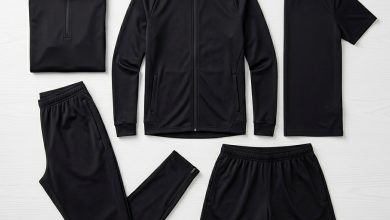
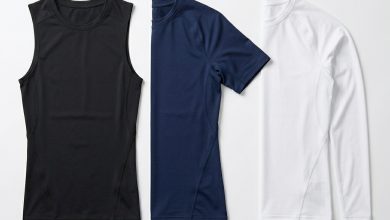
dryCELL is applied across Puma’s entire football apparel range — training jackets, pants, training tops, polo shirts, base layers, and match kit. This consistent technology application means every Puma football garment provides moisture management, eliminating the need to individually verify technology inclusion on each specific product as you might with brands that apply their premium technology selectively across different price tiers.
Product Range
teamFINAL Training Range
Puma’s teamFINAL collection represents their premium training apparel tier — the equivalent of Nike’s Strike range or Adidas’s Tiro Competition tier. teamFINAL products use enhanced dryCELL fabric with refined construction details, providing the highest-quality training experience within Puma’s range. The teamFINAL range includes training jackets, pants, half-zip training tops, and shorts with premium finishes and construction.
teamGOAL Training Range
teamGOAL serves as Puma’s primary mid-range training collection — comparable to Nike Academy and Adidas Tiro Training tier. This range delivers the core dryCELL technology with durable construction at accessible pricing. For most footballers and teams, teamGOAL provides the optimal balance of performance, quality, and value within the Puma ecosystem.
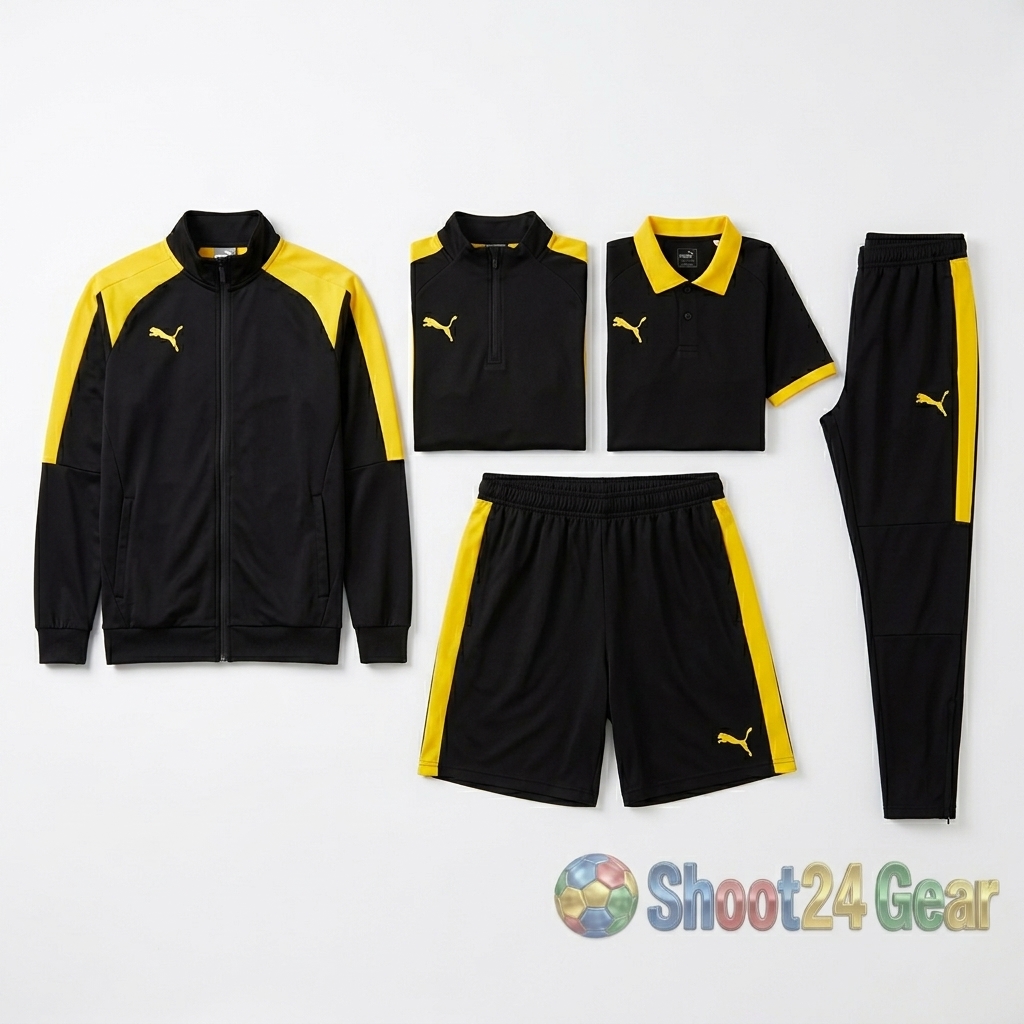
The teamGOAL range covers every training wardrobe need — track jackets, training pants, quarter-zip tops, training shorts, short-sleeve training tops, and polo shirts. The comprehensive product range means clubs can outfit entire squads exclusively from teamGOAL without needing to source complementary items from other ranges or brands.
individualFINAL Range
The individualFINAL collection serves players seeking premium Puma training wear for personal use rather than team outfitting. This range features bold, contemporary designs with more fashion-forward styling than the team-oriented ranges. individualFINAL products suit footballers who want performance training apparel with distinctive visual identity for personal training sessions, gym work, and casual football-related wear.
LIGA Collection
LIGA represents Puma’s most accessible football apparel tier — budget-friendly products that provide essential dryCELL technology without the refined construction quality and premium design details of the higher-tier ranges. LIGA products suit youth teams, recreational league players, and budget-conscious individual footballers who want Puma brand identity and basic moisture management at the lowest available pricing.
Fit Characteristics
Puma football apparel generally fits slightly roomier than Nike equivalents and comparably to Adidas sizing. This roomier fit suits footballers who find Nike’s slimmer approach too restrictive, and it provides natural layering allowance without requiring size adjustments for wearing base layers beneath training tops and jackets.
The fit consistency across Puma’s football range is reliable — a medium in teamGOAL jacket matches the same body measurements as a medium in teamGOAL pants and training tops. This consistency simplifies both individual purchasing and team ordering, where predictable sizing reduces returns and exchanges.
Puma’s women’s football apparel uses women’s-specific sizing and proportions rather than simply scaling down men’s patterns. Women’s Puma football apparel provides shaped fits with proportionally adjusted shoulders, waist, and torso length that serve women’s athletic builds more effectively than unisex or scaled-down men’s alternatives.
Team Ordering Ecosystem
Puma’s team ordering system is comprehensive and often provides a financial advantage over Nike and Adidas equivalents — the same quality tier of product at lower per-unit pricing, particularly at volume order levels.
Teamwear configurator: Puma offers online teamwear configuration tools that allow clubs to visualize their team apparel selections before ordering. These configurators show badge placement, color options, and complete kit layouts, helping clubs make informed visual decisions before committing to orders.
Customization options: Full embroidery, heat transfer, and sublimation printing are available across the teamGOAL and teamFINAL ranges. Badge placement areas are designated and reinforced for customization, ensuring professional results that maintain garment integrity.
Volume pricing: Puma’s team ordering pricing structure is competitive, with volume discounts that scale more aggressively than some competitors. For clubs comparing total squad outfitting costs across brands, Puma frequently delivers the lowest total investment for equivalent quality and technology levels.
Reorder reliability: Puma maintains production consistency within product generations, ensuring mid-season reorders for new squad members match existing team apparel. This reorder reliability is critically important for clubs that add new players during the active playing season and need precisely matching training apparel to maintain complete squad consistency in team appearance.
Puma vs Nike and Adidas
Understanding how Puma compares to the two dominant brands helps evaluate whether Puma’s offerings suit your specific requirements.
Technology: dryCELL provides equivalent moisture management to Dri-FIT and AEROREADY. No brand holds a meaningful technology advantage in standard training apparel — the performance differences between the three technologies are negligible in real-world football use.
Construction quality: At equivalent price tiers, Puma construction quality matches Nike and Adidas. The stitching, fabric weight, and durability of teamGOAL products are comparable to Nike Academy and Adidas Tiro Training products. Premium Puma products match the construction quality of premium competitors.
Design and aesthetics: Puma’s design approach tends toward bolder, more contemporary styling compared to the cleaner, more conservative designs that Nike and Adidas typically offer. Puma uses more pronounced branding elements and occasionally more fashion-forward colorways. This design approach appeals to some and not others — it represents a genuine aesthetic difference rather than a quality difference.
Price positioning: Puma’s primary competitive advantage is pricing. At equivalent quality and technology levels, Puma products frequently cost less than Nike and Adidas alternatives. This meaningful pricing advantage is most significant in team ordering contexts where the per-unit savings multiply substantially across full squad-size orders.
Brand perception: Nike and Adidas carry stronger brand prestige in football apparel. Some players and clubs prefer the perceived status of Nike or Adidas branding. This perception is a legitimate consideration for clubs where brand image matters for recruitment, sponsorship, or organizational identity — but it reflects market positioning rather than product quality differences.
Puma Ambassador and Club Partnerships
Puma’s visibility in professional football through club partnerships — including Manchester City, AC Milan, Borussia Dortmund, and multiple national teams — provides validation of their apparel quality at the highest competitive level. These high-profile partnerships clearly demonstrate that Puma’s technology and construction quality reliably meet the exacting demands of professional football at the highest competitive level, which provides confidence for amateur and grassroots purchasers that the same products will serve their requirements adequately.
The professional endorsement also means that current Puma football apparel designs draw from the same design language as products worn by elite players and clubs, providing amateur footballers with access to the same visual identity and product technology used at the professional level.
Care and Longevity
Puma football apparel follows the same care requirements as Nike and Adidas equivalents — cold water machine wash with mild detergent, no fabric softener, air dry when possible. The dryCELL technology maintains its moisture-wicking properties through proper care, degrading at similar rates to competing technologies under equivalent washing and drying conditions.
The longevity of Puma football apparel is competitive with Nike and Adidas products at equivalent price tiers. Budget-tier LIGA products show wear sooner than premium teamFINAL products, as expected from the construction quality difference between tiers, but within each tier Puma garments maintain their performance and appearance comparably to their branded competitors.
Sustainability Initiatives
Puma has made significant commitments to sustainability in their football apparel production. Current Puma football garments increasingly incorporate recycled polyester — derived from post-consumer plastic bottles processed into performance-grade fibers — without compromising dryCELL effectiveness or garment durability.
The RE:Collection initiative applies recycled materials specifically to football apparel production. Garments produced under this initiative meet the same performance specifications as standard production while reducing virgin material consumption. For clubs and individuals where environmental responsibility influences purchasing decisions, Puma’s sustainability credentials provide additional justification for selecting Puma over competitors with less transparent environmental practices.
Puma publishes sustainability data for their football product lines, providing transparency about recycled material content, manufacturing practices, and environmental impact. This data transparency allows environmentally conscious purchasers and organizations to make genuinely informed decisions based on verifiable and auditable data rather than relying on vague general marketing claims about environmental responsibility.
Specific Product Highlights
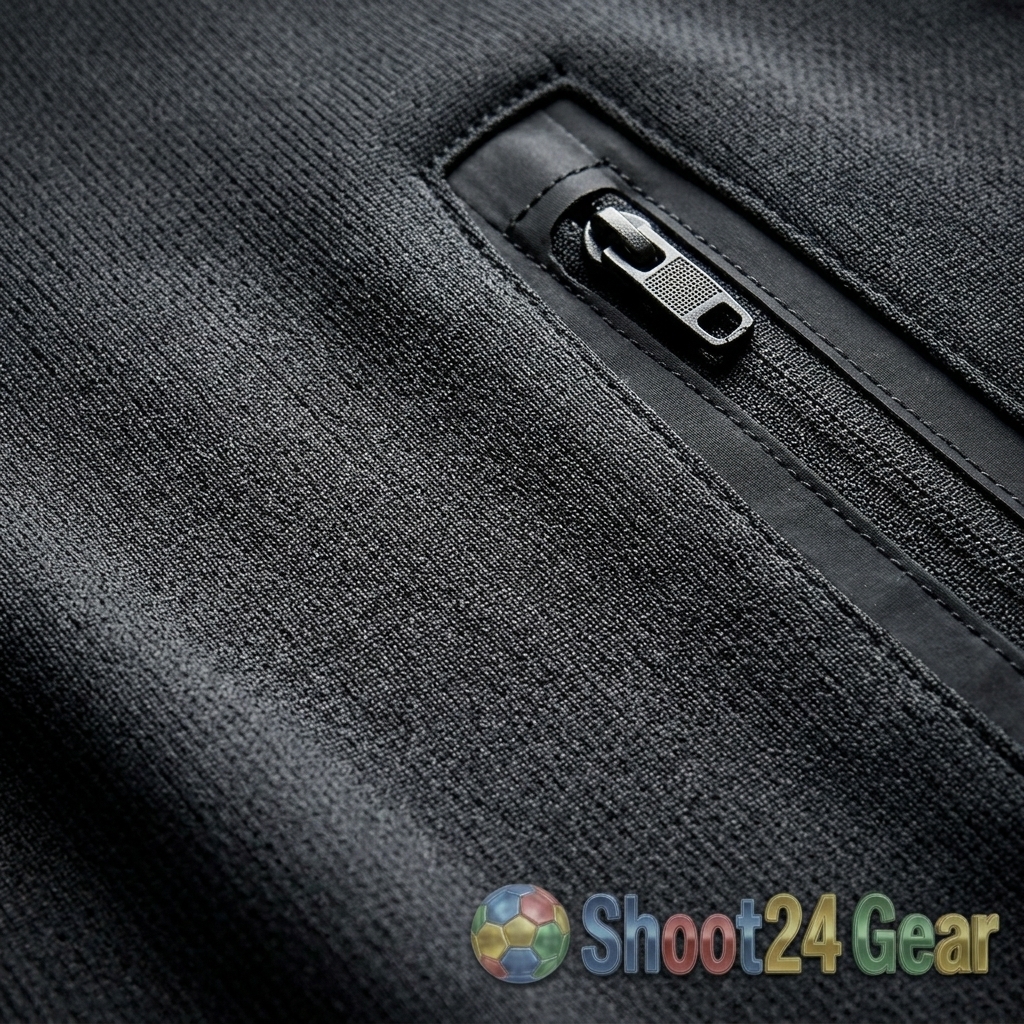
teamGOAL Sideline Jacket: Puma’s signature training jacket offering — a full-zip design with dryCELL technology, stand-up collar, and zippered pockets. The jacket provides moderate wind resistance and moisture management suitable for most training conditions. Available in a comprehensive colorway range that supports team color matching for squad orders.
teamGOAL Training Pants: Tapered training pants with elasticated ankle cuffs and zippered ankle openings for easy on-off over football boots. The modern fit follows the same tapered silhouette established by Nike and Adidas training pants, with dryCELL moisture management throughout. The genuinely comfortable fit and reliable construction quality make these a strong and credible alternative to Tiro pants at competitive pricing.
teamGOAL Quarter-Zip Top: A versatile mid-layer training top that functions as a standalone training garment in moderate conditions or as an insulating layer beneath a jacket in cold weather. The quarter-zip provides ventilation control during variable-intensity training sessions. The brushed interior provides comfortable feel against the skin during extended wearing periods.
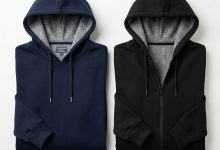
teamFINAL Casuals Hoodie: Puma’s team hoodie offering combines casual comfort with team customization capability. Available in pullover and full-zip designs, the Casuals Hoodie suits team travel, warm-up and cool-down use, and casual representation. The cotton-blend construction provides the soft comfort that casual wear requires while maintaining adequate moisture management for light activity.
Common Puma Purchasing Mistakes
Mixing Puma tiers within a team order: Purchasing some items from teamFINAL and others from teamGOAL within the same team order creates visible inconsistency in fabric quality, design detailing, and color matching. While both tiers use dryCELL technology, the visual differences between tiers are noticeable when garments are worn together. Order all team items from the same tier for visual consistency.
Assuming Nike or Adidas sizing: Footballers transitioning from Nike to Puma may find Puma’s roomier fit unexpected if they assume sizes will be identical. Consult Puma’s specific size charts rather than assuming cross-brand size equivalence. Similarly, Adidas users will find Puma sizing comparable but not identical in all dimensions.
Overlooking teamGOAL in favor of teamFINAL: Some clubs automatically select Puma’s premium tier assuming it represents significantly better quality. For most team training use, teamGOAL provides equivalent functional performance to teamFINAL at meaningfully lower pricing. The premium tier’s refined details and enhanced fabric primarily benefit match-day presentation rather than daily training functionality.
Ignoring Puma due to brand perception: Some footballers dismiss Puma without evaluating the actual products because Nike and Adidas dominate market visibility. This brand-based dismissal misses the genuine value that Puma offers — equivalent technology at lower pricing. Evaluate Puma products on their individual merits and value proposition rather than automatically defaulting to larger brands based solely on market presence and advertising visibility.
Budget Optimization with Puma
Puma’s pricing advantage creates opportunities for budget-optimized team outfitting strategies that provide comprehensive coverage at reduced total investment.
Complete squad packages: Puma offers configured squad packages that bundle training jackets, pants, tops, shorts, and polo shirts at combined pricing that reduces per-item cost further than individual purchasing. These package deals represent the most cost-effective approach to comprehensive squad outfitting within the Puma ecosystem.
Multi-season planning: Puma’s product generation cycles provide opportunities for advance purchasing at clearance pricing. When new teamGOAL or teamFINAL generations launch, previous generation products are available at substantial discounts. Planning team apparel purchasing around these product transitions maximizes the budget savings available through Puma’s already competitive pricing.
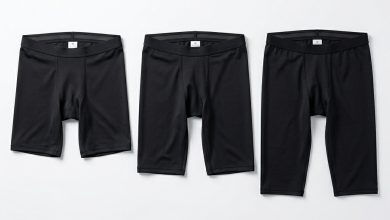
Supplementary items from LIGA: Training bibs, basic training shorts, and practice tops that experience heavy wear can be sourced from the budget LIGA range without compromising team appearance for items that are worn only during training and not for team presentation. This tiered purchasing approach — teamGOAL for presentation items, LIGA for training consumables — optimizes budget allocation across the full apparel requirement.
Cold and Wet Weather Puma Options
Puma’s cold weather and wet weather ranges provide seasonal protection that complements the standard training range.
teamFINAL Winter Jacket provides padded insulation for cold weather warm-up and cool-down use. The jacket uses synthetic fill insulation with dryCELL treatment for moisture management even in insulated garments. teamGOAL Rain Jacket provides waterproof protection with sealed seams and adequate breathability for training-intensity wet weather use.
These seasonal additions extend the Puma ecosystem to cover all-weather training requirements without sourcing cold weather or rain gear from competing brands. For clubs committed to brand consistency across their apparel range, Puma’s seasonal coverage eliminates the mixed-brand appearance that occurs when teams source specific weather items from different manufacturers.
Summary
Puma football apparel provides genuine performance features, comprehensive range coverage, and competitive team ordering capability at pricing that frequently undercuts Nike and Adidas alternatives without meaningful quality compromise. The dryCELL technology delivers equivalent moisture management to competing technologies, and the construction quality at each price tier matches the competition.
Consider Puma seriously for team outfitting where budget optimization genuinely matters, for individual purchases where the slightly roomier fit or bolder design aesthetic appeals, and and for any purchasing situation where equivalent performance at demonstrably lower cost represents clear practical value for your budget. The brand’s numerous professional football partnerships at the highest level clearly validate its quality credentials, and the comprehensive product range covers every conceivable training and team presentation need.
Product ranges, available colorways, technology features, and specific product specifications all change between seasons and product generations as Puma continues developing their football apparel range. Always verify current offerings, pricing, customization options, and size availability on the official Puma website or through authorized team sales representatives before making any purchasing decisions for individual or team football apparel.