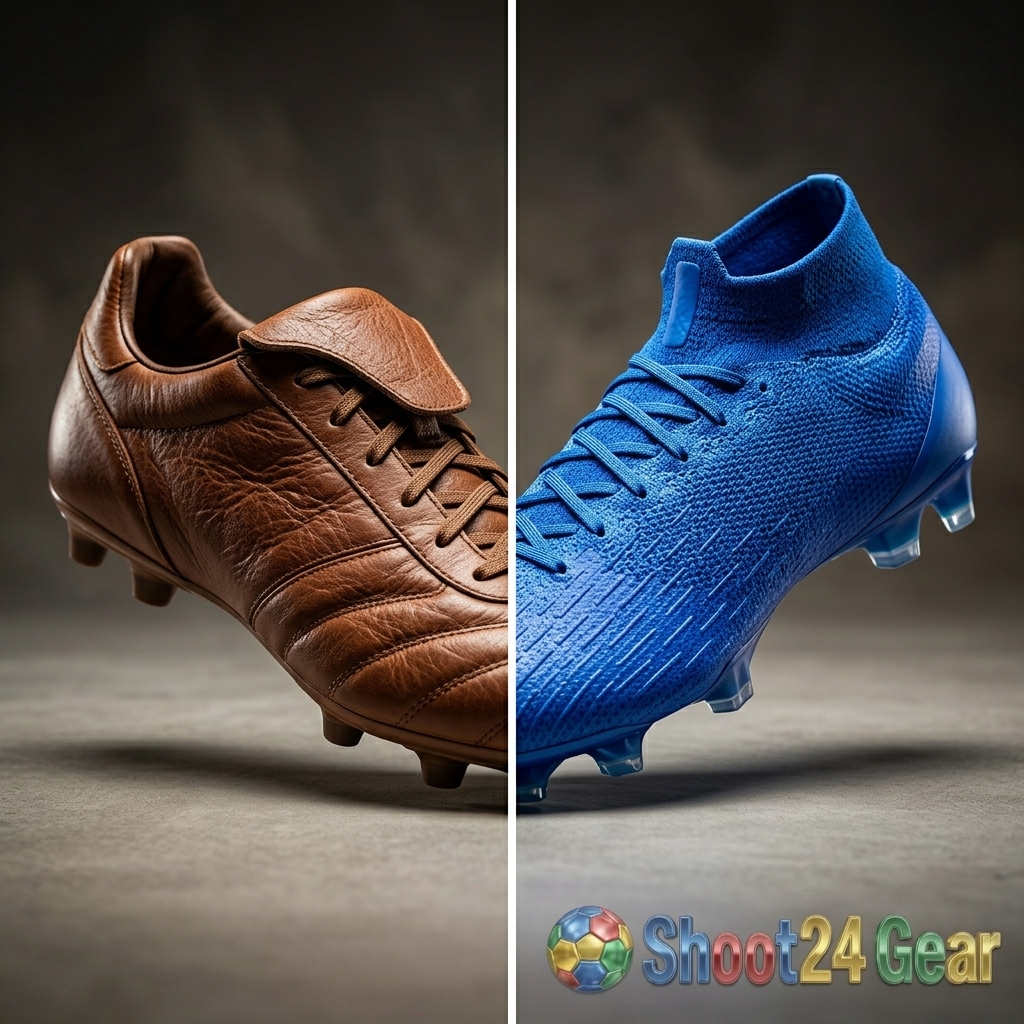
The leather versus synthetic debate in football boots has shifted considerably over the past two decades. In the early 2000s, leather was the default and synthetic materials were seen as inferior compromises — cheaper, less comfortable, and with poor ball feel. Today, synthetics dominate the professional game, and leather boots occupy a specialist niche for players who specifically value natural material properties.
Neither material is objectively superior. Each offers genuine advantages that the other cannot replicate, and each imposes limitations that the other avoids. The right choice depends on your playing style, maintenance tolerance, playing surface, climate, and personal preferences regarding how a boot should feel on your foot and against the ball.
This guide examines both material categories across every dimension that matters for match and training performance.
Ball Feel and Touch
This is the dimension where the debate is most passionate, and where leather maintains its clearest advantage.
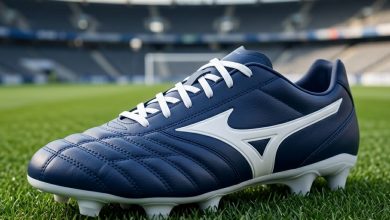
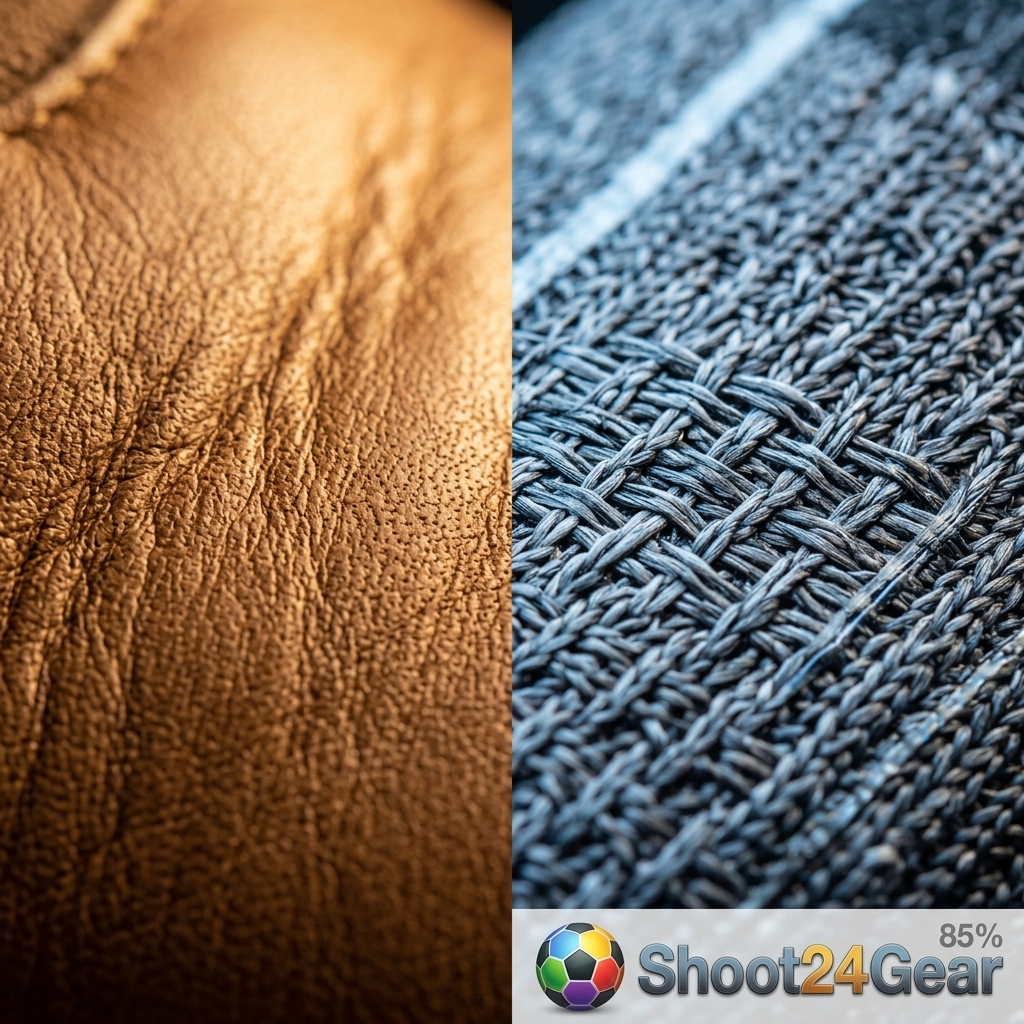
Natural leather — particularly kangaroo leather (K-leather) — transmits ball feedback to your foot with a directness and warmth that synthetic materials do not match. When you trap a ball with a leather upper, you feel the ball’s surface texture, its spin, and the pressure of contact in a nuanced way. The leather deforms slightly around the ball at the moment of contact, creating a micro-cradle that holds the ball for a fraction of a second longer than a rigid synthetic surface would. This deformation is what leather advocates describe as “feel” — a tactile richness that goes beyond simple proximity to the ball.
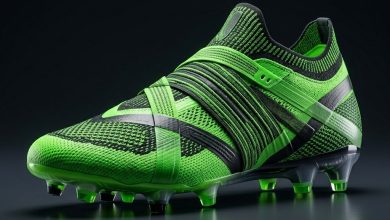
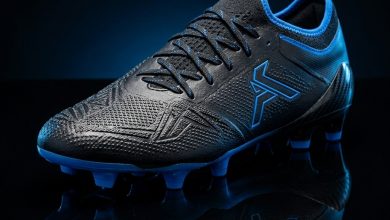
Synthetic materials have improved dramatically in touch quality. Modern thin synthetics like Nike’s Flyknit, Adidas’s Speedskin, and Puma’s MATRYXEVO provide close-to-foot ball proximity that delivers good feedback. But they transmit ball contact differently — more sharply, less cushioned, and without the organic deformation that leather provides. The ball bounces off a synthetic surface with slightly more predictability but slightly less control than it does off leather.
The difference is most noticeable during first touches at pace, receiving driven passes, and striking the ball in cold conditions. In these situations, leather’s natural cushioning absorbs energy that synthetic materials transfer directly through to the foot. Whether this matters depends on your skill level and playing style — highly technical players often notice and value the difference, while players focused on other attributes may not find it significant.
Weight
Synthetic boots hold a clear advantage in weight reduction. The lightest synthetic boots — the Adidas X Crazyfast, Nike Mercurial Vapor, and Puma Ultra — weigh between 170 and 200 grams per boot. The lightest leather boot — the Mizuno Morelia Neo III — achieves approximately 195 to 210 grams, which is competitive but represents the absolute minimum achievable with natural leather.
Most leather boots sit in the 220 to 250 gram range — 30 to 70 grams heavier than speed-focused synthetics. This weight difference is functionally negligible for most amateur players, but for professionals and serious competitive players who sprint repeatedly during matches, the cumulative energy savings of lighter boots are measurable over ninety minutes.
The weight advantage of synthetics comes from material engineering — synthetic sheets can be manufactured at precise thicknesses impossible to achieve with natural leather while maintaining structural integrity. A synthetic upper can be made as thin as 0.5mm in non-critical areas, while leather needs minimum thicknesses to maintain its structural properties.
Durability
Durability comparisons between leather and synthetic boots are more nuanced than they initially appear, because different types of durability matter in different contexts.
Abrasion resistance: Synthetic materials generally resist surface abrasion better than leather, particularly on artificial turf. The abrasive texture of synthetic pitch surfaces wears leather away faster than it wears synthetic uppers. Players who train primarily on artificial turf will notice shorter leather boot lifespans.
Structural integrity: Leather stretches over time, which can be either a benefit (custom fit) or a drawback (loss of shape). Synthetic materials maintain their original dimensions more consistently. A synthetic boot at six months old has essentially the same shape as when new; a leather boot at six months old has stretched and molded to match the wearer’s foot.
Failure modes: Leather typically degrades gradually — thinning, softening, and eventually developing thin spots or holes. This gradual degradation gives warning before failure. Synthetic materials can fail more suddenly — delamination, peeling, or cracking can occur with less obvious precursors.
On natural grass with proper care, a premium leather boot can outlast a synthetic alternative. On artificial turf with minimal maintenance, a synthetic boot typically lasts longer. The context determines which material proves more durable in practice.
Weather Resistance
Weather performance is a clear synthetic advantage. Synthetic materials do not absorb water in the way that natural leather does. In rain, a synthetic boot maintains its weight and feel consistently, while a leather boot absorbs moisture, gains weight, and may soften beyond its optimal feel.
Modern leather boots have addressed this problem partially. The Adidas Copa Pure uses a synthetic backing on its leather panels. The Nike Tiempo Legend employs Flytouch Plus foam behind the calfskin. The Puma King uses foam-backed K-leather. These backing layers limit moisture absorption, but they do not eliminate it entirely.
The Mizuno Morelia, with its minimally-lined K-leather, remains the most weather-sensitive option among premium leather boots. In consistently wet climates, this is a genuine practical limitation.
Cold weather also affects the materials differently. Leather stiffens in cold temperatures, requiring a longer warm-up period before it reaches optimal flexibility. Synthetic materials maintain their properties more consistently across temperature ranges, performing similarly whether the pitch temperature is 5 degrees or 25 degrees Celsius.
Maintenance Requirements
Maintenance is where the practical difference between leather and synthetic boots becomes most apparent in daily use.
Leather boots require active care after every session: removing insoles for drying, opening laces, stuffing with newspaper after wet use, and periodic conditioning to maintain suppleness. Failure to maintain leather leads to stiffening, cracking, and accelerated deterioration. The maintenance routine takes five to ten minutes per session — not burdensome, but not optional either.
Synthetic boots require minimal maintenance. After playing, a quick wipe-down and air drying is sufficient. No conditioning, no careful drying protocol, no special storage requirements. The boot maintains its properties regardless of how much or little care you provide.
For players who train daily, the cumulative time difference is meaningful. A player who trains five days per week spends roughly forty to fifty minutes per week on leather boot maintenance — time that synthetic boot owners spend doing something else entirely. Over a season, this adds up to hours of maintenance that serves no performance purpose beyond preserving the leather material.
Fit and Adaptation
Leather’s ability to mold to foot shape is one of its most compelling characteristics and one that synthetics cannot replicate.
A new leather boot begins as a generic foot shape and gradually transforms into a personalized fit that matches your specific foot contours. This process — involving stretching at pressure points, conforming to toe shapes, and adapting to bunions or other irregularities — creates a semi-custom fit that no off-the-shelf synthetic boot can match.
Synthetic boots, by contrast, offer a fixed fit. The material does not stretch or mold meaningfully over time. What you experience on the first wearing is essentially what you will experience on every subsequent wearing. This consistency is either an advantage (predictable, no break-in required) or a limitation (no adaptation to foot irregularities), depending on how well the boot’s factory shape matches your individual foot.
Modern knit synthetics offer a middle ground. Materials like Nike Flyknit and Adidas Primeknit have some inherent stretch that accommodates minor foot shape variations. They do not mold like leather — they stretch slightly and then maintain that stretched shape — but they are more adaptive than rigid synthetics or laminated materials.
Cost Considerations
At the elite tier, leather and synthetic boots occupy similar price ranges. A Nike Mercurial Vapor Elite costs roughly the same as a Nike Tiempo Legend Elite. An Adidas X Crazyfast Elite is comparably priced to an Adidas Copa Pure Elite. The Mizuno Morelia Neo III sits at the top of the leather market and is among the most expensive boots from any brand.
The cost difference emerges in total ownership cost. Leather boots require conditioning products, typically last shorter periods on artificial turf, and demand replacement when the leather stretches beyond functional limits. Synthetic boots have lower maintenance costs and more predictable lifespans.
For players who rotate between two pairs of boots — a common practice at higher levels — the total annual investment is similar regardless of material choice. The pattern typically involves using newer boots for matches and older pairs for training, extending the usable life of premium match boots regardless of material.
Environmental Considerations
Both materials carry environmental considerations worth acknowledging. Kangaroo leather involves animal products, which raises ethical questions for some players. The kangaroo leather industry is regulated in Australia, where the animals are wild-harvested rather than farmed, but opinions on the ethics of using animal-derived materials vary.
Synthetic materials are petroleum-derived products that do not biodegrade readily. The environmental footprint of manufacturing synthetic boots includes chemical processing, energy-intensive production, and plastic waste at end of life. Some brands have begun introducing recycled synthetic materials, but the majority of synthetic boots use virgin materials.
Neither option is environmentally neutral. Players for whom environmental impact is a deciding factor should research specific brands’ sustainability initiatives and material sourcing practices.
Material Choice by Position
While personal preference ultimately governs material choice, certain positions tend to benefit from specific material characteristics more than others.
Goalkeepers: Leather boots offer comfort during long periods of standing and waiting, and the cushioned touch can benefit distribution. However, goalkeepers frequently dive and slide, creating abrasion that wears leather faster. Synthetic boots with padding — like control-category options — often provide the best balance for keepers.
Center-backs: Leather’s wider fit and comfortable construction suit the physical demands of central defense. The touch benefits aid distribution from the back. On natural grass, leather is a strong choice for center-backs. On artificial turf, synthetic alternatives may prove more practical for durability.
Fullbacks and wing-backs: These positions demand a balance of speed, comfort, and durability. Synthetic boots tend to serve fullbacks well because of the high-intensity running combined with the need for durable materials that withstand constant acceleration and deceleration.
Central midfielders: This position arguably benefits most from leather’s touch advantages. Midfielders who control matches through passing precision find that leather’s ball feel directly enhances their primary contribution. Central midfield is where leather boots maintain their strongest case.
Wingers and forwards: Speed-dependent attackers overwhelmingly benefit from lightweight synthetic boots. The weight savings and explosive soleplate designs found in synthetic speed boots directly serve the demands of wide attacking play. Technical forwards who prioritize finishing accuracy over pace may find leather beneficial, but this is the exception rather than the rule.
Hybrid Approaches
Several modern boots attempt to combine leather and synthetic characteristics, and understanding these hybrid approaches adds context to the pure material comparison.
The Adidas Copa Pure uses Fusionskin — kangaroo leather bonded to a synthetic backing. This hybrid provides leather touch with improved structural stability and weather resistance. It is perhaps the most successful current hybrid, offering a genuine leather feel with reduced maintenance requirements.
The Nike Tiempo Legend uses calfskin leather with Flytouch Plus foam backing. The foam adds cushioning and structural support while the calfskin provides natural touch. The result is a boot that feels like leather to the foot but behaves with some of the consistency of a synthetic during weather changes.
The Puma King uses K-leather with foam backing throughout. The generous padding creates a comfortable leather boot that sacrifices some touch purity for all-day wearability.
These hybrid boots represent practical compromises for players who want leather benefits without leather’s full maintenance burden. They do not deliver the pure, uncompromised leather experience of a Mizuno Morelia, but they provide a version of leather touch that is more practical for everyday use.
The Experience Factor
Beyond measurable specifications, there is a subjective dimension to the leather-synthetic choice that data cannot fully capture. Many players describe leather boots as having a “soul” — a warmth and character that develops over time as the material molds and adapts. The boot becomes personal in a way that a consistent, unchanging synthetic cannot.
This is not mysticism — it reflects the real physical process of leather adaptation. A boot that has stretched to match your exact foot shape, softened at your specific flex points, and developed a unique wear pattern genuinely fits differently from a boot fresh from the box. The experience of wearing a fully broken-in leather boot is distinct from wearing a synthetic boot at any stage of its life.
Whether this experience matters to you is entirely personal. Some players value it highly; others are completely indifferent. Both positions are valid.
Making the Choice
The leather versus synthetic choice reduces to a few honest questions:
How important is ball feel? If touch sensitivity is your highest priority and you notice the difference between leather and synthetic during ball contact, leather serves you better. If ball feel is one factor among many, synthetics offer a more balanced package of characteristics.
Will you maintain the boots? Leather requires commitment to care. If you will not spend five minutes after each session on maintenance, leather will deteriorate rapidly and you will not experience its advantages. Synthetics tolerate neglect.
What surface do you play on? Natural grass favors leather — longer lifespan, better traction dynamics, and more comfortable temperature interaction. Artificial turf favors synthetic — better abrasion resistance, more consistent grip, and no moisture absorption from the crumb rubber infill.
Do you prioritize speed? If weight reduction and soleplate responsiveness matter most, synthetic speed boots are the appropriate choice. Leather boots can be lightweight (the Morelia Neo III proves this), but the lightest synthetic boots still hold a meaningful gram advantage.
Do you have foot fit issues? If standard boot shapes do not accommodate your foot comfortably, leather’s molding ability may solve fit problems that synthetic boots perpetuate. The ability to stretch and conform to unusual foot shapes is a genuine practical advantage for players with non-standard feet.
Summary
The leather versus synthetic debate does not have a winner. Leather provides unmatched ball feel, adaptive fit, and a playing experience that many players find deeply satisfying. Synthetic materials provide lighter weight, better weather resistance, lower maintenance, and more consistent long-term performance.
The best boot for you is the one that serves your specific priorities. If you have never tried a premium leather boot, doing so at least once is worthwhile — even if you ultimately prefer synthetic, the experience gives you a reference point for understanding what leather advocates value. Conversely, leather purists who dismiss synthetics categorically may find that modern thin synthetics have closed the touch gap more than they expect.
Product specifications, pricing, and material compositions change between generations. Verify current details directly on official brand websites before making any equipment decisions.