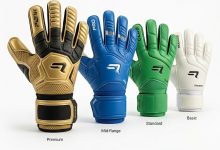
Junior goalkeeper gloves serve young goalkeepers who are developing their skills, building confidence, and forming the habits that will define their goalkeeping for years to come. The equipment choices made for young goalkeepers during this formative period matter more than many parents and coaches realize — gloves that fit poorly, provide inadequate protection, or degrade too quickly can create negative experiences that discourage young players from committing to the goalkeeping position.
This guide examines what makes junior goalkeeper gloves different from adult models, how to select appropriate gloves for young goalkeepers at different stages of development, and how to balance adequate quality with the practical economic reality that rapidly growing hands require frequent and regular glove replacement throughout the developmental years.
How Junior Gloves Differ from Adult Gloves
Junior goalkeeper gloves are not simply scaled-down versions of adult models. While they share the same basic structure — latex palm, backhand construction, wrist closure — they differ in several important ways designed to accommodate the specific needs of young players.
Latex compound: Junior gloves typically use firmer, more durable latex than adult match gloves. This considered choice reflects the practical and economic reality that young goalkeepers need their gloves to survive frequent training sessions and the rough handling that comes with youth play. Premium soft latex that wears out after a few matches represents poor value when the young goalkeeper may outgrow the gloves before the latex degrades, making durability the sensible priority over maximum grip.
Construction simplicity: Junior gloves use simpler construction than adult premium models. The cut designs tend toward wider, more forgiving fits that accommodate growing hands and varying finger proportions. Wrist closures are simpler and easier to fasten independently — important for young goalkeepers who need to put on and adjust their own gloves without requiring any adult assistance during matches and organized training sessions.
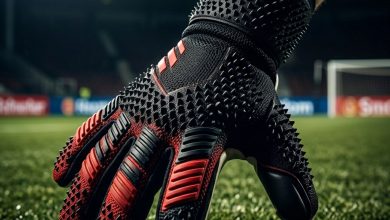
Finger protection: Some junior gloves include finger protection systems — plastic or semi-rigid inserts along the back of each finger that resist hyperextension. These protective spine systems effectively prevent young fingers from bending dangerously backward during catches and powerful shots, reducing the risk of finger injuries that can be particularly significant for developing hands. Finger protection is more commonly included in junior models than adult models because young goalkeepers’ developing hand strength provides less natural resistance to hyperextension forces.
Padding: Junior gloves often include additional backhand padding compared to adult models. Young goalkeepers are still developing proper catching technique, meaning they experience more ball impact on the backs of their hands during learning. Extra backhand padding cushions these learning-stage impacts and prevents the hand pain that can discourage young players from attempting catches.
Youth Sizing
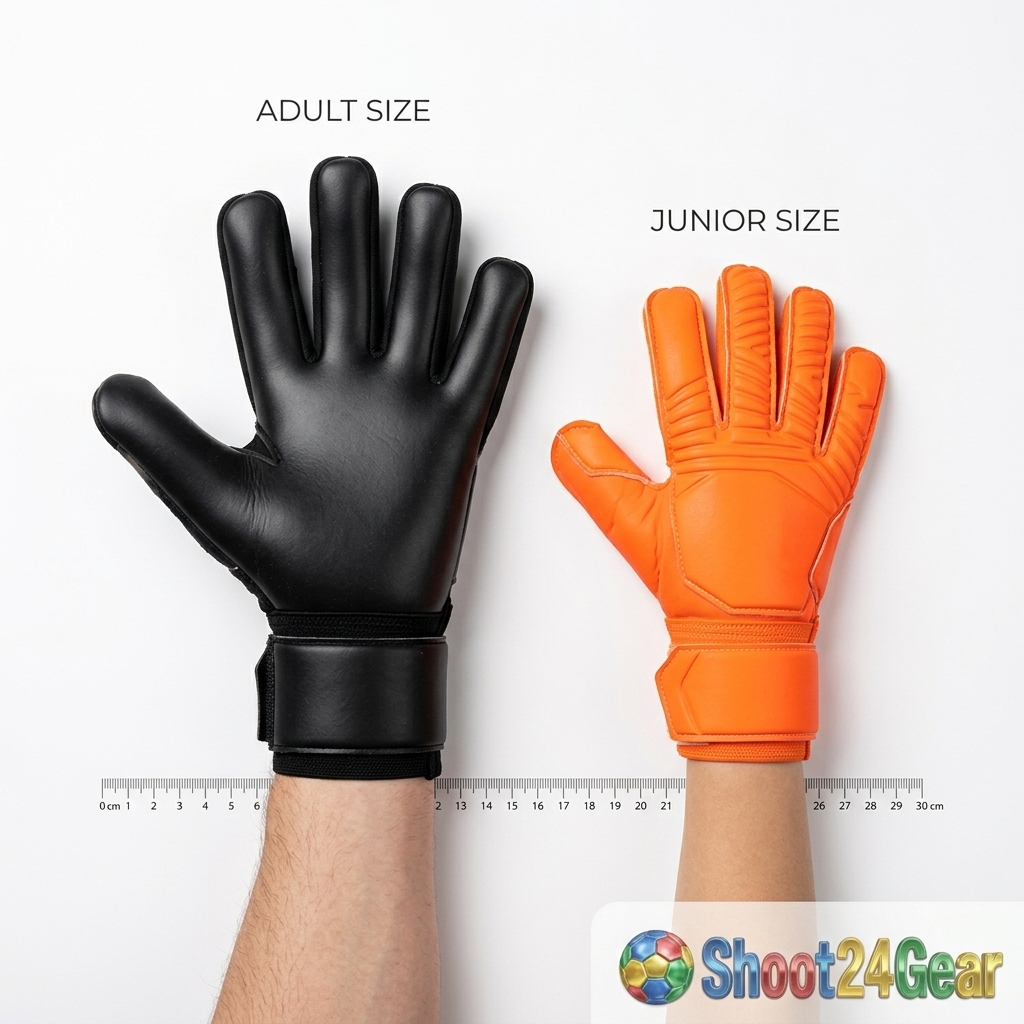
Junior goalkeeper glove sizes typically range from size 3 to size 7, with the transition to adult sizing occurring around sizes 6 to 8 depending on the brand and the individual young goalkeeper’s hand development.
Measuring a young goalkeeper’s hand follows the same process described in the sizing guide — wrap a measuring tape around the widest part of the hand across the knuckles and compare to the brand’s junior size chart. However, youth sizing adds the complication of growth, which creates a tension between proper current fit and practical longevity.
The Growth Dilemma
Parents naturally want to maximize the value of any glove purchase by buying slightly larger gloves that the child can “grow into.” This instinct is understandable but creates problems for the young goalkeeper’s development.
Oversized gloves reduce ball feel, create inconsistent catching because the glove shifts on the hand during saves, and prevent the development of confident hand positioning that correctly sized gloves encourage. A young goalkeeper wearing oversized gloves is effectively learning with equipment that works against them — every catch is slightly less secure, every save slightly less controlled, and the feedback they receive from each ball contact is less reliable.
The recommended approach is purchasing gloves that fit correctly now, accepting that replacement will be needed when the hands grow. For most young goalkeepers between ages 8 and 14, hand growth requires new gloves every four to eight months during active growth periods. This replacement frequency is comparable to other growing-related equipment replacements (football boots, shin guards) and should be budgeted similarly.
Age-Size Guidelines
While individual hand sizes vary significantly among children of the same age, general guidelines provide starting reference points for parents purchasing first goalkeeper gloves without prior sizing data.
Ages 5-7: Typically sizes 3 to 4. Very small gloves with basic construction and simple closure systems. Focus should be on comfortable fit and basic hand protection rather than performance features.
Ages 8-10: Typically sizes 4 to 6. The developmental stage where goalkeeping-specific skills begin forming. Gloves should provide adequate grip for building catching confidence and sufficient padding for diving without fear.
Ages 11-13: Typically sizes 5 to 7. The transition stage where some young goalkeepers begin approaching adult hand sizes. Performance features become more relevant as technique develops and competitive expectations increase.
Ages 14-16: Typically sizes 6 to 9. Many teenagers at this stage transition to adult gloves, though some continue using junior-specific models at the upper end of the junior size range. Performance expectations at this age justify higher-quality latex and more refined construction.
Development-Appropriate Features
Not all features that benefit adult goalkeepers benefit young goalkeepers. Selecting age-appropriate features supports the young goalkeeper’s development without introducing complexity they cannot use effectively.
Finger protection for beginners: Young goalkeepers who are new to the position benefit from finger protection systems because their catching technique has not yet developed the hand strength and positioning that naturally protects against hyperextension. As technique improves through training and experience, finger protection can be gradually removed to allow greater finger flexibility and more natural catching feel.
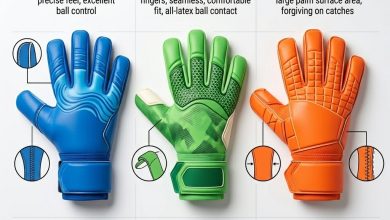
Wider cuts for developing hands: Young hands change shape as they grow — proportions between palm width and finger length shift during development. Wider cut designs accommodate these changing proportions more forgivingly than tight negative cuts, providing comfortable fit across a broader range of hand shapes within a given size.
Simple wrist closures: Young goalkeepers need to manage their own equipment independently during matches and training. Complex closure systems that require precise adjustment are less practical than simple wraparound straps that fasten quickly and securely with minimal effort.
Visual appeal: While not a performance feature, the visual design of junior gloves matters for young players’ motivation and confidence. A young goalkeeper who feels confident and excited about their equipment is more likely to commit enthusiastically to training and matches. Brands that offer appealing junior designs — bright colors, distinctive patterns, designs that resemble professional gloves — provide psychological value alongside functional performance.
Training vs Match Gloves for Youth
The adult practice of maintaining separate match and training gloves applies differently to young goalkeepers depending on their competitive level and training frequency.
Recreational youth goalkeepers: Players who train once or twice per week and play casual matches do not need separate match and training gloves. A single pair of mid-range junior gloves serves both purposes adequately at recreational level. The lower intensity and frequency of use means a single pair lasts long enough before the young goalkeeper outgrows them, making the investment in two pairs unnecessary.
Competitive youth goalkeepers: Players who train three or more times per week and play in organized leagues benefit from the match-training separation that adults use. A better-quality pair preserved for matches and a budget pair used for daily training extends the match pair’s lifespan and provides consistently better grip for competitive situations. At this level, the young goalkeeper is developing skills that benefit from the quality difference between match and training gloves.
Budget Considerations
The practical economics of junior goalkeeper gloves differ from adult glove purchasing because growth-driven replacement adds a recurring cost that adult goalkeepers do not face.
For most young goalkeepers, mid-range junior gloves from reputable brands provide the best balance between adequate performance and practical cost management. Premium junior gloves with advanced features and soft latex represent poor value when the gloves will be outgrown within months — the child does not benefit from the premium features long enough to justify the additional investment.
Budget junior gloves from reputable brands provide adequate performance for development-stage goalkeeping. The latex is firmer and less grippy than mid-range options, but for young goalkeepers who are learning fundamental techniques, the difference between budget and mid-range latex is less impactful than the difference between correctly and incorrectly sized gloves. Correct sizing matters more than latex quality for youth development.
Avoid purchasing the cheapest unbranded junior gloves available. These products often use materials that provide minimal grip and deteriorate rapidly, creating a negative experience that can discourage young goalkeepers. The difference between the cheapest available option and a reputable brand’s budget offering is typically modest in price but significant in quality and durability.
Care and Maintenance for Junior Gloves
Teaching young goalkeepers proper glove care habits serves both the practical purpose of extending glove lifespan and the developmental purpose of building equipment responsibility.
Young goalkeepers should wash their gloves after every use — lukewarm water and mild soap are sufficient. This simple routine takes two minutes and significantly extends latex performance and glove hygiene. Parents can supervise initially and gradually transfer responsibility to the young goalkeeper as part of their overall development as a committed player.
Air drying at room temperature is essential — young players may instinctively leave wet gloves in gym bags or near heat sources, both of which damage the latex and shorten glove lifespan. Establishing the habit of removing gloves from bags immediately after play and placing them in a ventilated drying location prevents the common problems of bacterial growth, odor, and heat damage.
Transitioning to Adult Gloves
The transition from junior to adult goalkeeper gloves typically occurs between ages 13 and 16, depending on the individual’s hand development and competitive level.
Signs that a young goalkeeper is ready for adult gloves include: hand circumference entering the adult size range (typically above 20cm), sufficient hand strength to handle the firmer feel of adult latex compounds, developed technique that can utilize the performance advantages of adult-specific cuts and features, and competitive demands that exceed what junior construction can adequately support.
The transition should be gradual rather than abrupt. Starting with adult gloves at a mid-range tier allows the young goalkeeper to adjust to the different construction and latex characteristics without the pressure of managing elite-level gloves that require strict care protocols. As comfort with adult gloves develops, the goalkeeper can progress to higher tiers that match their evolving skill level and competitive requirements.
During the transition period, some young goalkeepers fall between junior and adult sizing — too large for the biggest junior sizes but at the very bottom of the adult size range. In this situation, adult gloves in the smallest available size with a wider cut (roll finger or flat) typically provide the most comfortable fit while the hand completes its growth into the adult size range.
Surface Considerations for Youth Goalkeepers
Young goalkeepers often train and play on varied surfaces, and the surface type affects glove selection priorities for youth players.
Artificial turf: Many youth football programs use artificial surfaces for both training and matches. Artificial turf is harder and more abrasive than natural grass, which accelerates both latex and fabric wear on gloves. For young goalkeepers who primarily play on artificial turf, prioritizing durable construction and harder-wearing latex is more important than maximum grip performance. The hard surface also increases the importance of padded pants and padded jerseys to complement glove protection.
Indoor surfaces: Indoor goalkeeping on hard court surfaces demands gloves with good cushioning for palm protection during low saves on the unforgiving surface. Indoor-specific youth gloves are uncommon, but selecting outdoor youth gloves with thicker foam and robust backhand padding serves adequately for indoor use.
Common Youth Glove Mistakes
Using outfield gloves for goalkeeping: Some parents provide generic winter gloves or basic sport gloves for young goalkeepers rather than investing in proper goalkeeper gloves. These non-specific gloves provide no grip, no catching structure, and no protection — actively hindering the young goalkeeper’s development. Even the most basic goalkeeper-specific glove from a reputable brand provides dramatically better performance than any non-goalkeeper alternative.
Prioritizing brand over fit: Young goalkeepers often want the same brand gloves they see professional goalkeepers wearing. While brand enthusiasm is positive, correct fit and age-appropriate features matter more than brand prestige for development. A properly fitting mid-range glove from any reputable brand serves development better than a poorly fitting premium glove from a prestigious brand.
Neglecting glove care: Young players who do not clean or properly store their gloves accelerate latex degradation significantly. A pair of mid-range junior gloves that is properly washed and dried after every use outlasts a pair of premium junior gloves that is stuffed into a bag wet and unwashed after each session.
Keeping worn-out gloves too long: Parents who want to maximize value from each purchase may continue using gloves beyond their effective lifespan. When the latex is visibly worn, grip is minimal, and padding is compressed, the gloves no longer serve their developmental purpose and should be replaced regardless of how recently they were purchased.
Guidance for Parents and Coaches
Parents and coaches play a critical role in ensuring young goalkeepers have appropriate equipment. A few practical principles guide effective equipment support for youth goalkeepers.
Measure the young goalkeeper’s hands before every purchase. Do not assume the same size is correct from one purchase to the next — growth can change sizing requirements within a single playing season.
Allow the young goalkeeper to participate in the selection process within practical boundaries. Letting them choose between appropriate options that meet functional requirements builds their ownership of the position and their engagement with their goalkeeping development.
Budget for regular replacement rather than expensive one-time purchases. Three pairs of mid-range gloves over a season provides better development support than one pair of premium gloves that is worn beyond its effective lifespan while the goalkeeper waits for the next purchase.
Summary
Junior goalkeeper gloves support young players through the critical developmental stage where goalkeeping skills, confidence, and habits are formed. The right gloves provide adequate grip for learning, sufficient protection for fearless diving, correct fit for reliable catching development, and construction durability for the practical demands of growing young players.
Prioritize correct sizing over premium features, age-appropriate construction over adult technology, and consistent replacement over long-term investment in single expensive pairs. The goal is equipping the young goalkeeper with gloves that support their development without creating barriers through poor fit, inadequate protection, or premature degradation.
Junior glove ranges, sizing systems, available features, and construction standards all change between retail seasons and across different brands as manufacturers continue refining their youth goalkeeper equipment offerings. Always verify current youth glove offerings, sizing information, and pricing on official brand websites before making any purchasing decisions for young goalkeeper equipment.