The Adidas Predator brand carries decades of football heritage, and its goalkeeper glove range applies the same control-oriented philosophy that defines the Predator boot line. Where specialist glove manufacturers like Reusch and Uhlsport focus exclusively on goalkeeping, Adidas approaches the category from the perspective of a generalist sportswear company with massive research resources and a brand identity built around the concept of ball manipulation and control.
The Predator goalkeeper gloves distinguish themselves through their signature spike technology — textured elements on the backhand and fingers designed to improve grip and punching performance beyond what latex alone provides. This overview examines the technology, construction, and performance characteristics of the Predator glove range, placing it in context alongside specialist alternatives.
Demonskin Technology
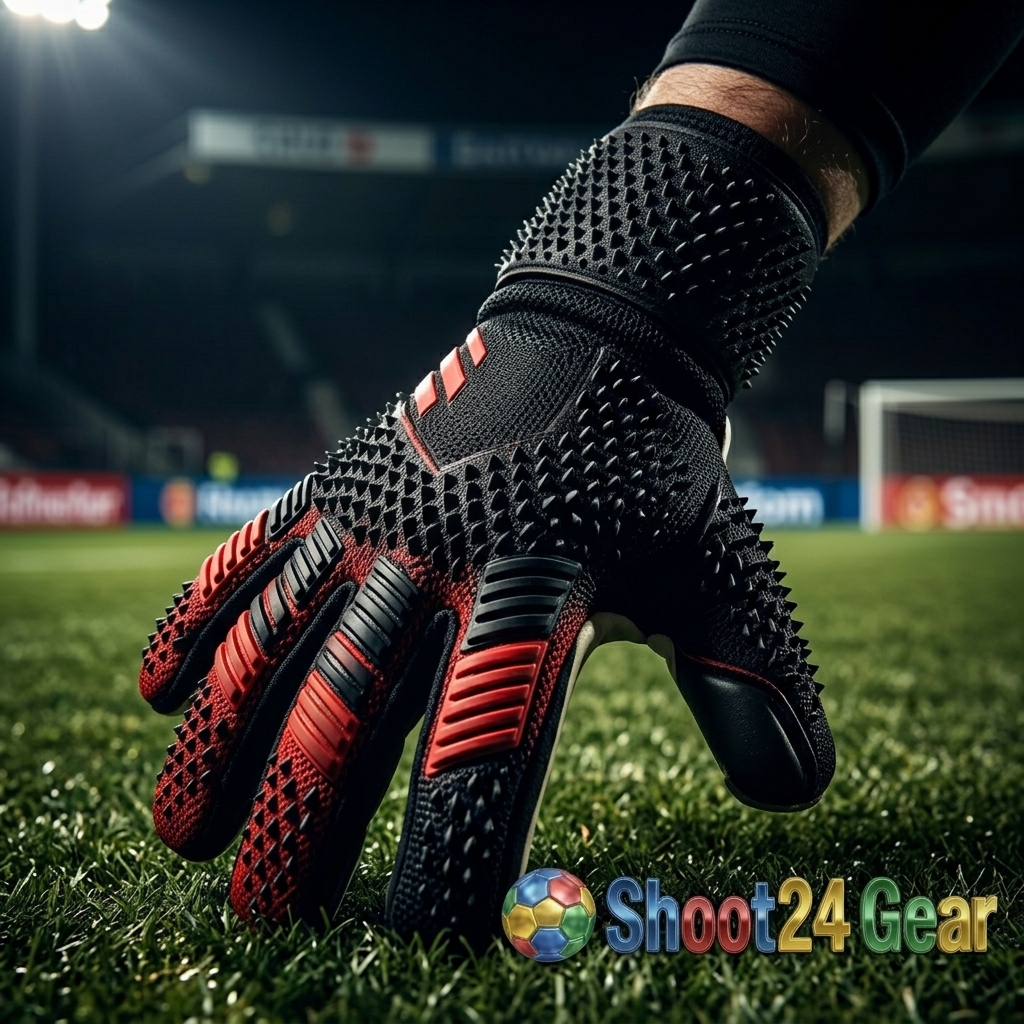
The defining visual and functional feature of Predator goalkeeper gloves is the Demonskin spike technology applied to the backhand and finger surfaces. These raised silicone or rubber elements serve several purposes that extend beyond visual branding.
Punching assistance: When a goalkeeper punches a cross or high ball, the contact surface is the fist — the backhand of the glove rather than the palm. Traditional gloves provide minimal grip assistance for punching because the backhand uses smooth or lightly textured materials. Demonskin spikes create additional friction during fist contact, helping the ball travel further and more accurately from punches. For goalkeepers who punch frequently — particularly in aerial-dominant playing styles — this represents a functional advantage.
Catching assistance: While the palm latex provides primary grip during catching, the finger surfaces also contact the ball during securing. Demonskin elements on the fingers add supplementary grip points that assist when wrapping hands around the ball. The effect is subtle but noticeable — the ball feels marginally more secure during high catches and close-range saves where finger grip contributes to ball retention.
Visual intimidation: The aggressive spike aesthetic serves a psychological purpose that Adidas markets explicitly. A goalkeeper wearing visibly textured, aggressive-looking gloves projects a different visual presence than one wearing plain gloves. Whether this affects opponents’ decision-making is debatable, but the visual distinctiveness of Demonskin has made Predator gloves among the most recognizable goalkeeper gloves in football.
The spike technology has evolved through several generations. Earlier versions used larger, more prominent spikes that some goalkeepers found uncomfortable during catching. Current generations use smaller, more refined elements that provide grip assistance without interfering with the natural hand closure that catching requires.
URG Latex
Adidas uses their URG (Ultimate Rebound Grip) latex formulation across the Predator glove palm. URG latex is a proprietary compound that Adidas has refined over multiple goalkeeper glove generations to provide competitive grip performance.
At its best, URG latex provides strong grip in dry and lightly damp conditions. The foam has a medium softness that balances grip with reasonable durability — not as aggressively soft as Uhlsport’s Supergrip+ but comparable to Reusch’s Mega G3 in the middle of the grip-durability spectrum.
URG latex’s wet weather performance is adequate but not its strongest characteristic. In persistent heavy rain, the foam can lose grip consistency faster than the specialist wet weather formulations from dedicated goalkeeper brands. For goalkeepers who frequently play in heavy rain, specialist wet weather gloves may serve better than Predator gloves as a rain-specific option.
Adidas offers different URG variants across their glove tiers. The Pro tier receives the highest-quality URG compound, while Academy and Training tiers use progressively simpler formulations. The gap between Adidas’s top-tier and entry-tier latex is comparable to the gaps within specialist brands’ ranges.
Cut Options
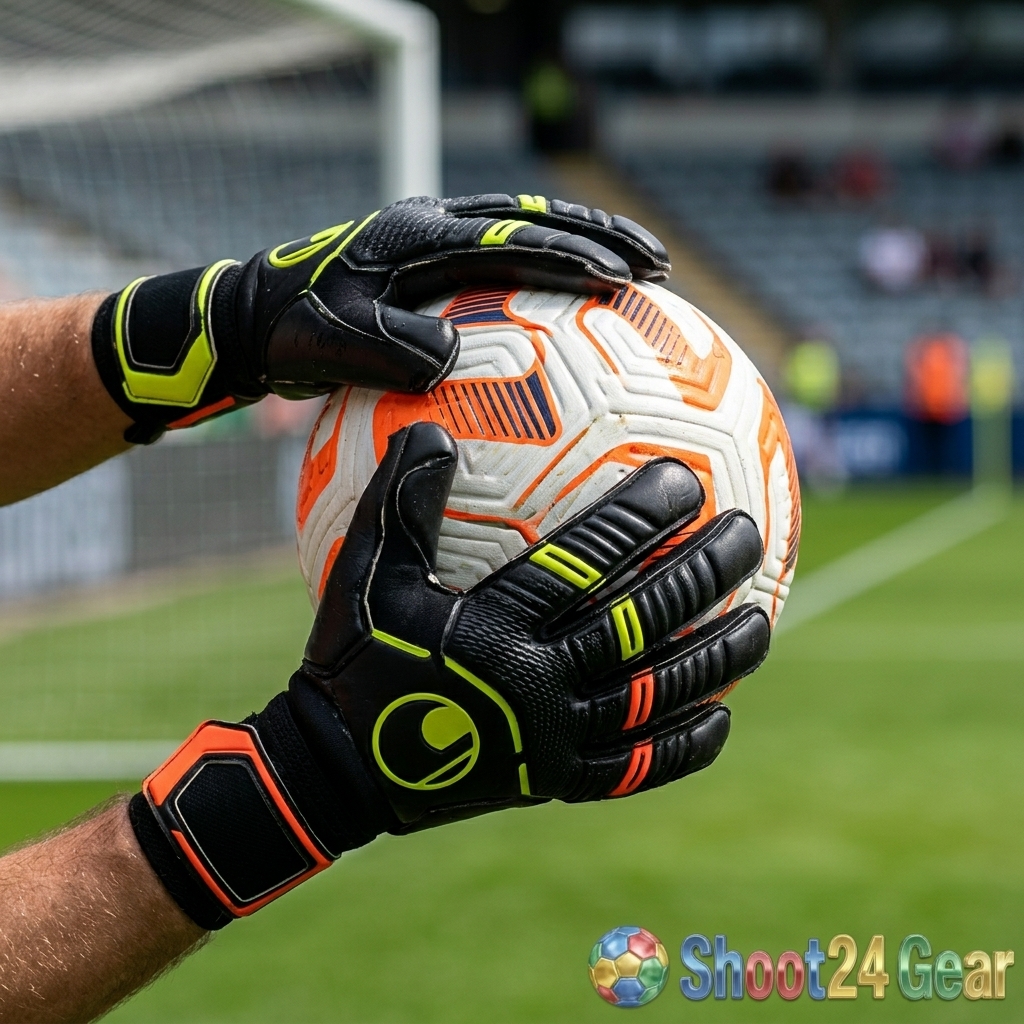
Predator gloves are available in multiple cut configurations that affect fit and ball contact characteristics.
Negative Cut: The most popular cut in the Predator range, with internal stitching that creates a tight, responsive fit. Adidas’s negative cut implementation fits snugly without being constrictive, providing good ball feel for goalkeepers who want close contact between hand and ball. The negative cut pairs well with the Demonskin elements because the close fit positions the finger spikes optimally against the ball surface.
Hybrid Cut: Combines negative cut on the index and middle fingers with roll finger construction on the ring and pinky fingers. This hybrid approach provides tight ball feel on the primary catching fingers while offering more room on the outer fingers for comfort. A sensible compromise for goalkeepers who find full negative cut too restrictive.
Training Cut: A wider, more forgiving cut used in budget-tier Predator gloves. Training cut provides more internal space, making it suitable for casual goalkeeping and for players whose hand shape does not suit tighter cuts.
Fit Characteristics
Predator gloves fit moderately across the hand — tighter than many flat cut specialist gloves but less constrictive than the tightest negative cut options from Reusch. The fit is consistent with Adidas’s approach across their football product range: designed for mainstream hand shapes without extreme specialization for narrow or wide hand profiles.
The wrist closure uses a wide strap system that wraps securely without excessive bulk. Predator Pro models feature a clean-entry design that makes putting the glove on easier than traditional strap-and-loop closures. The closure feels secure during play without requiring constant readjustment.
Sizing runs true to Adidas’s published sizing chart. Goalkeepers who know their Adidas glove size from previous generations should find consistent fit in current Predator models. Those switching from specialist brands should measure their hand circumference and consult Adidas’s specific size guide rather than assuming cross-brand size equivalence.
Performance Assessment
The Predator gloves perform differently depending on the goalkeeping context, and understanding these contextual strengths and limitations helps assess their suitability.
Shot-stopping: Palm grip during shot-stopping is competitive with mid-to-premium specialist alternatives. The URG latex provides reliable catch quality, and the Demonskin elements on the fingers add noticeable supplementary grip when wrapping the ball. For one-on-one saves and close-range reactions, Predator gloves perform well.
Aerial command: This is where Predator gloves offer their clearest advantage. The combination of Demonskin punching assistance and adequate palm grip makes the Predator a strong choice for goalkeepers who deal with frequent crosses, corners, and aerial challenges. The spike technology provides tangible benefit during fist contacts that plain-backhand gloves do not match.
Distribution: Ball release from the hand during throws and rolls feels natural. The Demonskin elements do not interfere with distribution — the spikes are positioned and sized to avoid catching the ball during intentional release. Some early Demonskin generations created slight friction during distribution, but current versions have resolved this concern.
Durability: Predator gloves offer reasonable durability for their price tier. The URG latex develops wear at a rate comparable to mid-range specialist gloves — approximately six to ten matches of optimal performance at Pro level before noticeable grip degradation. The Demonskin spikes themselves are durable and rarely detach or degrade during normal use.
Tier Breakdown
Adidas structures the Predator glove range into distinct tiers with meaningful differences between them.
Predator Pro (Elite): The top tier featuring premium URG latex, full Demonskin technology, negative or hybrid cut, and clean-entry wrist closure. This is the competition-ready model that provides the best performance the Predator line offers. Priced comparably to premium gloves from specialist brands.
Predator Match (Mid): A mid-range option with simplified URG latex and reduced Demonskin elements. Still provides adequate performance for competitive amateur goalkeeping but with noticeable reductions in grip softness and spike density compared to the Pro tier. Strong value option for goalkeepers who want the Predator experience without elite pricing.
Predator Training (Entry): The budget option with basic latex and minimal Demonskin elements. Suitable for training sessions, casual goalkeeping, and youth players who want the Predator aesthetic without the premium investment. Performance is adequate for recreational use but insufficient for competitive match play.
Predator vs Specialist Brands
The honest comparison between Adidas Predator gloves and specialist alternatives from brands like Reusch, Uhlsport, and Sells involves acknowledging different strengths.
Where Predator excels: Punching performance through Demonskin technology. Brand ecosystem integration for goalkeepers who wear Adidas boots and apparel. Consistent availability through Adidas’s global retail network. Visual distinctiveness and brand recognition.
Where specialist brands excel: Peak grip performance at elite level (particularly Uhlsport’s Supergrip+). Wider range of cut options and specialized models. Deeper expertise in latex formulation across multiple compounds. More granular sizing and fit options for unusual hand shapes.
The Predator is a strong generalist goalkeeper glove that competes effectively at the mid-to-premium level. It is not the absolute peak grip performer that specialist match gloves can achieve, but it offers competitive performance combined with the punching advantage that no other brand currently replicates effectively.
Weather Performance
The Predator’s weather performance reflects its generalist design philosophy — adequate across conditions without extreme optimization for any single environment.
Dry conditions: URG latex performs at its best in dry weather. Grip is consistent and reliable, and the Demonskin elements function optimally when dry. Pre-match dampening improves grip further in completely dry conditions by activating the latex surface.
Light rain: Performance remains strong in light rain and damp conditions. The latex maintains adequate grip, and the Demonskin spikes actually assist by providing additional contact points that supplement the reduced latex friction on wet surfaces.
Heavy rain: Prolonged heavy rain challenges the URG latex more than specialist wet weather compounds. The foam can become saturated, which reduces grip consistency. Goalkeepers who frequently play in heavy rain conditions should consider dedicated wet weather gloves as a supplement to their Predator pair rather than relying solely on the Predator in persistent rain.
Cold conditions: URG latex stiffens in cold temperatures, as does all latex foam. The effect is moderate — the Predator maintains functional grip in cool conditions but loses some of the softness that creates optimal dry-weather grip. In very cold conditions (near or below freezing), the latex performance drops noticeably, though this is a universal latex characteristic rather than a Predator-specific weakness.
Predator Gloves for Youth Goalkeepers
Adidas offers the Predator glove range in junior sizes, and the youth versions deserve separate consideration because they differ from adult versions in meaningful ways.
Youth Predator gloves use simplified construction compared to adult models. The Demonskin elements are typically reduced in number and size, and the latex compound is firmer and more durable than the adult versions. These modifications acknowledge that young goalkeepers need durability for frequent training sessions more than they need elite-level grip for occasional competitive play.
The Predator aesthetic appeals strongly to young goalkeepers who follow professional football and want to wear equipment that resembles what they see professionals using. This brand appeal has genuine value in motivating young players and building their confidence, even if the performance characteristics of junior gloves differ from professional specifications.
Sizing for youth Predator gloves follows Adidas’s junior sizing chart. Growth rate in young goalkeepers means gloves may need replacement every three to six months as hands grow, making the Training tier the most practical choice for rapidly growing young goalkeepers. Investing in Pro-tier junior gloves is rarely justified when the gloves will be outgrown before they wear out.
Transition from Other Brands
Goalkeepers considering switching to Predator gloves from specialist brands should be aware of adjustment factors that affect the transition experience.
The Demonskin texture on the backhand creates a different hand feel than plain-backhand gloves. Some goalkeepers initially find the raised elements distracting during catching, particularly when wrapping hands around the ball. This sensation typically resolves within two to three training sessions as the goalkeeper adapts to the textured surface.
URG latex feels different from specialist latex compounds. Goalkeepers accustomed to Uhlsport’s extremely soft Supergrip+ may find URG latex firmer and less immediately grippy. Goalkeepers accustomed to Reusch’s G3 Fusion will find URG latex more similar in feel. The adjustment period for latex feel is typically minimal — one to two sessions is usually sufficient to calibrate expectations.
Sizing may differ from specialist brands. Always measure and consult Adidas’s specific sizing chart rather than assuming your size from another brand translates directly. A size 9 in Adidas may fit differently from a size 9 in Reusch or Uhlsport, and the comfort of the wrist closure system differs between all three brands.
Care Considerations
Predator gloves follow the same care protocols as any latex goalkeeper glove. Wash after every use with lukewarm water and mild soap. Air dry away from direct heat and sunlight. Store flat or with fingers supported to maintain shape.
The Demonskin spikes require minimal additional care. They are bonded securely to the backhand material and resist detachment under normal use. Avoid scrubbing the spike areas aggressively during cleaning — the bonding adhesive can weaken under mechanical stress, even though it withstands ball impact forces without issue.
URG latex responds well to pre-match dampening. Lightly wetting the palm before use activates the latex’s grip properties, particularly in dry conditions where the foam surface may feel less sticky than when dampened. This is standard practice for most latex goalkeeper gloves and is not specific to the Predator range.
Extending Predator Glove Lifespan
Several practical strategies extend the usable lifespan of Predator gloves beyond their natural degradation timeline. Using a dedicated pair for matches and a separate pair for training distributes wear across two gloves rather than concentrating it in one. The match pair maintains its grip quality for competitive situations, while the training pair absorbs the heavy volume of drill repetitions that accelerate latex wear.
Avoid using Predator gloves on artificial turf when possible. The abrasive surface of artificial pitches accelerates palm wear significantly compared to natural grass. If training occurs frequently on artificial surfaces, consider using a budget training glove for those sessions and preserving the Predator for natural grass matches and training.
Proper storage between sessions — flat or with fingers supported, away from heat sources and direct sunlight — prevents the shape deformation and latex degradation that shortens lifespan through environmental factors rather than through use-related wear.
Summary
Adidas Predator goalkeeper gloves offer a distinctive combination of mainstream brand quality and specialized spike technology that serves goalkeepers well across most playing situations. The Demonskin elements provide genuine functional benefit for punching and aerial work that no competitor currently matches, and the URG latex delivers competitive grip performance that satisfies the majority of goalkeeping demands at both amateur and competitive levels.
The Predator is an excellent choice for goalkeepers who value punching performance above absolute palm grip, who want brand consistency with their Adidas football equipment ecosystem, and who need a versatile glove that performs well across varied conditions without extreme specialization for any single environment. The punching advantage is particularly relevant for goalkeepers who play in systems that require frequent aerial interventions — commanding the box through punching is a core goalkeeping skill, and equipment that supports it deserves consideration.
For goalkeepers seeking absolute peak grip performance for specific match situations where every save depends on maximum palm contact, specialist alternatives from dedicated goalkeeper brands may offer marginally better palm grip performance at equivalent price points. However, the Predator’s overall package — combining reliable grip, unique punching technology, and strong brand ecosystem support — is thoroughly competitive with any option on the market.
Product specifications, technology features, and tier structures change between Predator generations. Verify current specifications, available cuts, and pricing on the official Adidas website before making any purchasing decisions.