The latex foam on a goalkeeper glove’s palm is the single most important material component — it determines grip quality, durability, weather performance, and ultimately how effectively a goalkeeper can stop shots, catch crosses, and retain possession of the ball. Every other glove feature — cut design, backhand construction, wrist closure — supports the palm latex in fulfilling its primary function: creating friction between the glove and the ball.
Despite its importance, latex foam remains poorly understood by many goalkeepers who select gloves based on brand loyalty or visual appeal without considering the foam compound that will actually touch the ball. This comprehensive guide explains the different latex types available on the market today, their individual performance characteristics, their practical trade-offs, and how to select the right foam compound for your specific playing pattern and budget considerations.
How Latex Foam Works
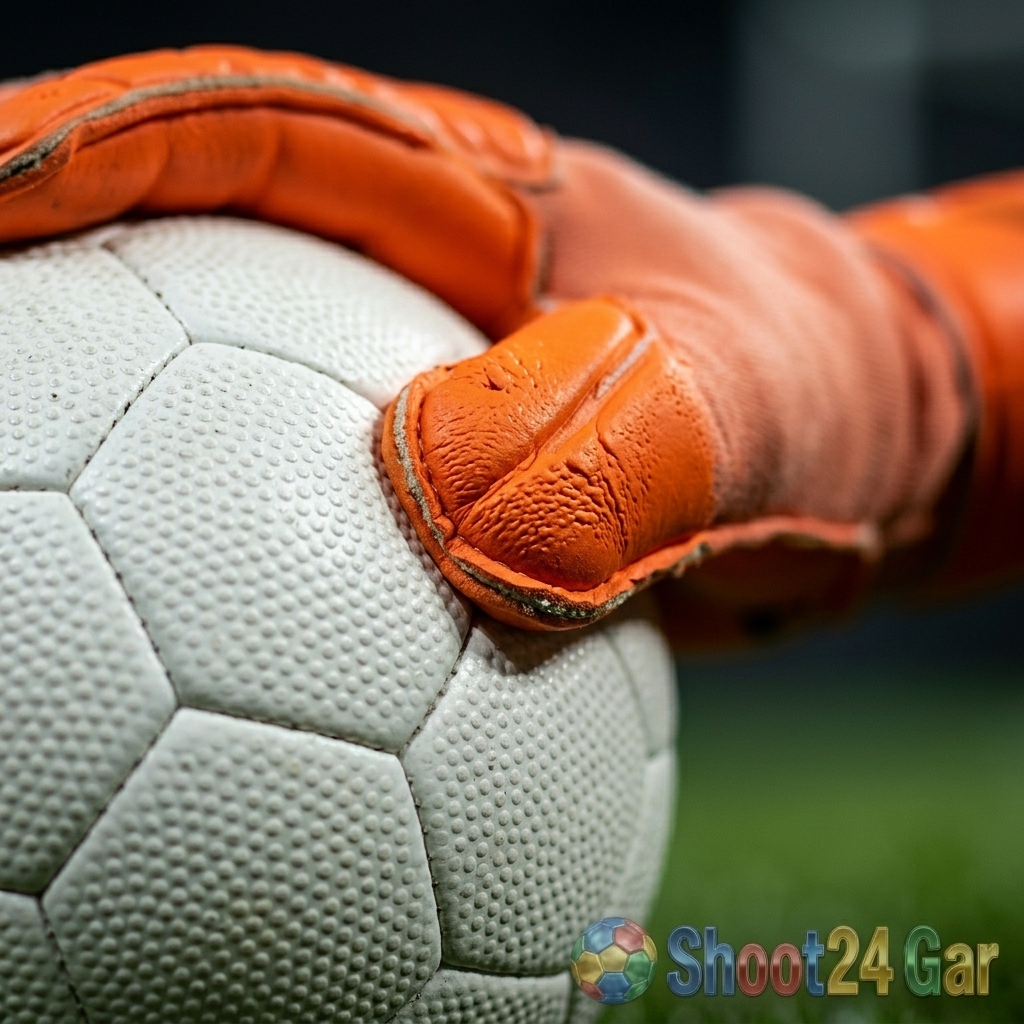
Goalkeeper glove latex is a processed natural rubber compound that creates grip through a combination of surface adhesion and material deformation. When the ball contacts the latex, the foam surface conforms to the ball’s curvature, creating maximum contact area. The larger the contact area, the greater the friction force resisting the ball’s movement — and friction is what stops shots.
Softer latex deforms more readily, creating larger contact areas and therefore greater grip. Harder latex deforms less, creating smaller contact areas and less grip. This fundamental relationship between softness and grip drives the entire latex foam market: softer foams grip better but wear faster, harder foams grip less but last longer.
The softness of latex foam is determined during manufacturing through the formulation of chemical compounds, the curing process, and the foam cell structure. Different manufacturers use proprietary processes to achieve their specific balance of softness, durability, and weather resistance — which is precisely why latex quality and performance vary significantly between different brands and between tiers within the same brand.
Soft Latex (Match Grade)
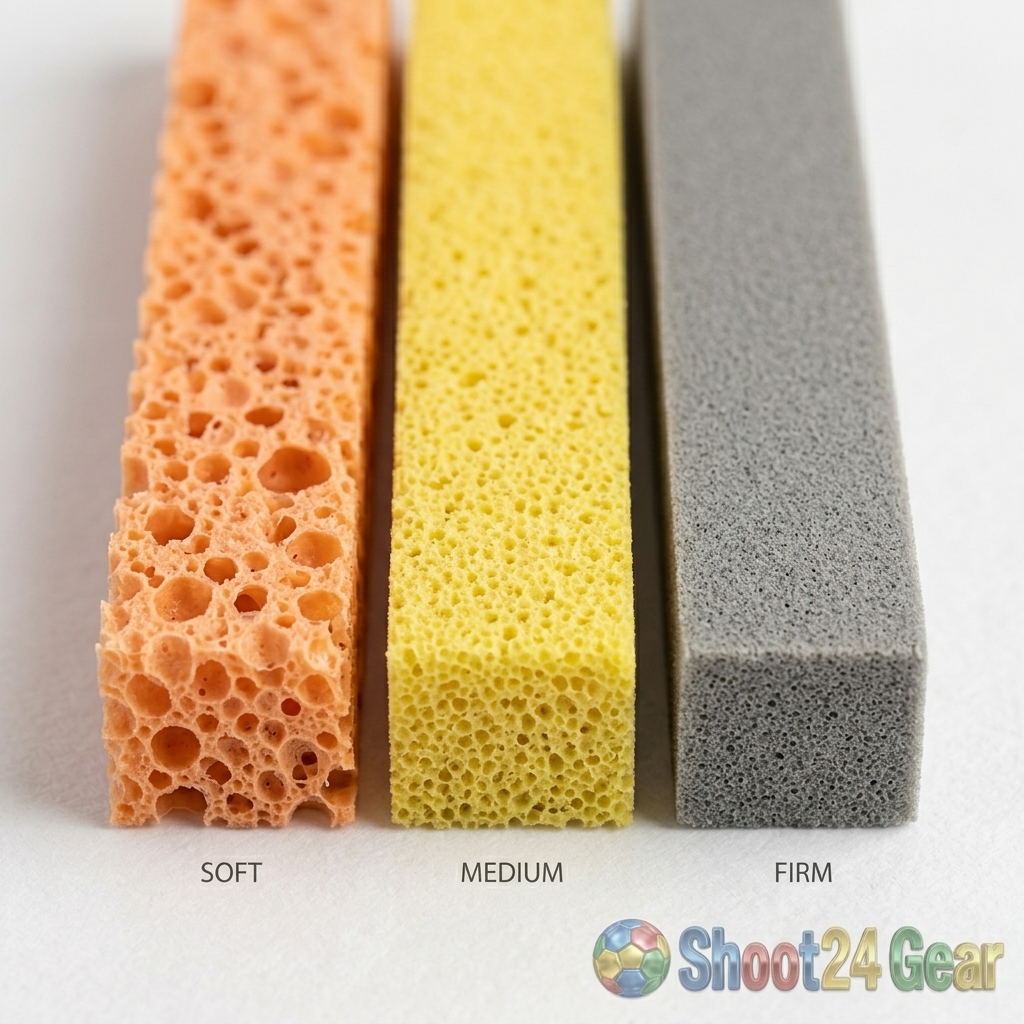
Soft latex — sometimes called match latex or competition latex — represents the premium end of the foam spectrum. These are the foams used in top-tier gloves from all major brands, designed for maximum grip performance at the cost of reduced longevity.
Characteristics: Extremely tacky surface feel. Visible deformation when pressed with a finger. High porosity that allows the foam to breathe and conform. Thin cell walls that collapse easily under pressure, maximizing ball contact area.
Grip performance: Soft latex provides the absolute best grip performance currently available in any goalkeeper gloves on the market. The extreme surface conformity creates adhesion that feels almost sticky — the ball appears to stick to the palm rather than bouncing off. In dry conditions, soft latex grip approaches the physical limits of what rubber compounds can achieve.
Durability: The same thin cell walls and high porosity that create superior grip also make soft latex vulnerable to wear. The foam surface degrades with each ball contact — cells collapse permanently, surface roughens, and the sticky feel diminishes progressively. A soft latex palm used for matches typically provides four to eight matches of optimal performance before noticeable degradation. Used for training with hundreds of ball contacts per session, soft latex may degrade within two to four sessions.
Examples: Uhlsport Supergrip+, Reusch G3 Fusion, Nike Contact foam (Pro tier), Adidas URG 2.0 (Pro tier). These represent each brand’s absolute premium latex offering, priced at the very top of their respective product ranges and intended primarily for competitive match use.
Medium Latex (Match-Training Grade)
Medium latex occupies the middle ground — balancing grip performance with practical durability for goalkeepers who need their gloves to last beyond a handful of sessions.
Characteristics: Noticeable tackiness but less extreme than soft latex. Moderate deformation under pressure. Denser cell structure with thicker cell walls that resist permanent collapse. Slightly firmer feel in the hand compared to soft latex.
Grip performance: Medium latex provides strong grip that satisfies the demands of competitive amateur goalkeeping. The grip is genuinely effective — balls are caught securely, saves feel controlled, and the foam provides reliable friction in most conditions. The difference between medium and soft latex is perceptible to experienced goalkeepers but unlikely to determine match outcomes at amateur level.
Durability: Significantly longer-lasting than soft latex. Medium latex maintains effective grip for eight to fifteen matches or three to six weeks of regular training use. The denser cell structure resists the progressive degradation that shortens soft latex lifespan, providing more total value per purchase despite the reduced peak grip.
Examples: Reusch Mega G3, Uhlsport Absolutgrip, Adidas URG 2.0 (Match tier), various mid-range offerings from specialist brands like Sells. These represent each brand’s second-tier latex, typically found in Match or Academy level gloves.
Hard Latex (Training Grade)
Hard latex — also called training latex or practice latex — prioritizes longevity above all other characteristics. These foams are designed for the high-volume ball contact of daily training sessions.
Characteristics: Minimal surface tackiness. Firm feel with limited deformation. Dense, closed-cell structure that resists wear. Thicker overall foam layer compared to softer compounds to compensate for the reduced conformity with additional cushioning.
Grip performance: Functional but clearly inferior to medium and soft compounds. Hard latex catches balls adequately — it provides enough friction for routine saves during training drills — but it does not grip with the authority that match-grade foams provide. In wet conditions, hard latex grip drops more dramatically than softer compounds because the limited surface conformity cannot compensate for the lubrication effect of water.
Durability: Excellent. Hard latex withstands months of regular training use, potentially lasting an entire season for goalkeepers who train two to three times per week. The dense cell structure simply does not degrade at the rate that softer foams do, making hard latex the most cost-effective and economically practical option for pure training use throughout an entire playing season.
Examples: Reusch Soft Support, Uhlsport Soft Advanced, budget-tier latex across all brands. Training-grade latex is standard in Club and Training tier gloves priced below the mid-range threshold.
Specialty Latex Types
Wet Weather Latex
Some manufacturers produce latex compounds specifically formulated for wet weather performance. These foams modify the standard latex formulation to resist the grip reduction that water causes on conventional compounds.
Wet weather latex typically uses a more open cell structure that channels water away from the contact surface, maintaining a drier grip zone even when the glove exterior is saturated. Some formulations also use hydrophobic additives that cause water to bead on the surface rather than penetrating the foam structure.
The trade-off for wet weather specialization is typically reduced dry-weather grip compared to standard soft latex at the same price tier. Wet weather foams are designed as condition-specific tools rather than all-purpose solutions.
Contact Foam
Contact foam — used notably by Nike in their Vapor Grip range — represents a different approach to latex that prioritizes consistent all-conditions performance over maximum dry-weather grip. Contact foam compounds aim to minimize the performance gap between wet and dry conditions, providing a narrower but more stable performance band regardless of weather.
Treated Latex
Some latex compounds receive post-manufacturing treatments that modify their surface characteristics. Nike’s ACC (All Conditions Control) is the most prominent example — a surface treatment applied to Contact foam that enhances wet-weather grip without fundamentally changing the foam’s base properties. These treatments add value in specific conditions but do not transform the underlying foam quality.
The Grip-Durability Trade-Off
The central tension in latex foam selection is the inverse relationship between grip and durability. No current manufacturing process produces a foam that simultaneously maximizes both characteristics — physics and material science impose a genuine trade-off that all brands navigate differently.
Understanding this trade-off helps set realistic expectations for any glove purchase. A goalkeeper who buys soft latex match gloves and uses them for daily training is not getting poor-quality gloves when the grip degrades after a week — they are using a specialized tool outside its designed use case. Similarly, a goalkeeper who buys hard latex training gloves and finds the grip inadequate for match-day performance is not receiving an inferior product — they are using a durability-optimized foam in a situation that demands grip-optimized foam.
The most practical and cost-effective approach for serious goalkeepers at any competitive level is maintaining separate match and training gloves with appropriately different latex types. Match gloves with soft latex provide maximum grip for competitive situations where saving quality matters most. Training gloves with medium or hard latex survive the high volume of training ball contacts without requiring frequent replacement. This dual-glove strategy extracts the best performance from each latex type in its appropriate context.
Foam Thickness
Beyond softness, foam thickness affects performance in ways that deserve consideration during glove selection.
Thinner foam (3-4mm): Provides better ball feel because less material separates the goalkeeper’s hand from the ball surface. The goalkeeper can feel the ball’s position, spin, and trajectory more precisely during catches. However, thinner foam provides less impact absorption, which means harder shots create more discomfort in the hand.
Thicker foam (4-5mm): Provides better impact absorption, cushioning the hand during hard shots and reducing the physical discomfort of shot-stopping. However, thicker foam reduces ball feel — the additional material acts as a buffer that dampens the tactile feedback the goalkeeper receives during catches.
Most premium gloves use foam in the 3.5 to 4mm range, balancing feel and protection. Training gloves often use thicker foam (4-5mm) to provide additional cushioning for the high volume of catches during drills, accepting the reduced ball feel as an acceptable trade-off for training contexts where precision catching is less critical than in matches.
Latex Care and Longevity
How you treat latex foam directly affects how long it maintains effective grip. Following proper care protocols extends latex lifespan regardless of the foam type.
Pre-match dampening: Lightly wetting latex before use activates its grip properties. Dry latex is less grippy than dampened latex because moisture fills the foam pores and increases surface adhesion. A quick water spray or palm wipe before kickoff noticeably improves initial grip for all latex types.
Post-session cleaning: Washing latex after every use removes dirt, sweat, and debris that clog foam pores and reduce grip. Lukewarm water and mild soap are sufficient — aggressive cleaning products can damage the foam structure.
Drying: Air drying at room temperature preserves latex integrity. Heat — from radiators, sunlight, or dryers — damages the foam cell structure, causing premature hardening and grip loss. Proper drying is the single most impactful care step for extending foam lifespan.
Temperature Effects on Latex
Temperature significantly affects latex performance in ways that goalkeepers should understand for match preparation.
Cold weather: All latex compounds stiffen in cold temperatures. The polymer chains in the rubber become less mobile, reducing the foam’s ability to deform and conform to the ball surface. Grip performance drops progressively as temperature decreases, with noticeable reduction below 5آ°C and significant impairment near or below freezing. Softer latex compounds are more affected proportionally because their grip advantage depends on the deformation that cold temperatures restrict.
Warm weather: Moderate warmth (15-25آ°C) is the ideal temperature range for latex performance. The foam is flexible, responsive, and provides optimal surface conformity. In very hot conditions (above 30آ°C), latex can become slightly too soft and prone to accelerated wear, though this is a minor concern compared to cold-weather performance loss.
Practical response: In cold weather, dampening gloves more generously before play helps compensate for the stiffness by providing surface moisture that assists adhesion independently of foam deformation. Some goalkeepers store gloves in interior pockets before cold-weather matches, using body heat to keep the latex warmer and more responsive until kickoff.
Recognizing Worn Latex
Knowing when latex has degraded beyond effective use prevents goalkeepers from playing competitive matches with compromised grip. Several indicators signal that a glove’s latex has reached end of life.
Surface roughening: Fresh latex has a smooth, tacky surface. Worn latex develops a rough, granular texture as surface cells break down and the smooth contact plane deteriorates. When the palm surface feels rough rather than smooth, grip has degraded significantly from its original level.
Visible thinning: Areas of heavy contact — typically the center of the palm and the fingertips — show visible thinning as latex material is gradually removed through abrasion. When the underlying fabric or stitching becomes visible through the foam, that area no longer provides effective grip.
Hardening: Old or heat-damaged latex hardens progressively, losing the deformation capability that creates grip. If the palm feels noticeably firmer than when new — resisting finger pressure rather than yielding — the foam has hardened beyond effective match use.
Loss of tackiness: The most straightforward test is pressing a clean, dry palm against a clean ball. Fresh latex creates noticeable resistance when pulled away. Worn latex releases without resistance. If the ball does not stick at all when pressed against the palm, the grip has degraded to training-only levels.
Selecting Latex for Different Budgets
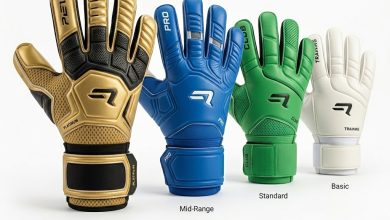
Premium budget: Invest in soft latex match gloves from a specialist brand like Reusch or Uhlsport, supplemented by medium or hard latex training gloves from any reputable brand. This approach provides peak match performance while managing overall cost through durable training options.
Moderate budget: Choose medium latex gloves that serve both match and training roles. Medium latex provides competitive match grip while lasting through training sessions. Brands’ mid-tier offerings — Academy or Match level — typically use medium latex compounds that represent the best overall value in the goalkeeper glove market.
Limited budget: Start with hard latex training gloves that provide functional grip at the lowest cost. As budget allows, add a single pair of medium latex match gloves for competitive play. Even a relatively modest additional investment in match-specific gloves with better latex creates a noticeable performance improvement over using training gloves for everything.
Youth budget: For young goalkeepers whose hands are growing and who need frequent glove replacement, hard or medium latex at Training or Academy tier provides the most practical value. Premium soft latex is rarely justified for junior goalkeepers who will outgrow the gloves before the latex wears out.
Summary
Latex foam quality determines goalkeeper glove performance more directly than any other component. Soft latex provides maximum grip for match situations but wears quickly. Medium latex balances grip with durability for combined match and training use. Hard latex prioritizes longevity for high-volume training. Specialty foams address specific conditions like wet weather or all-conditions consistency.
Understanding the grip-durability trade-off enables informed purchasing decisions that match foam type to intended use. The most effective and economically sensible approach for committed goalkeepers is maintaining separate glove pairs with appropriate latex types for matches and training, extracting optimal performance from each foam in its designed context while managing overall equipment cost through practical glove rotation.
Latex formulations, brand-specific compounds, and treatment technologies evolve between glove generations. Always verify current foam specifications and compound names on official brand websites before making any purchasing decisions for your goalkeeper glove equipment.