Goalkeeper glove care is the most undervalued aspect of goalkeeper equipment management. A pair of premium gloves with excellent latex foam that receives no care degrades faster and performs worse than a pair of mid-range gloves that is properly maintained. The care you give your gloves directly determines how long they maintain effective grip, how many matches they serve, and ultimately how much value you extract from your equipment investment.
Despite its importance, glove care is consistently neglected by goalkeepers at all levels. Gloves are stuffed into bags wet and unwashed after sessions, left in hot cars, dried on radiators, and replaced long before they needed to be — simply because poor care accelerated their degradation. This comprehensive guide covers every aspect of proper glove care, from post-session washing to long-term storage, providing the knowledge needed to maximize glove performance and lifespan.
Why Care Matters
Understanding why specific care steps matter helps motivate consistent practice rather than treating care as an arbitrary routine.
Dirt clogs foam pores: Latex foam grips through surface adhesion and deformation. Dirt particles that accumulate in the foam pores prevent the latex from deforming properly and reduce the tacky surface contact that creates grip. Every session deposits dirt, grass, rubber crumb, and soil into the palm surface. Without washing, this debris accumulates progressively, creating a barrier between the latex and the ball that steadily reduces grip quality.
Sweat degrades latex: The salts and acids in sweat chemically react with latex over time, breaking down the polymer chains that give the foam its structural properties. Sweat left on unwashed gloves continues this degradation between sessions, meaning the latex is aging even when the gloves are not being used. Washing removes sweat residue and halts this chemical degradation cycle.
Heat damages foam structure: Latex foam cells have thin walls that maintain their shape at room temperature but collapse permanently when exposed to heat. Once collapsed, the cells cannot deform during catching, which eliminates the conformity that creates grip. Heat damage is irreversible — no amount of subsequent care can restore cells that have been heat-collapsed.
Bacterial growth creates hygiene issues: Warm, moist environments — exactly the conditions inside a sealed bag containing wet, unwashed gloves — promote rapid bacterial growth. This growth creates odor, degrades latex through biological processes, and creates hygiene concerns for the goalkeeper’s hands. Regular washing and proper drying prevent the conditions that bacteria require to proliferate.
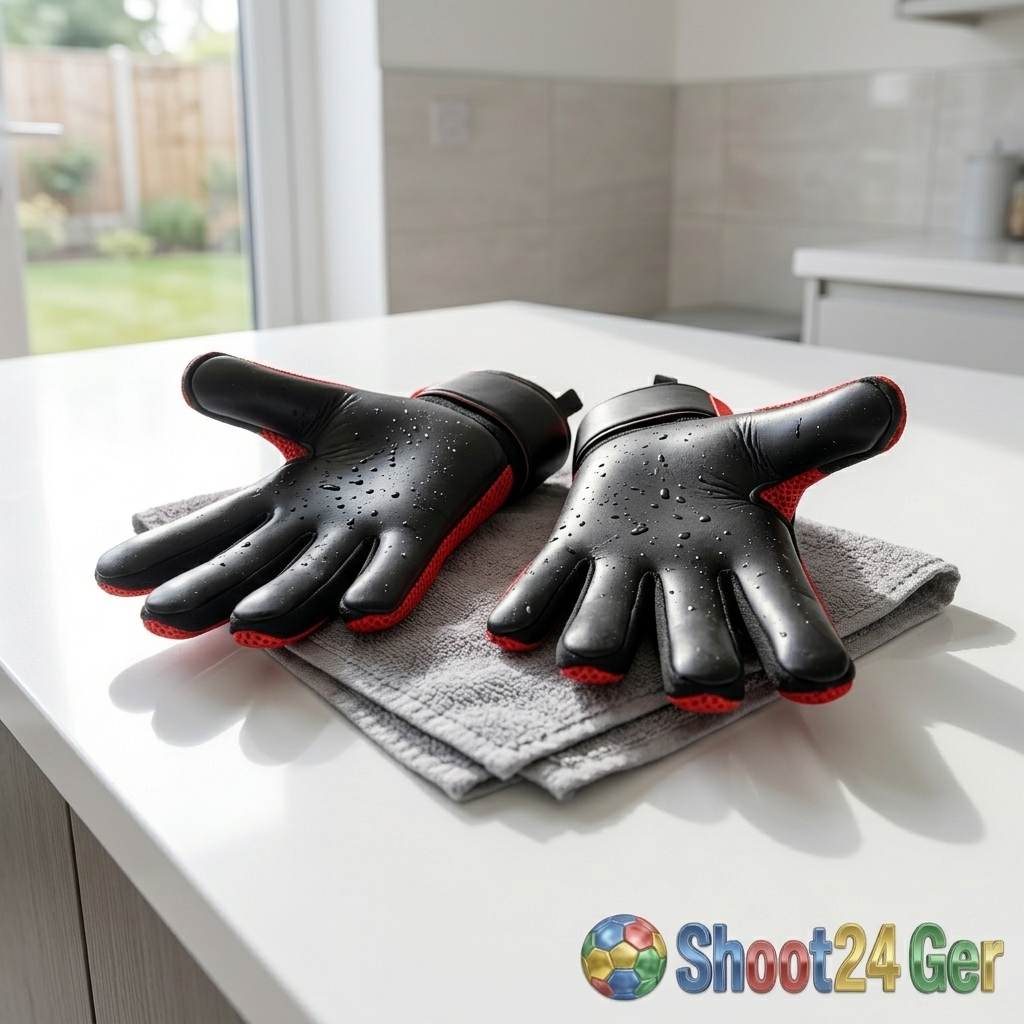
Post-Session Washing
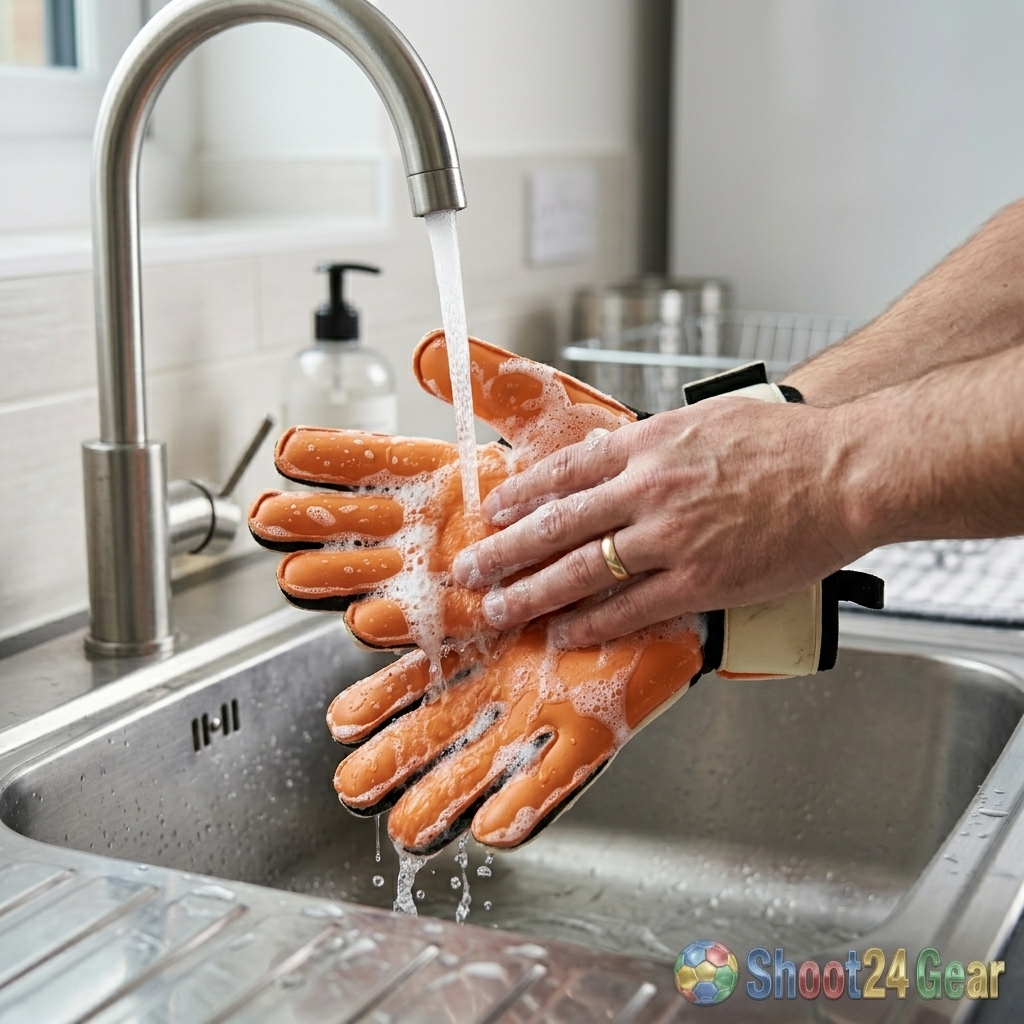
Washing gloves after every use is the single most important care step. The process is simple and takes two to three minutes — a minimal time investment that yields significant and measurable lifespan extension for your gloves.
Step 1: Rinse
Rinse both palms under lukewarm running water to remove loose dirt and surface debris. Use gentle water pressure — high-pressure streams can damage the latex surface. Lukewarm water is ideal; cold water does not dissolve sweat residue as effectively, and hot water can begin the heat damage process that care is meant to prevent.
Step 2: Wash
Apply a small amount of mild soap to the palm surfaces. Purpose-made glove wash solutions are available from specialist suppliers, but mild hand soap or baby shampoo works effectively. Avoid harsh detergents, bleach, or abrasive cleaning products — these damage latex through chemical interaction.
Gently work the soap across the palm surface with your fingers, creating light lather. Do not scrub aggressively — the goal is to lift dirt and sweat from the foam pores, not to abrade the latex surface. Pay attention to the finger areas and thumb crotch where sweat and dirt accumulate most heavily.
Step 3: Rinse Again
Rinse all soap thoroughly from the palm under lukewarm running water. Soap residue left on the latex creates a film that reduces grip — the same effect as dirt, but from a different source. Continue rinsing until the water runs clear and no soap lather remains on the palm surface.
Step 4: Remove Excess Water
Gently squeeze the palms between flat hands to press out excess water. Do not wring or twist the gloves — the twisting motion stresses the stitching and can deform the latex, particularly in negative cut gloves where the internal stitching is already under tension during normal use.
Drying Methods
How you dry goalkeeper gloves matters as much as how you wash them. Incorrect drying is the single most common cause of premature glove degradation.
Correct: Air Drying at Room Temperature
Place washed gloves palm-up on a clean, flat surface or hang them from the wrist strap in a well-ventilated area at room temperature. Allow them to dry naturally — this process typically takes 12 to 24 hours depending on humidity and air circulation. The gloves should be completely dry before the next use or before storage.
Incorrect: Radiator or Heater Drying
Never place goalkeeper gloves on or near radiators, heaters, or heat sources. The concentrated heat collapses latex foam cells irreversibly, creating hard, non-grippy areas on the palm. Even brief exposure to high heat can cause permanent damage that no subsequent care can reverse. This is the most common and most destructive care mistake goalkeepers make.
Incorrect: Direct Sunlight
Do not dry gloves in direct sunlight. Ultraviolet radiation from sunlight degrades latex at the molecular level, breaking down the polymer structure that gives the foam its grip properties. Sun-dried latex becomes hard and brittle, losing both grip and flexibility. Dry in shade or indoors, away from windows where direct sunlight could reach the gloves.
Incorrect: Tumble Dryer
Never use a tumble dryer for goalkeeper gloves. The combination of heat and mechanical agitation damages the latex, loosens stitching, and deforms the glove construction. The convenience of faster drying is not worth the significant lifespan reduction that tumble drying causes.
Incorrect: Leaving in Bag
Never leave wet gloves sealed in a bag after use. The enclosed, moist environment promotes bacterial growth, accelerates latex degradation through moisture exposure, and creates persistent odor that is difficult to eliminate once established. Even if you cannot wash gloves immediately after use, remove them from the bag and allow air circulation until washing is possible.
Pre-Match Preparation
Preparing gloves before use enhances grip performance and extends the session lifespan of the latex.
Dampening: Lightly dampen the palm surface with clean water before play. Moisture activates latex grip by filling the foam pores and increasing surface adhesion. Use a spray bottle or water from a drinking bottle — the amount needed is minimal, just enough to make the palm visibly moist without being soaking wet.
Warming: In cold weather, warm the gloves before use by holding them or wearing them for several minutes before the match begins. Cold latex is stiffer and less grippy than warm latex. Using body heat to bring the latex to a comfortable temperature before play ensures optimal grip from the first save.
Storage
How you store gloves between sessions and during off-seasons affects their condition when you next use them.
Between sessions: Store completely dry gloves palm-to-palm or with fingers extended in a ventilated location at room temperature. Do not compress the gloves under heavy objects — sustained pressure on the latex creates permanent indentations that reduce the smooth contact surface. A shelf or hook in a well-ventilated room is ideal.
During off-season: For extended storage periods (weeks to months), wash and thoroughly dry the gloves, then store them palm-to-palm in a breathable bag or wrapped in a soft cloth. Do not store in sealed plastic bags, which trap residual moisture and create conditions for latex degradation. Add a small amount of talcum powder to the palm surface before long-term storage to absorb any residual moisture and maintain surface condition.
Common Care Mistakes
Using hand sanitizer on palms: Alcohol-based hand sanitizers damage latex. Never apply hand sanitizer to glove palms — the alcohol dissolves the latex surface and permanently reduces grip.
Machine washing: While hand washing is recommended, machine washing on a gentle cycle with cold water and mild detergent is acceptable as an occasional alternative. Always place gloves inside a mesh laundry bag to prevent them from catching on the drum, and never use spin cycles above 400 RPM. Machine washing should not replace hand washing as the regular care method because the mechanical stress of machine washing is greater than hand washing even on gentle settings.
Sharing gloves between goalkeepers: Gloves mold to the specific hand shape of their regular wearer through use. Sharing gloves between goalkeepers with different hand shapes accelerates structural wear by repeatedly stretching the gloves in different directions, reducing the lifespan of both the latex and the construction.
Extending Lifespan Through Usage Strategy
Beyond care protocols, how you use your gloves affects their longevity. Strategic usage management extracts more total value from each pair of gloves purchased.
Maintain separate match and training pairs. Match gloves with premium latex should be reserved exclusively for competitive matches where grip quality directly affects match outcomes. Training gloves with more durable latex absorb the high volume of training ball contacts without depleting your match pair’s limited premium latex lifespan.
Rotate between multiple training pairs if training frequency is high. Using the same gloves for every training session concentrates wear on a single pair, while rotating between two or three training pairs distributes the total wear across multiple gloves, extending the effective lifespan of each individual pair.
Retire match gloves to training duty when their grip drops below match-acceptable levels. Premium latex that has degraded beyond match quality still provides adequate grip for training drills, extending the total useful life of the glove through role transition rather than disposal.
Odor Prevention and Treatment
Glove odor is a common complaint among goalkeepers, and it is almost entirely preventable through proper care. The odor comes from bacterial colonies that establish themselves in warm, moist glove interiors — the exact conditions created when wet gloves are sealed in bags without washing and drying.
Prevention: Washing after every use and thorough air drying eliminates the conditions bacteria need to grow. If these two steps are performed consistently, significant odor should never develop during the glove’s normal lifespan.
Treatment for existing odor: If odor has already established itself, soak the gloves in lukewarm water with a small amount of white vinegar (approximately one tablespoon per liter of water) for thirty minutes. The mild acidity of vinegar neutralizes odor-causing bacteria without damaging the latex. Rinse thoroughly after soaking and air dry completely. Repeat if necessary for persistent odor.
Baking soda method: For gloves with persistent odor that vinegar does not fully resolve, sprinkle a thin layer of baking soda on the interior surfaces and leave overnight. The baking soda absorbs odor compounds from the fabric. Shake out and rinse the following day before use. This method is safe for latex and effective against most organic odors.
Minor Repair and Maintenance
Minor glove damage does not always require immediate replacement. Some common issues can be addressed through simple maintenance that extends the glove’s functional lifespan.
Loose stitching: Small sections of loose stitching — particularly on the wrist closure or backhand seams — can be resecured with a needle and strong thread. Use a curved upholstery needle if available, which navigates the foam and fabric more easily than a straight needle. This repair prevents small stitching failures from expanding into structural problems that compromise the glove’s fit and function.
Small latex tears: Minor tears in the palm latex — less than one centimeter — can be stabilized with a small amount of latex-compatible adhesive applied to the edges of the tear. This does not restore the latex’s grip properties in the torn area but prevents the tear from expanding during subsequent use. Large tears or tears in high-contact areas typically indicate the glove has reached end of life and should be replaced.
Wrist closure wear: Velcro wrist closures gradually lose their gripping strength as the hook-and-loop material wears. Brushing the hook side with a stiff brush removes lint and debris that clog the hooks, restoring some closure strength. When brushing no longer restores adequate closure grip, the closure has reached the end of its functional lifespan.
Seasonal Care Adjustments
Winter care: Cold weather extends drying time because lower temperatures slow evaporation. Allow additional drying time during winter months — gloves may require 24 to 36 hours to dry fully compared to 12 to 18 hours in warmer weather. Position gloves near (but not on) a radiator at a safe distance — close enough to benefit from ambient warmth without direct heat contact. The recommended distance is at least 50 centimeters from any heat source.
Summer care: Warm weather accelerates bacterial growth in unwashed gloves but also speeds drying. The urgency of immediate post-session washing is even greater in summer because bacteria multiply faster in warm conditions. However, the faster drying time means gloves reach storage-ready dryness more quickly, partially offsetting the increased care urgency.
Rainy season care: During periods of frequent rain, gloves used in wet weather conditions absorb significantly more water than during dry-weather use. Extra care should be taken to remove maximum water through gentle squeezing before air drying, and drying time should be extended to ensure complete moisture removal from the saturated foam structure.
Weekly Care Routine
Establishing a consistent weekly care routine ensures no care steps are missed during busy training and match schedules.
After every session: Wash palms, rinse thoroughly, squeeze out excess water, air dry at room temperature. Time required: two to three minutes plus drying time.
Weekly: Inspect palm condition for signs of wear — roughness, thinning, or hardening. Check stitching integrity on seams and finger joints. Verify wrist closure function. Clean backhand and interior surfaces if visibly dirty. Time required: five minutes.
Monthly: Deep clean with extended soaking if needed. Apply odor treatment if any odor is developing. Assess overall glove condition and remaining lifespan for match and training pairs. Plan replacement timing based on condition assessment. Time required: fifteen to twenty minutes including soak time.
Summary
Goalkeeper glove care is not optional maintenance — it is an essential practice that directly determines how long your gloves maintain effective grip and how much value you receive from your equipment investment. Wash after every use with lukewarm water and mild soap. Air dry at room temperature, never near heat sources or in sunlight. Store properly between sessions and during off-seasons. Pre-dampen before matches for optimal grip activation.
These simple, consistent practices take minutes per session but extend glove lifespan by weeks or months, representing one of the best return-on-effort investments in all goalkeeper equipment management. Proper care transforms goalkeeper glove ownership from a cycle of premature replacement into a sustainable equipment strategy that supports consistent performance.
Care product recommendations, specialist glove wash solutions, and brand-specific care instructions all change between individual products and manufacturers as new care technologies and approaches become available. Always verify specific care guidance for your particular glove model on the manufacturer’s official website before applying any cleaning methods.