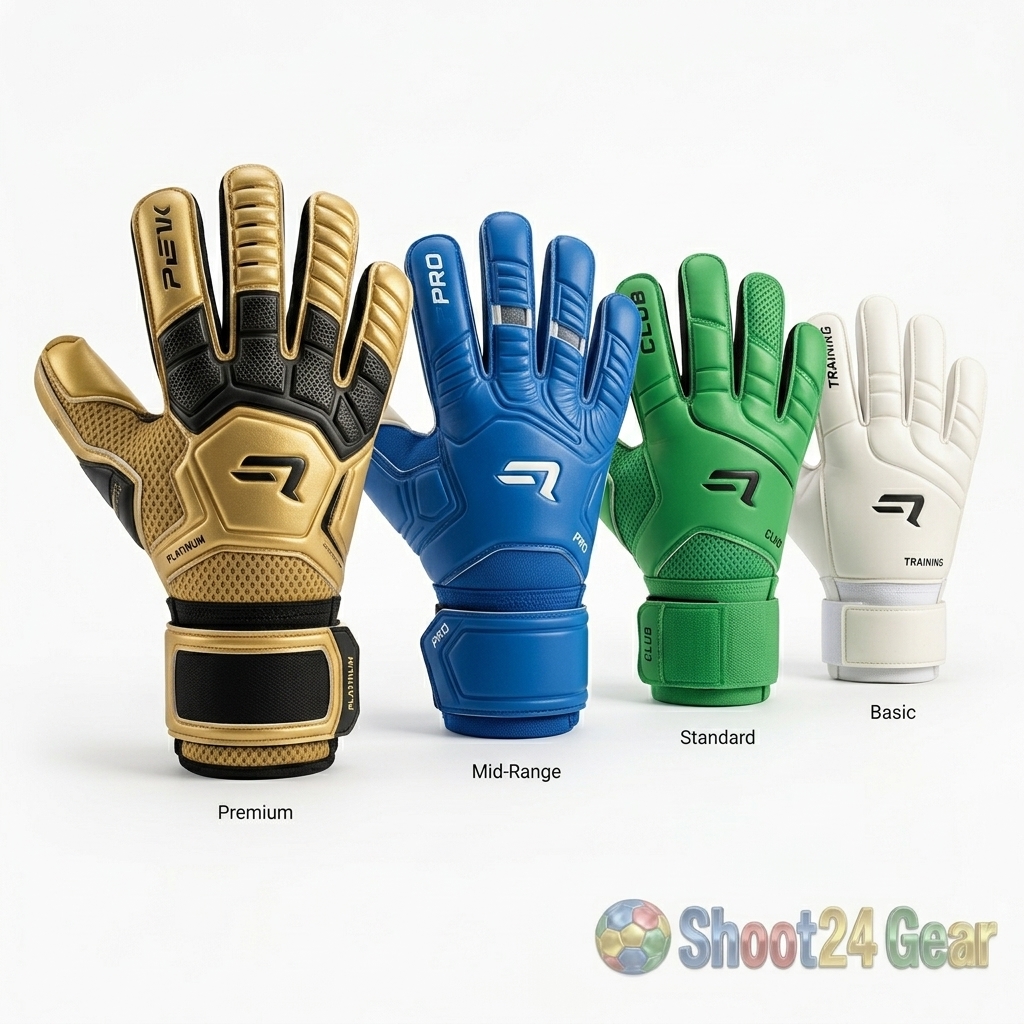
The goalkeeper glove market is structured around tiers — hierarchical product levels that represent different combinations of latex quality, construction refinement, and feature sophistication at corresponding price points. Understanding in detail how these tiers genuinely differ in practical performance terms helps goalkeepers make truly informed purchasing decisions that match their competitive level, budget, and performance expectations to the appropriate product rather than simply buying the most expensive option available or defaulting to the cheapest.
This comprehensive guide examines the tier system used across all major goalkeeper glove brands, explains what genuinely and meaningfully changes between tiers, and provides practical guidance for selecting the specific tier that offers the best value for your specific goalkeeping needs, playing level, and budget constraints.
The Tier Structure
While naming conventions vary between brands, the goalkeeper glove market universally follows a four-tier structure. Understanding this structure provides a framework for comparing products across brands, even when the brands use different terminology for each level.
Pro Tier (Top Level)
The Pro tier represents each brand’s highest-performance offering — the gloves used and endorsed by professional goalkeepers at the highest competitive levels. Every component is optimized for maximum performance without regard for longevity or cost efficiency.
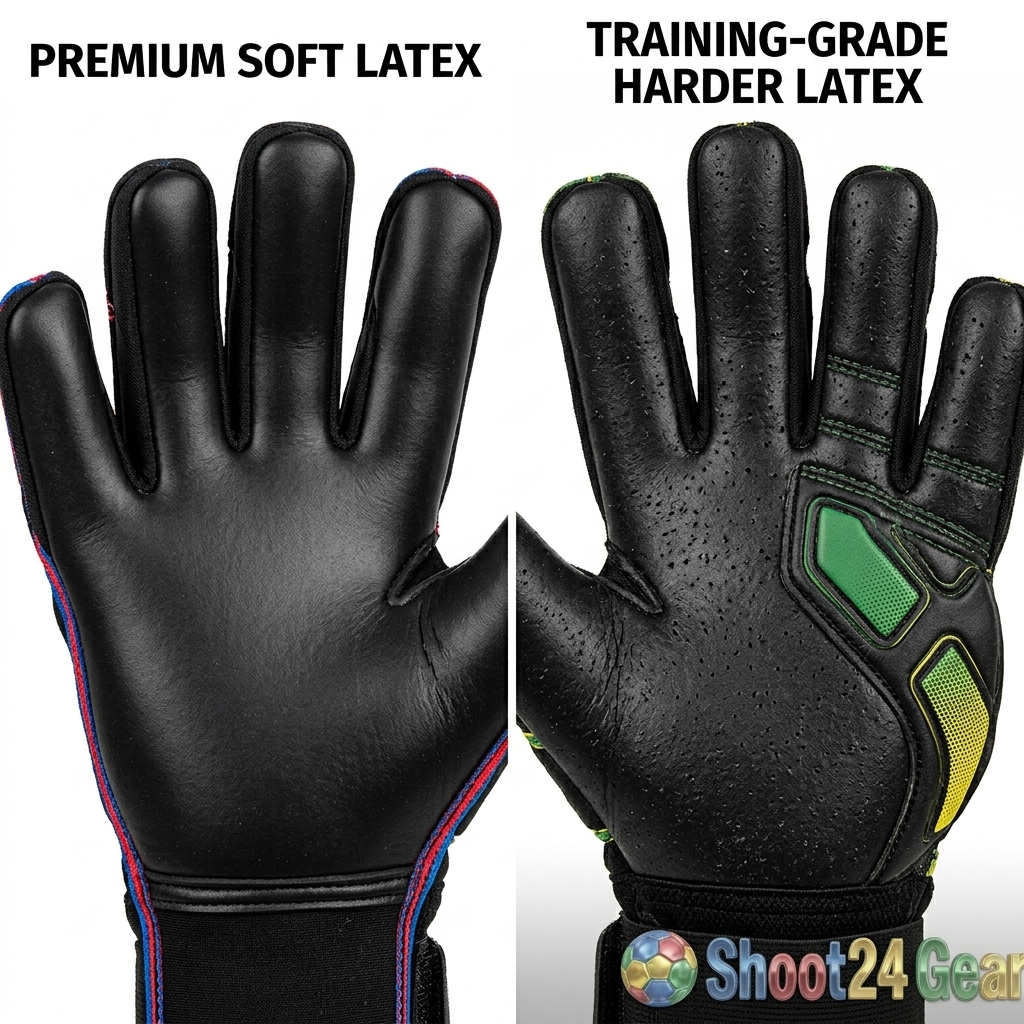
Latex: Softest available compound from the brand. Maximum grip, minimum durability. Foams like Uhlsport’s Supergrip+, Reusch’s G3 Fusion, Nike’s Contact Pro, and Adidas’s URG 2.0 Pro represent each brand’s peak latex development. These compounds provide the strongest grip available but wear fastest under use.
Construction: Most refined cut options, premium backhand materials, advanced wrist closure systems, and the highest manufacturing precision. Stitching is tighter, material tolerances are smaller, and finishing quality is visibly superior to lower tiers.
Price: Highest in the range. Pro tier gloves typically cost two to three times more than the lowest tier, reflecting both the premium materials and the professional endorsement value embedded in the pricing.
Best for: Competitive goalkeepers at semi-professional level and above who need maximum grip performance for match situations and who can budget for the rapid replacement cycle that soft latex requires. Also suited for serious amateur goalkeepers who want the best available performance for competitive matches, provided they clearly understand and accept the significantly accelerated durability trade-off that premium soft latex inherently involves.
Match Tier (Second Level)
The Match tier provides strong performance with improved durability compared to the Pro tier. This level represents each brand’s best balance between grip quality and practical longevity — the tier designed for competitive goalkeepers who need reliable match performance without the extreme durability limitations of Pro tier soft latex.
Latex: Medium-soft compound that provides competitive grip while lasting significantly longer than Pro tier latex. The grip difference between Match and Pro tier latex is clearly perceptible to experienced goalkeepers who test both compounds but rarely determines actual match outcomes at amateur competitive level during normal playing conditions.
Construction: High-quality construction with refined cuts and good backhand materials. The manufacturing precision is slightly below Pro tier — material tolerances may be marginally wider, and finishing touches may be less elaborate — but the functional performance is close to the Pro level for most practical goalkeeping demands.
Price: Typically sixty to seventy-five percent of the Pro tier price. This moderate premium over lower tiers provides strong value because the performance approaches Pro level while the durability allows each pair to serve more matches and training sessions.
Best for: Competitive amateur goalkeepers who play regularly in organized leagues. The Match tier represents the strongest overall value proposition in the glove market — providing grip performance sufficient for serious competitive play with durability that makes the investment practical for goalkeepers who cannot replace gloves every few weeks.
Academy Tier (Third Level)
The Academy tier serves developing goalkeepers and recreational competitive players with functional performance at a moderate price point.
Latex: Medium compound that prioritizes balanced performance. Grip is adequate for competitive amateur and recreational play — balls are caught securely, saves feel controlled — but the latex lacks the extreme tackiness and responsiveness of Pro and Match tier compounds.
Construction: Simplified construction with fewer cut options, standard backhand materials, and basic wrist closures. Academy tier gloves are well-made but without the refined details and premium touches of higher tiers.
Price: Moderate, typically forty to fifty-five percent of the Pro tier price. This accessible pricing makes Academy tier gloves practical for goalkeepers who need decent equipment without significant financial commitment.
Best for: Developing goalkeepers who are improving their skills and competing at lower organized levels. Also suitable as training gloves for higher-level goalkeepers who use Pro or Match tier gloves for matches — the Academy tier provides adequate grip for training drills while preserving premium match gloves for competitive situations.
Training Tier (Entry Level)
The Training tier represents each brand’s entry-level offering — functional goalkeeper gloves designed for high-volume training use and casual goalkeeping.
Latex: Hard, durable compound that prioritizes longevity above grip quality. Training tier latex provides functional grip that is clearly inferior to higher tiers but sufficient for training drills and recreational play. The durability is excellent — these gloves withstand months of regular training use.
Construction: Basic construction with standard cuts, simple materials, and elementary closures. Training tier gloves fulfill the fundamental requirements of a goalkeeper glove — latex palm, backhand coverage, wrist closure — without refinement or premium elements.
Price: Lowest in the range, typically twenty-five to thirty-five percent of Pro tier pricing. The affordability makes Training tier gloves accessible for all goalkeepers and practical for high-volume training where glove degradation is fastest.
Best for: Goalkeepers who need dedicated training gloves that survive intensive daily training sessions. Also suitable for recreational goalkeepers who play casually and do not require match-grade grip. For junior goalkeepers, Training tier provides practical value when frequent size changes due to growth make premium investment impractical.
What Actually Changes Between Tiers
Understanding which differences between tiers are significant and which are cosmetic helps goalkeepers evaluate whether the price increase between tiers is justified for their specific situation.
Latex quality (significant): The latex compound is the most important difference between tiers and the one that most directly affects on-pitch performance. The upgrade from Training to Academy tier provides noticeable grip improvement. The upgrade from Academy to Match provides further improvement. The upgrade from Match to Pro provides the final increment — the smallest proportional improvement but the most expensive step.
Cut options (significant for fit): Higher tiers offer more cut options, allowing goalkeepers to select the fit profile that best suits their hand shape. Lower tiers typically offer only one or two cuts, limiting fit optimization. For goalkeepers whose hand shape strongly favors a specific cut, the cut availability at higher tiers can be more important than the latex upgrade.
Backhand materials (moderate): Higher tier backhands use lighter, more breathable, and more flexible materials. Lower tiers use heavier, stiffer materials that are more durable but less comfortable and less flexible during catching movements.
Visual design (minimal performance impact): Higher tiers typically feature more elaborate visual designs, premium colorways, and professional branding elements. While visually appealing, these differences do not affect catching performance and should not drive tier selection decisions.
The Value Calculation
Each goalkeeper’s optimal tier depends on a personal value calculation that weighs performance need against budget reality and usage pattern.
A goalkeeper who plays one competitive match per week and trains twice weekly gets the most value from Match tier match gloves combined with Training tier training gloves. The Match gloves provide competitive grip for the twelve to fifteen matches they serve, while the Training gloves absorb the high volume of training contacts without requiring premium investment.
A goalkeeper who plays casually twice per month without organized competition extracts minimal value from Pro or Match tier latex because the limited playing frequency means the latex degrades through aging rather than through use. Academy tier provides adequate performance for casual play at a price point that reflects the limited use frequency.
A goalkeeper at semi-professional level who competes at a standard where every save matters may genuinely benefit from Pro tier latex because the maximum grip provides a performance edge that can influence match outcomes. At this level, the rapid replacement cycle of soft latex is justified by the competitive stakes involved.
Cross-Brand Tier Comparison
Tier naming varies between brands, but the four-level structure remains consistent. Understanding the naming equivalencies helps when comparing options across different brands.
Pro tier equivalents: Nike Pro, Adidas Pro, Reusch Pro G3, Uhlsport Supergrip+, Sells Pro. These represent each brand’s pinnacle product.
Match tier equivalents: Nike Match, Adidas Match, Reusch Mega G3, Uhlsport Absolutgrip, Sells Elite. These provide competitive performance at reduced pricing.
Academy tier equivalents: Nike Academy, Adidas League, Reusch Attrakt, Uhlsport Soft, Sells Technical. These serve developing and recreational goalkeepers.
Training tier equivalents: Nike Club, Adidas Training, Reusch Attrakt Starter, Uhlsport Starter, Sells Wrap. These provide entry-level functionality.
When to Upgrade Tiers
Upgrading to a higher tier makes sense when specific performance conditions are met — not simply as a status improvement or when budget allows.
From Training to Academy: Upgrade when you begin competing in organized matches where save quality affects match results. The grip improvement from Training to Academy tier provides a noticeable advantage in competitive situations that training-grade latex cannot match. This is typically the first upgrade a developing goalkeeper should make.
From Academy to Match: Upgrade when your technique has developed to the point where you can perceive and utilize the grip difference between Academy and Match tier latex. If you consistently catch balls cleanly and your saves are limited by equipment rather than technique, the Match tier upgrade is justified. If you still drop catches due to technical errors rather than grip limitations, the Academy tier remains appropriate — better latex does not compensate for technique gaps.
From Match to Pro: Upgrade when you compete at a level where marginal performance differences influence match outcomes and when your budget can sustain the rapid replacement cycle that Pro tier soft latex demands. The grip difference between Match and Pro is the smallest tier-to-tier increment, and it is only consistently meaningful at high competitive levels where both teams feature quality finishing and goalkeeping.
Budget Management Strategy
Managing glove spending across tiers requires a strategic approach that maximizes total performance value across all your gloves rather than concentrating the entire budget on a single pair.
The two-tier strategy: The most cost-effective approach for competitive goalkeepers is maintaining match gloves one tier higher than training gloves. Match tier for competition paired with Training tier for practice. Or Pro tier for competition paired with Academy tier for practice. This two-tier gap provides noticeable performance improvement on match days while keeping training costs manageable.
Seasonal budgeting: Plan glove purchases seasonally rather than reactively. A typical competitive season may require one to two pairs of match gloves and two to three pairs of training gloves, depending on playing frequency and care quality. Budgeting for this anticipated replacement schedule prevents the surprise of needing urgent glove replacement at an inconvenient time.
Sale and clearance purchasing: Previous season’s Pro tier gloves sold at clearance prices often cost less than current season’s Match tier. The performance characteristics are identical — last season’s soft latex grips just as well as current season’s soft latex — and only the visual design changes between generations. Purchasing clearance Pro tier gloves at Match tier prices represents one of the best value strategies available in the goalkeeper glove market.
Common Tier Myths
Myth: Pro tier gloves make you a better goalkeeper. Gloves do not improve technique, positioning, or decision-making — the three factors that most significantly determine goalkeeping performance. Pro tier gloves provide maximum grip for saves you are already technically capable of making. They do not create saves that technique and positioning cannot set up.
Myth: Lower tiers are low quality. Lower tiers are optimized for different priorities — durability and value rather than maximum grip. Training tier gloves from reputable brands are well-made products that fulfill their intended purpose effectively. Calling them “low quality” misunderstands their design intent, which is longevity-focused rather than grip-focused.
Myth: You should always buy the highest tier you can afford. Buying Pro tier gloves for recreational play wastes money because the premium soft latex degrades through aging and use before the limited playing frequency can utilize its grip advantage. Match or Academy tier gloves used regularly at the appropriate competitive level extract more total value than Pro tier gloves used occasionally.
Myth: Professional goalkeepers’ gloves are available to consumers. While the same model names are sold to consumers, professional goalkeepers often receive custom modifications, personalized fit adjustments, and glove preparation services that consumer versions do not include. The consumer Pro tier represents the closest available approximation to what professionals use, but it is not identical.
Mixed-Tier Equipment Strategy
The most sophisticated equipment strategy uses different tiers from potentially different brands for different situations, creating an optimized equipment portfolio rather than relying on a single pair for everything.
A complete goalkeeper glove portfolio might include: Pro or Match tier dry weather match gloves from the brand whose latex and cut suits your hands best, a dedicated wet weather glove from whichever brand offers the strongest aqua compound, Academy or Training tier gloves for daily training from whichever brand provides the best durability at your price point, and potentially a specialist brand glove like Sells for specific conditions where their Total Contact technology provides advantage.
This portfolio approach acknowledges that no single brand or tier optimally serves every situation. Building a thoughtfully personalized combination of gloves that each individually excel in their specifically designated role extracts more total performance value than any single pair can provide across all situations.
Summary
Professional goalkeeper glove tiers exist to serve different goalkeeper needs at appropriate price points — not to create artificial quality hierarchies that push all goalkeepers toward the most expensive option. The Pro tier provides maximum performance for competitive situations where grip quality influences match outcomes. The Match tier offers the strongest value proposition for regular competitive goalkeepers. The Academy tier serves developing players and recreational competition. The Training tier provides durable, functional gloves for high-volume training and casual use.
Select your tier based on honest assessment of your competitive level, playing frequency, and budget constraints. A correctly sized Match tier glove outperforms a poorly sized Pro tier glove. A well-maintained Academy tier glove outlasts and ultimately outperforms a neglected Pro tier glove. Tier selection is one important factor in glove performance, but it works in conjunction with proper sizing, appropriate cut selection, and consistent care to determine your overall equipment performance.
Tier structures, naming conventions, latex compounds, and specific features all change between brand seasons and product generations as brands continue developing and refining their goalkeeper glove ranges. Always verify current product offerings, tier specifications, and pricing on official brand websites before making any purchasing decisions for your goalkeeper glove equipment.