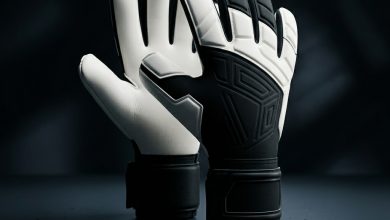
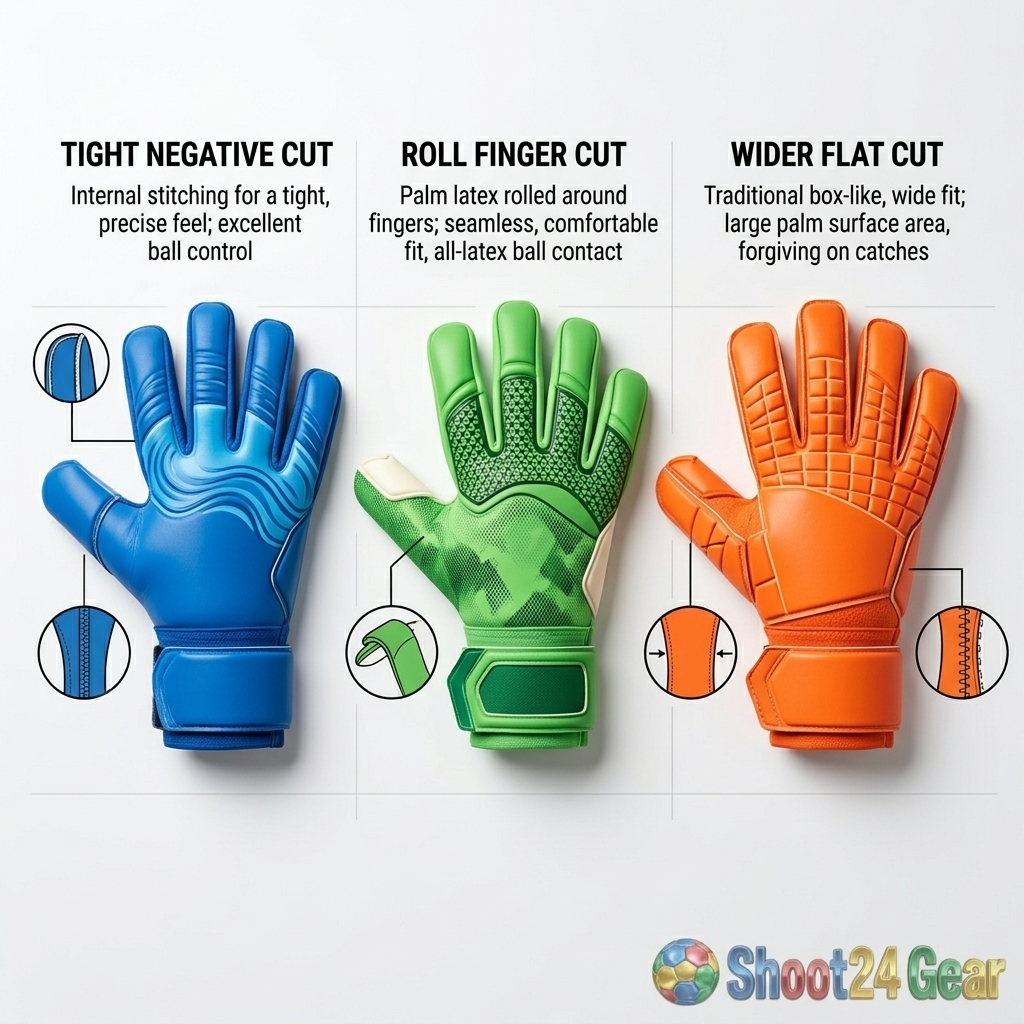
The cut of a goalkeeper glove determines how the latex palm wraps around your fingers and hand, affecting everything from fit tightness to ball contact area to overall comfort during play. Many goalkeepers focus exclusively on latex quality and brand reputation when selecting gloves, overlooking the cut — which arguably has a greater impact on day-to-day comfort and catching feel than any other single design element.
Understanding glove cuts is not complicated, but the terminology can be confusing because different brands use different names for similar constructions. This comprehensive guide explains each major cut type in detail, describes how each one fits and performs under different conditions, and helps you identify which specific cut best suits your individual hand shape and goalkeeping preferences for both match and training use.
Negative Cut
The negative cut — also called the internal stitch cut — is the most popular cut in modern goalkeeper gloves and the default configuration for most premium models from brands like Reusch, Uhlsport, Nike, and Adidas.
Construction
In a negative cut glove, the stitching that joins the palm latex to the finger gussets sits inside the glove rather than on the outside. This internal stitching pulls the latex closer to the fingers, creating a tight, form-fitting feel that minimizes dead space between your hand and the glove material.
Fit Characteristics
Negative cut gloves fit snugly across the palm and fingers. The internal stitching creates a close contact between your hand and the latex, which produces a more direct ball feel than wider-fitting alternatives. The tight fit means you feel the ball’s position, spin, and trajectory more precisely during catches.
The close fit also means negative cut gloves can feel restrictive for goalkeepers with wider fingers or those accustomed to roomier gloves. There is less internal space for finger movement, and some goalkeepers find the constant contact between stitching and skin uncomfortable during extended sessions.
Performance
The reduced dead space in negative cut gloves means less internal movement during saves — your hand and the glove move as one unit, which improves reaction time and catching precision. The tight fit is particularly beneficial for reaction saves where milliseconds matter and for one-on-one situations where secure ball retention determines outcomes.
The trade-off is reduced finger flexibility compared to wider cuts. Natural finger splay — spreading your fingers apart to present maximum catching surface — is slightly limited because the tight cut resists the spreading motion. This limitation is minor for most goalkeepers but noticeable for those who rely heavily on finger spread during high catches.
Best Suited For
Goalkeepers with slim to medium-width fingers who value precision. Goalkeepers who prioritize ball feel and catching precision. Shot-stoppers who value reactive performance. Goalkeepers who genuinely prefer a glove-as-second-skin feel during all playing conditions.
Roll Finger Cut
The roll finger cut — sometimes called the rolled cut — wraps the latex continuously around each finger, creating the maximum possible contact surface between latex and ball.
Construction
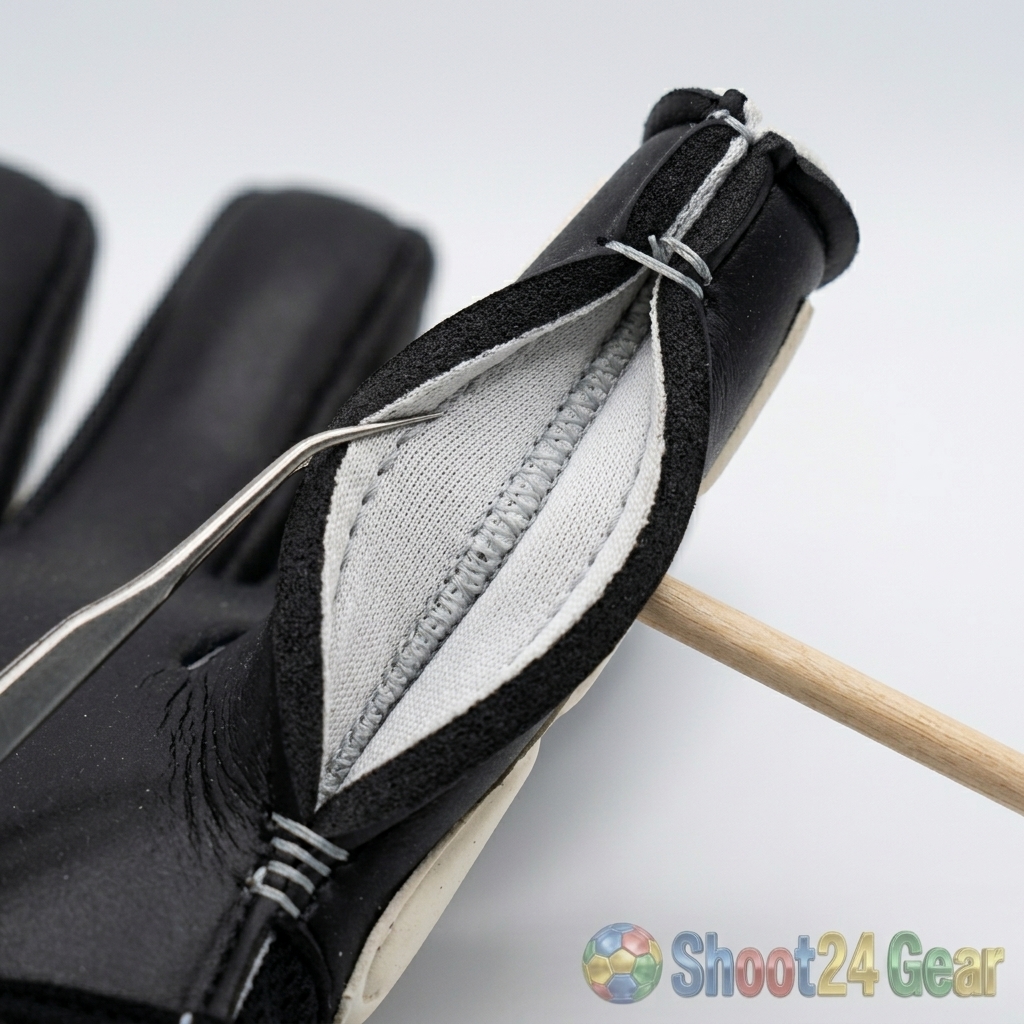
In roll finger construction, the palm latex extends up and around each finger without a separate gusset piece. The latex rolls from the palm side over the fingertip and partially onto the backhand side. Stitching sits on the sides of the fingers rather than inside or outside, and the continuous latex wrap creates an uninterrupted grip surface across the entire catching zone.
Fit Characteristics
Roll finger gloves fit moderately — roomier than negative cut but tighter than flat cut. The absence of internal stitching across the finger fronts creates a smoother internal surface that feels comfortable without the stitch-against-skin contact of negative cuts. The moderate room allows natural finger movement while maintaining reasonable ball contact.
The continuous latex wrap creates a slightly rounded finger profile that some goalkeepers find more natural than the flatter profile of negative cut gloves. Fingers sit in curved channels rather than being pulled into tight alignment, which can feel more comfortable during extended sessions for goalkeepers who find negative cuts too constrictive.
Performance
The primary and most significant advantage of roll finger cuts is the maximum possible latex-to-ball contact surface area across the entire catching zone. The continuous wrap means more latex touches the ball during catches, which theoretically improves grip — more contact area means more friction, which means more secure ball retention. This advantage is most noticeable during high catches where the fingers play a primary role in securing the ball above the head.
Roll finger gloves also offer good punching characteristics because the latex extension onto the backhand side provides some grip during fist contact. While not as specifically designed for punching as textured backhand solutions like the Adidas Predator’s Demonskin, the additional latex coverage assists punching performance beyond what negative or flat cuts provide.
Best Suited For
Goalkeepers who want the absolute maximum catching surface area available. Goalkeepers with medium-width fingers who find negative cuts too tight. Aerial-dominant goalkeepers who catch and punch frequently. Goalkeepers transitioning from flat cut who want improved ball contact without the extreme tightness of negative cut.
Flat Cut
The flat cut — also called the flat palm or traditional cut — is the original goalkeeper glove construction and remains available in many training and budget-tier gloves.
Construction
Flat cut construction uses separate gusset pieces between the fingers, with all stitching on the outside of the glove. The palm latex sits flat across the palm without wrapping around the fingers, and the gussets provide width between the finger channels. This construction method is the simplest and most traditional approach to glove assembly.
Fit Characteristics
Flat cut gloves fit the widest and roomiest of all cut types. The external gussets add material width between fingers, creating significant internal space that accommodates all finger widths comfortably. Goalkeepers with wide fingers or large hands often find flat cut gloves the most comfortable option simply because there is enough room for their hand shape without compression.
The additional room means more internal movement — your hand can shift slightly inside the glove during saves. This movement reduces the direct connection between hand and glove that tighter cuts provide, but increases comfort for goalkeepers who find tight gloves claustrophobic or who dislike feeling the glove compress against their fingers during catches.
Performance
Flat cut gloves provide less direct ball feel than negative or roll finger alternatives because the additional internal space creates a buffer between hand and ball. The glove absorbs more of the ball’s impact before the goalkeeper’s hand feels the contact, which can reduce catching precision in situations that require sensitive ball positioning.
However, flat cut gloves offer advantages for certain techniques. The wider finger spread allowed by the roomy construction benefits goalkeepers who spread their hands wide during diving saves, creating maximum catching width. The additional internal space also accommodates thicker glove liners or bandaging for finger injuries that would be constrained by tighter cuts.
Best Suited For
Goalkeepers with wide fingers or large hands. Training gloves where comfort over extended sessions outweighs peak performance. Youth goalkeepers who prefer a comfortable, non-restrictive fit. Budget-conscious goalkeepers seeking simple, reliable construction. Goalkeepers recovering from finger injuries who need internal space for bandaging.
Hybrid Cuts
Recognizing that no single cut suits every finger and every goalkeeping need, many brands now offer hybrid cuts that combine elements of different cut types within a single glove.
Negative-Roll Hybrid: Uses negative cut on the index and middle fingers (for tight ball feel on the primary catching fingers) and roll finger on the ring and pinky fingers (for comfort on the outer fingers that bear less catching responsibility). This is the most common hybrid configuration and arguably the best compromise between performance and comfort.
Negative-Flat Hybrid: Combines negative cut fingers with a flat palm section. Less common, but offers the tight finger feel of negative cut with the wider palm space of flat construction.
Brand-Specific Hybrids: Some brands create proprietary hybrid configurations. Reusch’s ExpansionCut adds stretch zones within a roll finger base. Uhlsport’s Half Negative Cut uses negative construction on selected fingers. These brand-specific innovations attempt to optimize the cut for specific performance goals rather than simply combining existing approaches.
How to Choose Your Cut
Selecting the right cut requires honest self-assessment of three factors: hand shape, playing priorities, and comfort preferences.
Hand shape: Slim fingers → negative cut. Medium fingers → negative or roll finger. Wide fingers → roll finger or flat cut. This is the most objective selection criterion because it is based on physical dimensions rather than subjective preference.
Playing priorities: Maximum ball feel → negative cut. Maximum catching surface → roll finger. Maximum comfort → flat cut. Maximum compromise → hybrid cut. Consider which goalkeeping situations you face most frequently and which glove characteristic would benefit those situations most.
Comfort tolerance: Some goalkeepers prefer tight equipment that feels like an extension of their body. Others prefer room and freedom. If you consistently size up in shoes, clothing, and equipment for comfort, you likely prefer wider glove cuts. If you choose form-fitting options in other equipment, you likely suit tighter cuts.
Cut and Sizing Interaction
Cut type affects how sizing feels, which is important to understand when purchasing new gloves — particularly when switching between cut types.
A size 9 negative cut glove fits tighter than a size 9 flat cut glove in the same brand with the same latex. The size number represents an approximate hand circumference range, but the cut determines how that range translates to internal space. Goalkeepers switching from flat to negative cut in the same size often feel that the negative cut is “too small” when it is actually the correct size — the tightness is the intended fit characteristic of the cut, not a sizing error.
When switching between cuts, resist the urge to size up to maintain the room you are accustomed to. The tighter fit of a negative cut is by design, and sizing up creates excess length in the fingers that undermines the performance benefits the cut is designed to provide. Accept the tighter fit as the intended experience and allow two to three sessions for adaptation before deciding the cut does not suit you.
Cut and Durability
Cut type affects glove durability in ways that influence long-term value and replacement frequency.
Negative cut durability: The internal stitching in negative cut gloves sits against the goalkeeper’s skin and the inside of the latex. This stitching bears stress during every finger movement, particularly during the stretching motion of catching. Over time, internal stitching can loosen or fail, which causes the tight fit to relax and the latex to separate from the finger channels. Premium negative cut gloves use reinforced internal stitching to resist this, but entry-level negative cuts may experience stitching failure before the latex itself wears out.
Roll finger durability: Roll finger construction distributes stress more evenly across the continuous latex wrap, which tends to create fewer concentrated stress points than negative cut stitching. The continuous latex can develop wear on the rolling edges where the palm transitions to the backhand, but overall construction durability is generally good across all quality tiers.
Flat cut durability: Flat cut is the most durable construction type because the external stitching sits on the outside of the glove where it does not bear the same bending stress as internal stitching. The gusset pieces add structural material that reinforces the finger channels. Flat cut gloves rarely fail through construction issues — the latex typically wears out long before the structural elements degrade.
Weather and Cut Performance
Weather conditions interact with cut type in ways that affect in-game performance.
In wet conditions, negative cut gloves can feel even tighter because moisture causes the latex to grip the skin more aggressively. This increased internal friction can make the glove feel constrictive in heavy rain, though it also means the glove stays firmly in place without shifting. Some goalkeepers who find negative cuts comfortable in dry conditions find them uncomfortable in prolonged rain.
Roll finger gloves handle wet conditions more comfortably because the moderate fit accommodates the slight swelling of the hand in humid and wet environments. The continuous latex wrap also means water has fewer entry points compared to multi-piece constructions, though all gloves eventually become internally wet in heavy rain.
Flat cut gloves in wet conditions can develop internal water pooling because the additional internal space allows water to accumulate. This pooling can create a sloshing sensation during movement that distracts from goalkeeping focus. In heavy rain, the roomier flat cut becomes less advantageous than tighter cuts that minimize internal water accumulation.
Common Cut Selection Mistakes
Choosing based on brand rather than cut: A goalkeeper who needs a roll finger fit may choose a negative cut glove simply because they want a specific brand’s top model. Cut compatibility matters more than brand — a perfectly fitting roll finger from a lesser-known brand serves better than an ill-fitting negative cut from a prestigious brand.
Ignoring hand shape: Wide-fingered goalkeepers who force themselves into negative cut gloves because professionals use them will experience discomfort that affects their goalkeeping. Professional goalkeepers receive custom-fitted gloves that accommodate their hand shape regardless of cut type. Consumer goalkeepers must honestly and realistically match their individual hand shape to the available cut options from their preferred brands.
Never trying alternatives: Goalkeepers who have used one cut type since youth often never explore alternatives that might suit them better. Trying a different cut requires a conscious decision to experiment, but many goalkeepers discover significant comfort or performance improvements when they try a cut type they had dismissed without experience.
Sizing up to compensate for tight cuts: As mentioned in the sizing section, sizing up defeats the purpose of the tight cut. If a negative cut in your measured size feels uncomfortably tight, the answer is a different cut — not a bigger size.
Summary
Glove cuts are not a cosmetic choice — they fundamentally affect how the glove fits, feels, and performs. Negative cut provides tight, responsive ball feel for precise catching. Roll finger provides maximum latex contact surface for secure ball retention. Flat cut provides roomy comfort for wide hands and extended training. Hybrid cuts combine elements to balance competing priorities.
The correct cut for you is the one that matches your hand shape comfortably while supporting the goalkeeping skills you rely on most frequently. Try multiple cuts if you have the opportunity, and give each unfamiliar cut at least two to three dedicated training sessions before judging its suitability for your hand shape and goalkeeping style — first impressions of a new cut type can be misleading because the unfamiliar feel resolves quickly with use.
Cut availability varies significantly between brands and between individual glove models within the same brand, and new cut innovations appear regularly as brands continue to refine their approaches to goalkeeper glove construction. Always verify available cuts for specific glove models on official brand websites before making any purchasing decisions.