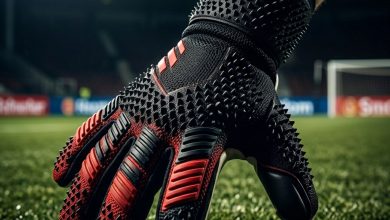
Goalkeeper glove sizing is simultaneously the most important and most frequently misunderstood aspect of glove selection. A glove with premium latex foam and the perfect cut design becomes ineffective when worn in the wrong size — too tight restricts finger movement and causes discomfort, too loose creates dead space that reduces ball feel and catching precision. Yet many goalkeepers select glove sizes based on guesswork, shoe size assumptions, or brand loyalty without ever measuring their hands.
This guide provides a systematic approach to finding your correct goalkeeper glove size, explains how sizing varies between brands, and addresses the common sizing errors that lead to poorly fitting gloves and wasted purchases.
How to Measure Your Hand
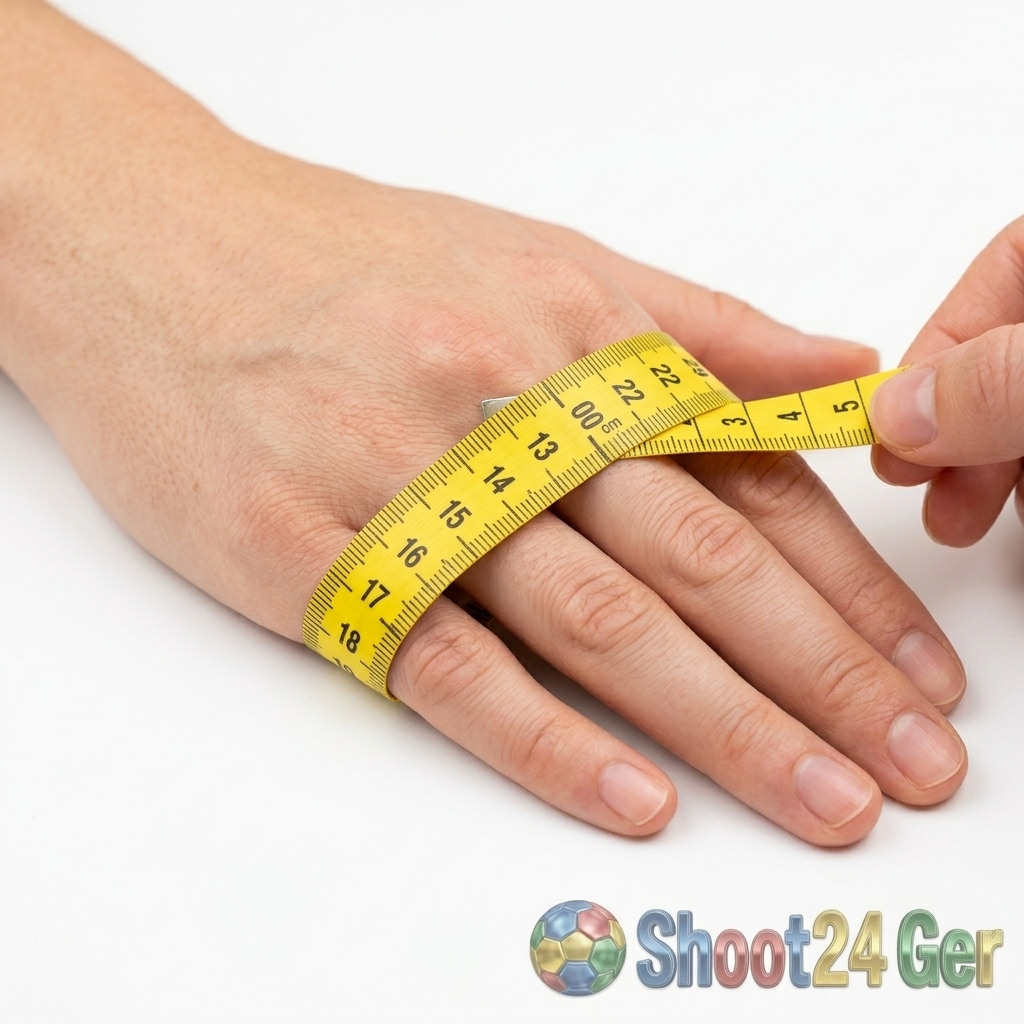
Accurate hand measurement is the foundation of correct glove sizing. The measurement process is straightforward and requires only a flexible measuring tape or a piece of string and a ruler.
Step 1: Measure Hand Circumference
Wrap the measuring tape around the widest part of your dominant hand — typically across the knuckles at the base of the fingers, excluding the thumb. Keep your hand flat with fingers together. The tape should be snug but not compressing the hand. Record this important measurement in centimeters for reference.
This circumference measurement is the primary sizing reference used by all major goalkeeper glove brands. It provides the most reliable size prediction because hand circumference correlates strongly with overall hand size and finger length for most people.
Step 2: Measure Hand Length
Place a ruler from the base of your palm (where the wrist meets the hand) to the tip of your longest finger (typically the middle finger). Record this measurement in centimeters. Hand length serves as a secondary reference that helps refine the size when circumference falls between two sizes on a brand’s chart.
Step 3: Note Your Hand Width
Observe whether your fingers are narrow, medium, or wide relative to your palm width. This subjective assessment does not directly determine size but influences which cut type will fit best at your measured size. Narrow fingers suit negative cuts in standard sizes. Wide fingers may require going up half a size in negative cuts or choosing roll finger or flat cuts at the standard measured size.
Understanding Size Charts
Each brand publishes a size chart that maps hand circumference ranges to glove sizes. These sizes are numerical — typically ranging from size 5 (youth) to size 12 (very large adult hands) — with some brands offering half sizes for more precise fitting.
A typical adult goalkeeper measures between 21cm and 27cm in hand circumference, corresponding to glove sizes 7 through 11 depending on the brand. The exact mapping varies between brands — a 24cm hand might be a size 9 in one brand and a size 9.5 in another — which is why measuring and consulting the specific brand’s chart is essential rather than assuming cross-brand size equivalence.
When your measurement falls between two sizes on a brand’s chart, the choice between sizing up and sizing down depends on your cut preference and fit priority. For negative cut gloves where tight fit is intended, the smaller size is typically correct. For flat cut or roll finger gloves where more room is desirable, the larger size provides a more comfortable fit without significant performance loss.
Brand-Specific Sizing Tendencies
Understanding how different brands’ sizing tendencies differ helps goalkeepers who switch between brands or who purchase online without trying gloves first.
Reusch: Tends to fit slightly snugger than the average across brands. A goalkeeper who is a comfortable size 9 in other brands may find Reusch’s size 9 tighter, particularly in negative cut models. If between sizes in Reusch, sizing up by half typically provides a more comfortable fit without excessive looseness. Reusch’s finger channels are narrower than average, which benefits slim-fingered goalkeepers but can feel constrictive for wider-fingered hands.
Uhlsport: Fits moderately — neither exceptionally tight nor loose relative to the industry average. Uhlsport’s sizing is among the most consistent between generations, meaning a goalkeeper who knows their Uhlsport size from previous gloves can confidently order the same size in new models. Finger channels are medium width, accommodating most hand shapes without extreme comfort or tightness.
Nike: Tends toward a slightly slimmer fit overall, consistent with Nike’s athletic product philosophy across their football range. The Vapor Grip 3 fits notably close through the fingers, and goalkeepers with wider fingers should consider sizing up. Nike’s sizing between glove generations can vary more than specialist brands, so measuring before each new model purchase is advisable.
Adidas: Fits true to their published size chart with moderate room across the hand. Predator gloves fit consistently within Adidas’s sizing framework, and the brand offers reasonable width accommodation across their cuts. Goalkeepers familiar with Adidas sizing from other products (boots, clothing) will find the glove sizing consistent with the brand’s general approach.
Sells: Tends to fit slightly roomier than average, which suits goalkeepers who prefer more internal space. The wider fit means goalkeepers who like tight-fitting gloves may need to size down in Sells compared to their size in tighter-fitting brands.
Fit Preferences and Playing Style
Beyond objective measurement, subjective fit preference influences the ideal size within the measured range.
Tight fit preference: Some goalkeepers want their gloves to feel like a second skin — minimal internal movement, direct ball contact, and responsive feel. These goalkeepers should select the smaller size when their measurement falls between two options, and they should prioritize negative cut gloves that reinforce the tight-fitting experience. The trade-off is reduced comfort during extended sessions and less finger flexibility for wide catches.
Comfortable fit preference: Other goalkeepers prioritize comfort and freedom of movement, accepting slightly less direct ball feel in exchange for unrestricted finger movement and no compression discomfort. These goalkeepers should select the larger size when between options and consider roll finger or flat cuts that provide inherently more room than negative cuts.
Shot-stopper style: Goalkeepers who focus on reactions and close-range saves benefit from tighter fits that maximize response speed — less internal glove movement means the glove reacts more immediately when the hand moves to save.
Sweeper-keeper style: Goalkeepers who play high and interact frequently with outfield play benefit from moderate fit that does not restrict their hand movements during distribution and ball-playing situations.
Common Sizing Mistakes
Using Shoe Size as Reference
Hand size does not correlate with foot size. A goalkeeper who wears size 10 shoes does not necessarily wear size 10 gloves. This assumption leads to significant sizing errors because shoe and glove sizing systems measure different body parts with different scaling ratios. Always measure your hand specifically for glove sizing.
Assuming Cross-Brand Equivalence
A size 9 in Reusch does not equal a size 9 in Uhlsport or Nike. Each brand develops its sizing independently, and the same numerical size can fit differently between brands. Always consult the specific brand’s size chart using your measured hand circumference rather than assuming your size from one brand transfers to another.
Buying for Growth
Parents of young goalkeepers often buy gloves one or two sizes too large so the child can “grow into them.” While understandable from a cost perspective, oversized gloves significantly impair a young goalkeeper’s development by reducing ball feel, creating catching inconsistency, and preventing the development of confident hand positioning. For youth goalkeepers, buying the correct current size — even if it means more frequent replacement — supports better technical development than wearing oversized gloves.
Ignoring Cut Impact on Fit
Two gloves in the same size and same brand can fit very differently if they use different cuts. A size 9 negative cut fits noticeably tighter than a size 9 flat cut in the same brand. When changing cut types within a brand, the measured size remains correct, but the feel changes significantly — do not size up simply because a negative cut feels tighter than the flat cut you previously wore.
Not Accounting for Break-In
New goalkeeper gloves — particularly premium latex models — feel tighter when first worn than they will after a few sessions. The latex and construction materials soften slightly with use, and the glove molds to the specific shape of the goalkeeper’s hand. A glove that feels slightly snug during initial try-on may fit perfectly after two to three training sessions. Conversely, a glove that feels comfortable during initial try-on may feel loose after the break-in period relaxes the materials further.
Youth Sizing Considerations
Youth goalkeeper glove sizing requires additional considerations because young hands are growing and because youth gloves often use different construction standards than adult gloves.
Youth sizes typically range from 3 to 7, with the transition to adult sizing occurring around size 7 depending on the brand. During the transition zone (sizes 6-8), both youth and adult gloves may be available in the same size, but they differ in construction — youth models use wider finger channels and simpler cut designs that accommodate growing hands more generously.
Measure youth goalkeepers’ hands every three to six months during active growth periods. Hand growth can be rapid enough that a goalkeeper outgrows a glove size within a single season, making regular measurement essential for maintaining proper fit. For junior goalkeeper gloves, proper sizing directly impacts technical development and should be prioritized over cost savings from buying oversized.
Online Purchase Sizing Strategy
Purchasing goalkeeper gloves online eliminates the ability to try before buying, making accurate sizing even more critical for online buyers.
Measure your hand precisely using the method described above. Consult the specific brand and model’s size chart — some brands publish model-specific sizing recommendations that differ from their general chart. Read customer reviews for sizing feedback — comments like “runs small” or “generous fit” provide practical insight that supplements the brand’s official chart.
Order from retailers with clear return and exchange policies. Even with careful measurement, the subjective feel of a new glove may not match expectations, and the ability to exchange for a different size reduces the risk of a poor-fitting purchase. Many specialist goalkeeper retailers offer specific glove-fitting guidance and easy exchanges for sizing adjustments.
When ordering online from an unfamiliar brand for the first time, consider ordering two adjacent sizes (for example, size 8.5 and size 9) and returning the one that does not fit. This dual-order approach is more expensive initially but prevents the frustration and delay of receiving, trying, returning, and reordering when the first size is incorrect.
The Fitting Test
When you receive or try on goalkeeper gloves, use this systematic fitting test to confirm the size is correct before committing to use.
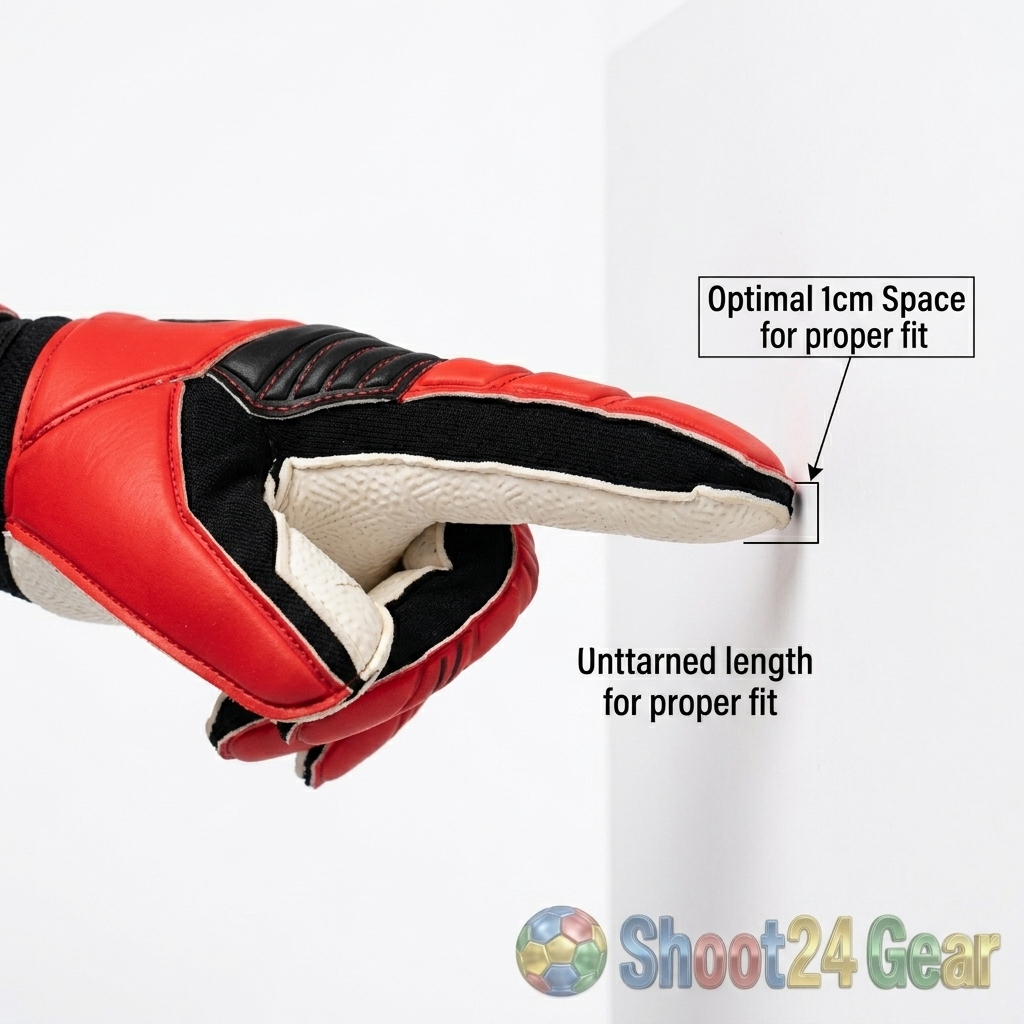
Finger length check: With the glove on, press the tips of your fingers against a flat surface. There should be approximately 1-1.5 centimeters of space between your fingertips and the end of the glove fingers. This gap accommodates the latex compression that occurs during catching — when the ball pushes the latex against your fingertips, the gap closes. If there is no gap, the glove is too small. If the gap exceeds 2 centimeters, the glove is too large and the excess finger length will fold during catches, creating catching inconsistency.
Palm contact check: With the glove on, close your hand around an imaginary ball. The palm latex should sit flat against your palm without significant bunching or air gaps. Minor creasing is normal, but large folds of excess latex indicate the glove is too wide. Conversely, if the latex pulls tight and restricts your hand closure, the glove is too narrow.
Wrist closure check: Fasten the wrist closure and move your hand through the full range of goalkeeping motions — catching, punching, diving position, and ball release for distribution. The closure should feel secure without being painfully tight, and it should not restrict wrist movement in any direction. If the closure cannot wrap completely around your wrist, the glove is too small. If the closure overlaps excessively and feels loose even at maximum tightness, the glove may be too large.
Comfort assessment: Wear the gloves for five to ten minutes while performing simulated catching and throwing movements. Initial tightness is acceptable in new gloves, but sharp discomfort at specific pressure points — particularly at the thumb crotch or between fingers — indicates a sizing or cut incompatibility that will not resolve through break-in.
Seasonal and Environmental Sizing Factors
Hand size changes subtly with temperature and activity level, which can affect glove fit perception across different playing conditions.
In cold weather, hands contract slightly, which means gloves may feel marginally looser than in warm conditions. This is rarely significant enough to warrant a different size for winter play, but goalkeepers who are between sizes and play primarily in cold climates may benefit from selecting the smaller size option.
In warm weather, hands swell slightly due to increased blood flow, which means gloves feel marginally tighter during summer play. Again, the effect is minor, but goalkeepers in hot climates who are between sizes may prefer the larger option for warm-weather comfort.
The swelling effect is more noticeable during intense activity. A glove that fits comfortably during pre-match warm-up may feel tighter during the second half after extended physical exertion. This dynamic sizing effect is normal and should not prompt a size change — it is better managed through appropriate cut selection rather than sizing adjustment.
When to Re-Measure
Adult goalkeepers should re-measure their hands when switching between brands for the first time, when they have not purchased new gloves in more than two years, or when existing gloves feel noticeably different from how they felt when first purchased. Hand dimensions can change subtly over years due to weight changes, aging, and activity patterns.
Youth goalkeepers should be re-measured before every new glove purchase during active growth periods — hand growth can change sizing requirements between consecutive purchases even within the same brand and model.
Summary
Correct goalkeeper glove sizing starts with accurate hand measurement and ends with honest self-assessment of fit preference. The measurement provides the objective starting point, the brand’s size chart narrows the options, and your cut preference and playing style determine whether to size up or down when between sizes. Avoiding common mistakes — cross-brand assumptions, shoe size correlations, and oversizing for growth — prevents the wasted purchases and poor-fitting experiences that frustrate many goalkeepers.
Take the time to measure properly, consult the specific brand’s chart, and prioritize fit over brand loyalty or aesthetic preference. A correctly sized glove from any reputable brand will consistently outperform a poorly sized glove from even the most premium and expensive brand available, regardless of the latex quality, technology features, or advanced construction methods involved in the more expensive option.
Size charts, fit tendencies, available sizes, and brand-specific sizing conventions all change between glove generations and retail seasons as brands refine their construction and sizing approaches. Always verify current sizing information and measurement guidance on official brand websites before making any purchasing decisions for your goalkeeper glove equipment.