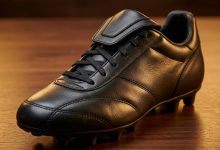
Having wide feet in football is a frustration that narrow-footed players never fully appreciate. Most football boots are designed on medium-width lasts — the foot-shaped molds around which boots are constructed — which means players with wider-than-average feet face a systematic problem: the majority of boots on the market will be uncomfortable regardless of size. Sizing up to gain width creates heel slippage and excessive length. Sizing correctly for length creates forefoot compression and pain. Neither compromise produces a satisfactory playing experience.
This guide addresses the wide-foot problem directly: which brands and models accommodate wider feet, how to measure your foot width accurately, what strategies work for finding comfortable boots, and what mistakes to avoid when shopping for wide-fit football footwear.
Understanding Foot Width
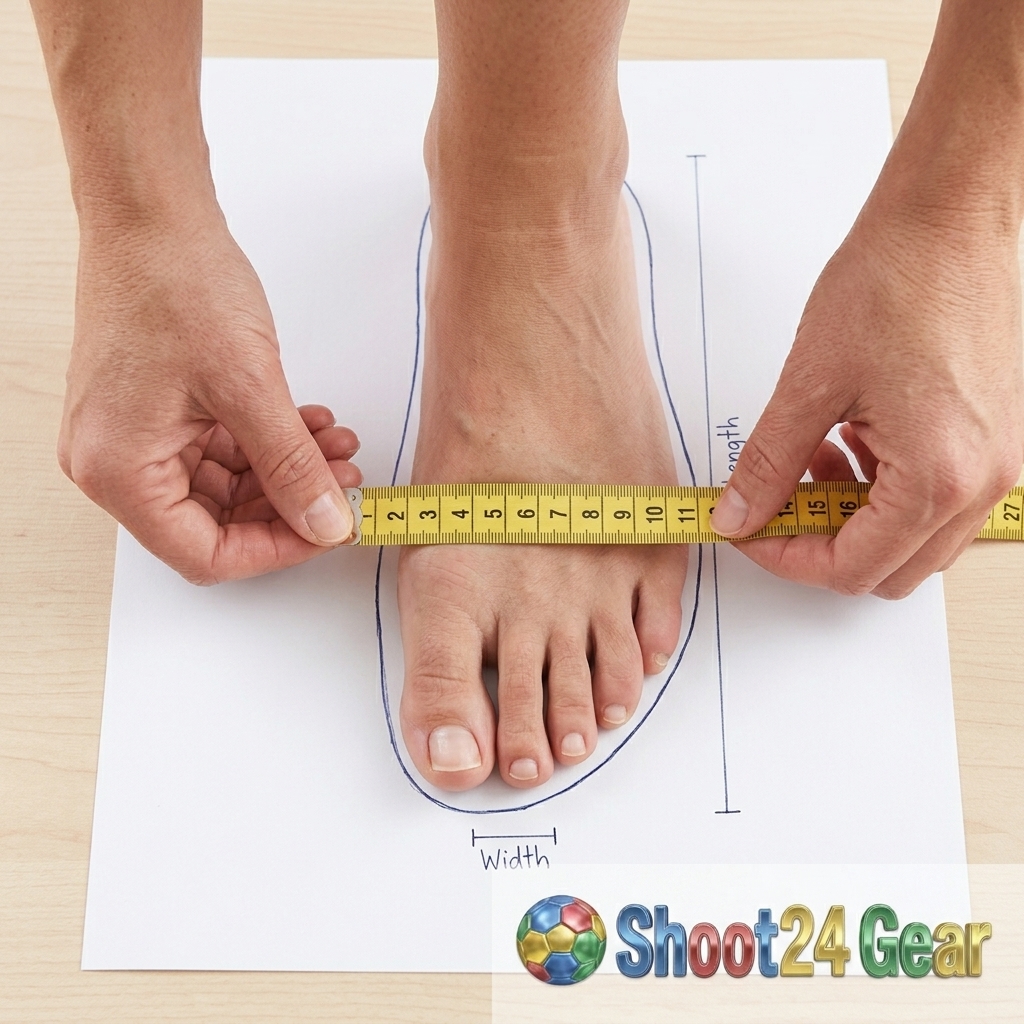
Foot width is measured at the widest point of the forefoot — the metatarsal heads, where the ball of your foot spreads during weight-bearing. Width is categorized using letter designations that vary between measurement systems but generally follow this scale:
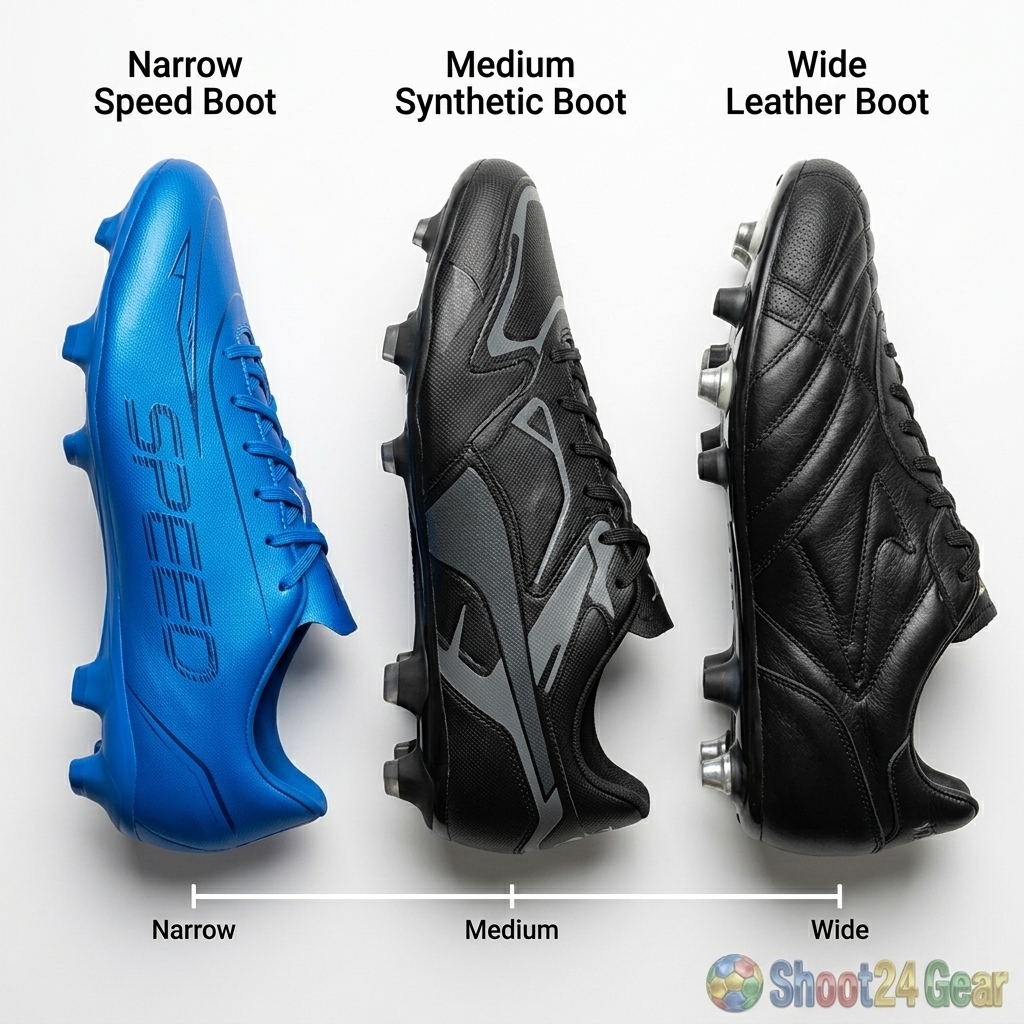
- B (Narrow): Below average width. Most speed boots suit this width comfortably.
- D (Standard/Medium): The width that most football boots are designed for. If you have never had width issues with shoes, you are likely D width.
- E (Wide): Wider than average. Standard football boots feel tight across the forefoot. This is the most common “problem” width — wide enough to be uncomfortable in standard boots but not extreme enough for specialized footwear.
- 2E/EE (Extra Wide): Significantly wider than average. Very few football boots accommodate this width without modification or specific wide-fit models.
Measuring your foot width requires a flat surface, a piece of paper, a pencil, and a ruler. Stand on the paper with your full weight on one foot, trace the outline, and measure the distance between the widest points of the tracing. Compare this measurement to width charts — available on most major brand websites — to determine your width category.
Importantly, measure both feet. Many people have slightly different widths between their left and right foot. If your feet differ in width, fit the boot to the wider foot — a slightly loose fit on one foot is far preferable to a painfully tight fit on the other.
Brand Width Comparisons
Different brands use different lasts, which means their boots fit differently even at the same marked size. Understanding these brand-level tendencies helps narrow your search before trying specific models.
Nike
Nike football boots generally run narrow to medium. The Mercurial line is particularly narrow — consistently one of the tightest-fitting boot families across any brand. The Phantom GX fits medium width. The Tiempo Legend offers the widest Nike fit thanks to its leather upper, which stretches to accommodate slightly wider feet over time. Overall, Nike is not the most accommodating brand for wide-footed players, though the Tiempo line provides a viable option for medium-wide feet.
Adidas
Adidas boots fit medium width as a baseline, with some variation across lines. The Copa Pure fits medium to slightly wide thanks to its Fusionskin leather construction. The Predator fits medium width. The X Crazyfast runs narrow, similar to the Mercurial. Adidas does not offer dedicated wide-fit versions but provides more forefoot room than Nike across most comparable models.
Puma
Puma boots tend to fit medium to slightly wide, making them among the more accommodating major brands. The Puma King is notably wider than most competitors — one of the widest-fitting boots from any major brand. The Puma Future offers adaptive fit through FUZIONFIT+ technology that accommodates width variation. The Puma Ultra runs narrow as a speed boot. Overall, Puma is often a good starting point for wide-footed players.
New Balance
New Balance has a strong heritage of accommodating wider feet across their general footwear range, and this extends to their football boots to some degree. The Tekela offers more forefoot room than comparable Nike models. New Balance also historically offers some models in wider-fit options, though availability varies by region. Wide-footed players should check New Balance’s football range as a priority.
Mizuno
Mizuno boots vary between models. The Morelia II fits medium to wide and is frequently recommended for wider feet. The Morelia Neo III fits medium, tighter than the Morelia II. Mizuno also offers Japan-market-only wide-fit versions of some models (marked “Wide” in their sizing), though these can be difficult to source outside Japan.
Best Options for Wide Feet
Based on consistent fit reports and construction characteristics, the following boots most reliably accommodate wider feet:
Tier 1 — Widest available options:
- Puma King Ultimate — K-leather with generous forefoot room and foam padding that accommodates width.
- Mizuno Morelia II — Medium-wide last with K-leather that stretches to conform to wide forefeet.
- New Balance 442 (if available in your region) — One of the few boots specifically designed with wider players in mind.
Tier 2 — Accommodating medium-wide feet:
- Adidas Copa Pure — Fusionskin leather provides some width accommodation.
- Nike Tiempo Legend — Calfskin leather stretches to suit medium-wide feet.
- Puma Future — FUZIONFIT+ adaptive system handles width variation.
Tier 3 — Worth trying for borderline wide feet:
- Adidas Predator — Medium fit with some forefoot room.
- Nike Phantom GX — Medium width, some knit stretch.
- New Balance Tekela — Slightly wider than Nike equivalents.
Sizing Strategies for Wide Feet
Wide-footed players often develop coping strategies for boot fitting that seem logical but actually cause problems. Understanding which strategies work and which create new issues helps make better purchasing decisions.
Going up half a size: This is the most common strategy and the most frequently problematic. Increasing length to gain width does add some forefoot room, but it also creates excess length at the toe and looseness at the heel. The toe box extends beyond your toes, creating dead space that shifts during running and can cause toe injuries. The heel becomes loose, reducing lockdown and causing blisters from internal movement. Half-size-up works for players who are only marginally wider than standard — for genuinely wide feet, it creates more problems than it solves.
Choosing leather over synthetic: This strategy has genuine merit. Leather boots stretch and mold to foot shape over time, effectively gaining width through use. K-leather in particular adapts significantly — a boot that feels snug on day one can accommodate an additional 2 to 3mm of width by day ten. This natural adaptation makes leather a genuinely better material choice for wide-footed players who can tolerate the initial tightness during break-in.
Removing the insole: Removing or replacing the stock insole with a thinner alternative creates a small amount of additional internal volume. This volume increase is modest — typically 1 to 2mm of effective width gain — but it can make the difference between uncomfortable and tolerable for borderline cases. The trade-off is reduced underfoot cushioning, which matters during extended sessions.
Heat molding: Some boot retailers offer heat molding services that soften the boot’s upper and allow it to conform to your foot under controlled heat. This works better with some materials than others — leather and certain synthetics respond well, while rigid plastics and laminated materials do not change significantly. Heat molding can provide 2 to 4mm of width accommodation when effective.
What to Avoid
Several common approaches to the wide-foot problem should be avoided because they create worse outcomes than the original issue.
Cutting the upper: Some players cut slits in the upper to relieve forefoot pressure. This destroys the boot’s structural integrity, voids any warranty, and creates weak points that fail rapidly during play. It also looks unprofessional and may not meet competition regulations.
Ignoring the problem: Playing in boots that are too narrow causes metatarsal compression, bunion aggravation, blackened toenails, and nerve irritation. Over time, these issues can become chronic foot problems that affect daily life beyond football. Width-related discomfort is not something to push through — it is a sign that the boot does not fit and needs to be changed.
Buying based on brand alone: Assuming that because one Nike boot fits, all Nike boots will fit. Each model within a brand uses different lasts, different materials, and different construction techniques. Always try specific models rather than relying on brand-level assumptions.
Custom and Aftermarket Options
For players at the extreme end of the width spectrum — 2E and beyond — standard off-the-shelf boots may not provide adequate accommodation regardless of brand or model. Several options exist for these players.
Custom-made football boots from specialist manufacturers provide boots built to your exact foot measurements. This is the most effective solution but also the most expensive — custom boots typically cost significantly more than retail alternatives. Companies specializing in custom football boots operate in several countries and can be found through online search.
Aftermarket insoles designed for wide feet can improve the internal fit of slightly-too-narrow boots. Companies like Superfeet, Currex, and Sidas produce sport-specific insoles in varying widths that can improve comfort within existing boots. These do not change the external dimensions of the boot but can redistribute internal pressure more comfortably.
Podiatric consultation provides professional guidance on foot shape, width measurement, and boot recommendations. A sports podiatrist can assess your specific foot characteristics and recommend boots, modifications, and orthotics tailored to your needs.
Position-Specific Width Considerations
Different playing positions interact with boot width in different ways, and understanding these interactions helps prioritize what matters most when compromising between width comfort and playing performance.
Goalkeepers: Width comfort matters most for keepers because they spend extended periods standing and making short explosive movements. A too-narrow boot causes pain during the long low-intensity phases between saves. Keepers should prioritize width comfort above all other boot characteristics — the marginal performance differences between boot models are less important than ninety minutes of forefoot comfort.
Center-backs: Defenders benefit from wider boots because they frequently plant their feet firmly during tackles, headers, and clearances. These high-impact moments distribute force across the forefoot, and a tight boot concentrates this force uncomfortably. The wider-fitting leather options — Puma King, Mizuno Morelia II — suit defensive play well.
Central midfielders: Midfielders need a balance between width comfort for sustained running and enough lockdown for precise passing. The adaptive-fit options — Puma Future, Copa Pure — work well because they accommodate width while maintaining enough structure for technical ball work.
Wingers and forwards: Speed-dependent wide players face the hardest compromise. Speed boots are almost universally narrow, and the wider alternatives sacrifice weight and soleplate responsiveness. Wide-footed wingers may need to accept a heavier boot that fits properly rather than squeezing into a narrow speed boot that causes pain. A properly fitting medium-weight boot serves a wide-footed winger better than a speed boot that creates forefoot agony by the 60th minute.
Wide Feet in Youth Football
Children and teenagers with wide feet face additional challenges that deserve specific attention from parents and coaches.
Young feet are still developing. Forcing growing feet into narrow boots can cause structural problems — bunions, hammertoes, and metatarsal alignment issues that may persist into adulthood. Parents should never dismiss a child’s complaint about boot tightness as a need to “break them in.” If a youth player says the boots hurt across the forefoot, the boots are too narrow, regardless of how new they are.
Youth boot sizing changes frequently as feet grow. A boot that fits in September may be too small by January. For wide-footed children, this rapid growth cycle means frequent replacements, which makes premium boots less cost-effective. Consider mid-range boots from width-friendly brands (Puma, New Balance) that provide adequate quality at price points that accommodate frequent replacement.
Many junior football academies and schools require specific boot colors — typically all black or all white. This can limit options for wide-footed juniors, as the widest-fitting models may not be available in the required colorway. Check league and school requirements before purchasing to avoid buying boots that cannot be worn in organized play.
The Break-In Factor for Wide Feet
Wide-footed players should understand that leather boots specifically require a break-in period during which the boot transitions from too-tight to properly fitted. This process is different from the experience of standard-width players because the degree of stretching required is greater.
During the first three to five sessions in a new leather boot, wide-footed players typically experience significant forefoot pressure. The leather has not yet stretched to accommodate the wider forefoot, and the boot feels constrictive across the metatarsal area. This discomfort is temporary and expected — it is the necessary period during which the leather adapts to your foot shape.
To manage break-in discomfort, wear the boots for shorter sessions initially. Twenty to thirty minutes of ball work for the first few wearings, gradually extending to full training sessions by the fourth or fifth wearing. This graduated approach allows the leather to stretch incrementally without subjecting your feet to ninety minutes of pressure on day one.
After approximately five to seven sessions, properly fitted leather boots should feel comfortable across the forefoot. If significant pressure and pain persist beyond this timeline, the boot is genuinely too narrow for your foot rather than simply not yet broken in. At that point, a different model or brand is the appropriate solution rather than continued wearing.
Synthetic boots do not break in the same way. If a synthetic boot feels too narrow on the first wearing, it will remain too narrow. The material does not stretch meaningfully over time, so the initial fit assessment is essentially permanent. This makes trying synthetic boots on before purchasing especially important for wide-footed players — the fit you feel in the store is the fit you will live with.
Online Purchasing Tips
Wide-footed players frequently need to order boots online because the widest-fitting models may not be stocked locally. This creates a sizing risk that can be mitigated with proper preparation.
Always measure your feet using the brand’s specific measurement guide before ordering. Generic shoe size numbers do not account for width variation between brands. A size 9 in Nike fits differently from a size 9 in Puma, and the width difference can be the determining factor in comfort.
Order from retailers with clear return policies. Boots that do not fit should be returnable without penalty. Try boots on at home on carpet or soft surfaces — not outdoors — to preserve the option of returning if the fit is wrong. Boots worn on grass or artificial turf typically cannot be returned.
When trying boots on at home, wear the socks you play in. Stand up and walk around for at least five minutes. Press on the sides of the forefoot to assess pressure points. If significant pressure exists across the metatarsal heads while standing still, the boot will be painful during play. Return it and try the next option on your list.
Summary
Wide feet and football boots present a solvable problem, but the solution requires honest assessment of your foot dimensions, willingness to look beyond the most popular brands and models, and acceptance that the widest selection of boots may not include the flashiest or most marketed options.
Start with brands that historically accommodate wider feet — Puma, New Balance, and Mizuno. Consider leather boots for their natural stretching properties. Measure both feet accurately before purchasing. And resist the temptation to size up for width — the problems it creates usually outweigh the marginal width gain.
Boot availability, sizing, and width options vary between regions and seasons. Check official brand websites and authorized retailers for current options before making any purchasing decisions.