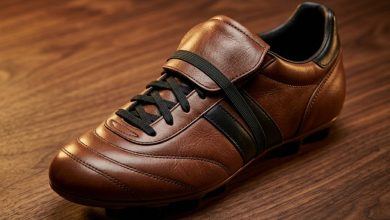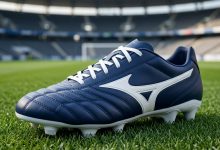
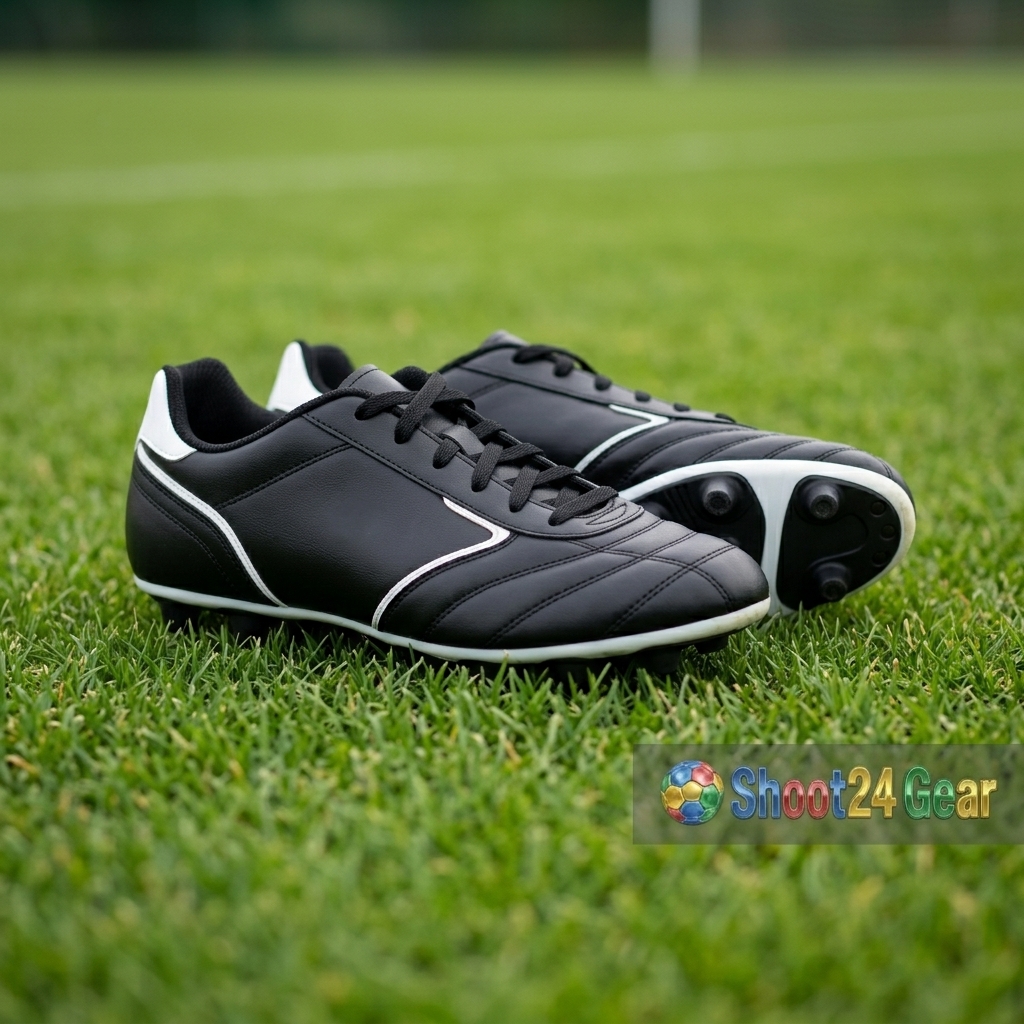
Not everyone can or should spend premium prices on football boots. The marketing-driven assumption that expensive boots are always better than affordable ones ignores a practical reality: for the vast majority of recreational, amateur, and youth players, a well-chosen budget boot provides adequate performance for their playing level. The technology gaps between budget and elite boots are real, but whether those gaps matter depends entirely on the player’s skill level, playing frequency, and competitive demands.
This guide examines the budget boot market honestly — what quality you can genuinely expect at lower price points, which compromises are acceptable, which are not, and how to maximize value when working within a limited equipment budget.
What Defines a “Budget” Boot
For the purposes of this guide, budget boots are defined as new football boots priced under approximately $100 (or the regional equivalent). This price range typically covers the following tiers from major brands:
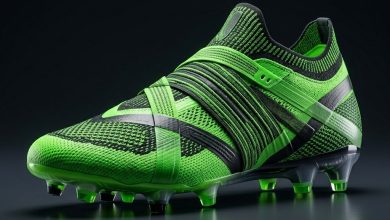
Training tier: The lowest-priced option in a boot line (e.g., Nike Mercurial Club, Adidas Predator Club). These boots share the visual design of elite models but use entirely different materials. Typically priced between $40 and $60.
Academy tier: The mid-range option (e.g., Nike Phantom Academy, Adidas Copa Academy). These boots use improved materials compared to training tier but remain significantly different from elite versions. Typically priced between $60 and $100.
Understanding where these tiers fit within brand hierarchies helps set appropriate expectations. An Adidas Predator Club is not a cheaper version of the Predator Elite — it is a different boot that shares a name and visual styling. The materials, construction techniques, and performance characteristics differ substantially between tiers.
What You Get at Budget Prices
Budget boots provide several things effectively:
Functional soleplate: The soleplate on budget boots uses the same stud configurations as higher-tier equivalents. An FG budget boot has the same number and arrangement of studs as an FG elite boot from the same line. Traction quality is comparable because the basic physics of stud-ground interaction does not change with price. The soleplate may be slightly heavier and less responsive, but it grips the ground effectively.
Basic protection: Budget boots protect your feet from impacts, stud pressure from other players, and surface abrasion. The uppers are thick enough to prevent injury from ball impacts and opponent challenges. Basic safety is not compromised at lower price points.
Acceptable durability: Surprisingly, budget boots sometimes outlast premium alternatives because their thicker, simpler materials resist wear more robustly than the thin, engineered uppers of elite boots. A thick synthetic upper does not tear as easily as a paper-thin speed boot upper. Players who prioritize longevity over performance may actually get more months of use from a budget boot.
Comfortable fit: Budget boots from major brands fit adequately. They use the same sizing systems and similar last shapes as higher-tier models. A Nike Academy boot fits similarly to a Nike Elite boot in the same line — the internal dimensions and foot shape are comparable.
What You Sacrifice at Budget Prices
The compromises at budget price points are concentrated in specific areas:
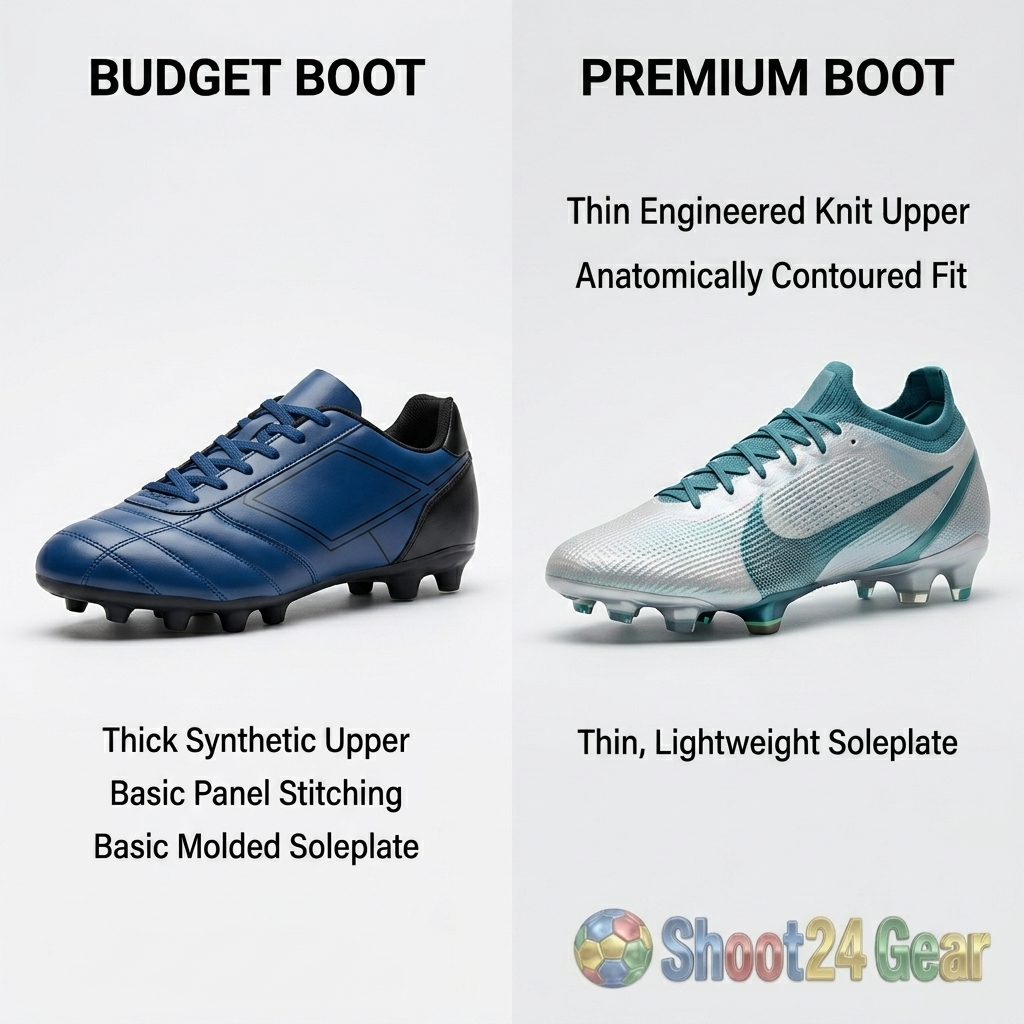
Upper material quality: This is the most significant difference. Budget uppers use thicker, stiffer synthetic materials that lack the touch sensitivity, flexibility, and ball feel of premium uppers. The ball feels more distant from your foot, first touches are less precise, and passing accuracy depends more on technique and less on boot assistance. No budget boot uses genuine leather or advanced knit materials.
Weight: Budget boots are heavier than elite equivalents — typically 50 to 100 grams heavier per boot. This weight difference comes from thicker materials, less refined soleplate construction, and additional adhesive used in simpler bonding processes.
Soleplate responsiveness: Budget soleplates are less rigid and less energy-efficient than elite plates. The energy return during sprinting is lower, meaning slightly more effort is required to achieve the same acceleration. For recreational players, this difference is negligible. For competitive players covering high distances at pace, it compounds over ninety minutes.
Technology features: The signature technologies that define elite boots — Gripknit zones, Kinetic Stitch textures, FUZIONFIT+ adaptive systems, Flytouch foam layers — are absent from budget tiers. Budget boots use plain synthetic uppers without applied grip elements, texture zones, or adaptive fit systems.
Best Value Options by Brand
Each major brand offers budget options with different strengths. The following recommendations represent the best value at accessible price points:
Nike
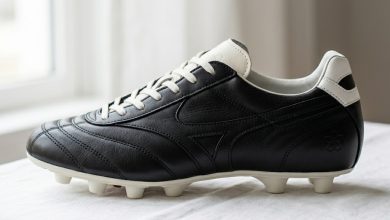
The Tiempo Academy offers the best overall value in Nike’s budget range. It provides reasonable ball feel through a softened synthetic upper that mimics some leather characteristics, comfortable fit, and the Tiempo line’s reliable soleplate. For control-oriented players on a budget, this is Nike’s strongest affordable offering.
The Mercurial Club provides a lightweight budget option for speed-oriented players. The upper is basic, but the soleplate performs adequately for the pace-focused playing style. It is the least expensive way to access a speed-oriented boot from a major brand.
Adidas
The Copa Academy carries forward some of the Copa line’s comfortable fit characteristics at an accessible price point. The synthetic upper does not match the elite version’s Fusionskin leather, but it provides decent ball feel for the price and fits comfortably from the first wearing.
The Predator Academy includes simplified versions of the Predator’s grip zones. While the rubber elements are less pronounced than the elite version, they provide some textural grip that budget boots from other lines lack entirely.
Puma
The King Match offers Puma’s wider fit profile at a budget price. Players with wider feet who cannot find affordable comfort in Nike or Adidas budget boots often find the King Match accommodating.
The Future Play provides Puma’s adaptive fit concept in a simplified form. While it lacks the full FUZIONFIT+ technology, the upper construction provides more flexibility than many budget alternatives.
Alternative Brands
Brands like Joma, Umbro, and Diadora produce football boots that often compete above their price point. Joma’s football boots in particular offer genuine quality at prices well below equivalent major brand products. These alternatives deserve serious consideration for budget-conscious players who prioritize performance over brand cachet.
Smart Budget Purchasing Strategies
Several strategies can stretch a limited boot budget further:
Previous season models: When brands release new boot generations, previous-season elite and pro-tier boots receive significant discounts — often dropping to or below budget price levels. A discounted previous-season Predator Pro may cost less than the current-season Predator Academy while offering substantially better materials and construction. This is the single most effective budget strategy for accessing high-quality boots at affordable prices.
Outlet and clearance shopping: Brand outlet stores and online clearance sections regularly offer current and previous-season boots at reduced prices. Selection is unpredictable — availability depends on remaining stock in your size and preferred colorway — but the savings can be substantial for flexible shoppers.
End-of-season sales: Football boot retailers typically reduce prices significantly at the end of winter and summer seasons to clear stock before new releases. Timing purchases to coincide with these sales can reduce costs by 30 to 50 percent on boots that were outside budget at full price.
Multi-pair rotation from budget tiers: For players who train frequently, buying two pairs of budget boots for rotation can provide better total value than one pair of premium boots. The rotation strategy extends each pair’s lifespan while providing a backup, and the total cost may be comparable to a single premium boot.
Durability Expectations
Budget boot durability depends heavily on playing frequency, surface type, and maintenance habits.
Light use (1-2 sessions per week): Budget boots from major brands typically last 8 to 14 months of light use on natural grass. The thicker synthetic materials resist casual wear well, and the simplified construction has fewer failure points than complex elite designs. For weekend players, a budget boot provides genuine longevity.
Moderate use (3-4 sessions per week): At moderate training frequency, expect 5 to 8 months of usable life. The thicker uppers resist abrasion adequately, but the adhesive bonding and soleplate attachment — areas where budget boots use simpler processes — begin showing stress at this usage level.
Heavy use (5+ sessions per week): Budget boots struggle under heavy training loads. Expect 3 to 5 months before the upper thins, the soleplate begins separating, or studs show significant wear. At this usage level, the multi-pair rotation strategy becomes essential for maintaining continuous boot availability.
On artificial turf, all durability timelines shorten by approximately 30 to 40 percent compared to natural grass. The abrasive synthetic surface accelerates upper wear regardless of price tier, and budget uppers — while thick — may not use abrasion-resistant materials engineered specifically for artificial surfaces.
Fitting Budget Boots
The same sizing principles apply to budget boots as to premium ones, but budget boots present specific fitting considerations that deserve attention.
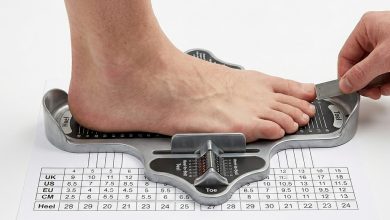
Budget uppers are less forgiving of fit errors because they do not stretch or adapt like premium materials. A premium leather boot accommodates minor fit imperfections through stretching; a budget synthetic boot maintains its factory dimensions permanently. This means getting the size right at purchase is even more important for budget boots than for premium alternatives.
Try budget boots on in-store whenever possible. The opportunity to test fit before committing eliminates the return-and-exchange cycle that online purchasing often requires. Budget boots from local sports shops may cost marginally more than online alternatives, but the fitting confidence justifies the small premium.
Break-in expectations differ at budget level. Premium leather boots have a defined break-in period that transforms the fit. Budget synthetic boots do not change significantly from day one — the boot you try on is the boot you will wear for its entire lifespan. If it does not feel right immediately, it will not feel right later.
Surface Selection on a Budget
Budget-conscious players who play on multiple surfaces face a practical decision: buy one versatile pair or invest in surface-specific options.
If you play only on natural grass: An FG budget boot is the clear choice. No compromise needed.
If you play only on artificial turf: An AG budget boot provides appropriate traction and better durability on synthetic surfaces than FG alternatives. The shorter, more numerous studs distribute pressure more comfortably on the harder artificial surface.
If you play on both surfaces: An AG boot typically provides the better compromise. AG studs work adequately on firm natural grass (though not as well as FG studs), while FG studs on artificial turf concentrate pressure uncomfortably and may create excessive grip. For the budget player who encounters both surfaces, AG is the safer universal choice.
If you play indoors: A separate pair of budget indoor court shoes is essential. No outdoor boot — budget or premium — works safely on indoor surfaces. Budget indoor shoes are typically very affordable and provide adequate grip and comfort for recreational indoor play.
What Not to Buy
Budget consciousness should not extend to certain categories where quality matters for safety and basic functionality:
Unbranded boots from unknown manufacturers: While major brand budget boots maintain acceptable quality standards, boots from unknown manufacturers with no reputation may compromise on materials, adhesives, and construction in ways that create safety risks. Soleplate separation during play, stud failure under load, and upper tearing during challenges all carry injury risk. Stick to recognized brands even at the lowest price points.
Counterfeit boots: Fake boots that copy premium brand designs at dramatically lower prices are widely available online. These counterfeits typically use inferior materials, poor adhesives, and substandard construction that creates both performance and safety problems. The price may be appealing, but the product is unreliable and potentially dangerous.
Second-hand boots with visible wear: While lightly-worn second-hand boots can be good value, boots with significant sole wear, upper deterioration, or structural damage provide inadequate performance regardless of their original quality. Inspect second-hand purchases carefully before committing.
Caring for Budget Boots
Budget boots benefit from the same care protocols as premium boots — and arguably need them more because the simpler construction is less tolerant of neglect.
The adhesive bonding on budget boots uses simpler processes than elite-tier construction. This means the adhesive is more vulnerable to the heat damage that causes soleplate separation. The golden rule — never dry boots with direct heat — applies doubly to budget boots where the bonding has less margin for thermal stress.
Clean mud from studs and uppers immediately after playing. The alkaline compounds in natural mud degrade synthetic materials over time, and budget synthetic uppers have fewer protective coatings than premium alternatives. Regular cleaning prevents the cumulative chemical damage that shortens lifespan.
Store budget boots in ventilated conditions between sessions. The thicker synthetic uppers on budget boots trap moisture more effectively than thin elite uppers, which means internal humidity stays higher for longer. Removing insoles and opening laces for ventilation is particularly important for budget boots to prevent the bacterial growth that causes persistent odor.
The small time investment in caring for budget boots extends their usable lifespan significantly — potentially adding two to three months of use that translates directly into delayed replacement costs. For budget-conscious players, boot care is itself a financial strategy.
When Budget Is Not Enough
For some playing situations, budget boots genuinely cannot meet the demands placed on them:
Competitive players at semi-professional or academy levels who train daily and play matches weekly need boots that handle the volume and intensity of their schedule. Budget boots wear out faster under this level of use, and the accumulated performance compromises in touch, weight, and responsiveness affect competitive outcomes.
Players with specific medical foot requirements — custom orthotic needs, unusual width requirements, or injury-related fit needs — may not find adequate accommodation in budget boot ranges that offer fewer fit options.
Players who play primarily on artificial turf need boots with durable uppers that resist abrasion. Budget synthetic uppers, while thick, may not be engineered specifically for artificial turf abrasion resistance, leading to faster-than-expected upper wear.
Summary
Budget football boots serve a legitimate and important purpose in the market. They provide functional, safe, comfortable football footwear at accessible prices for the majority of recreational and amateur players. The compromises they make — in ball feel, weight, technology features, and upper sophistication — are real but often irrelevant for players whose skill development, enjoyment of the game, and weekly playing experience are not meaningfully affected by the differences between a $70 boot and a $250 boot.
Spend wisely rather than spending more. A well-chosen budget boot from a reputable brand, properly fitted using our sizing guide and maintained following our care guide, provides months of reliable and consistent performance. That is the honest value proposition of budget football boots — not premium performance, but genuine functionality at genuinely fair prices for real players.
Prices, regional availability, and specific model offerings change frequently between seasons and across different markets. Check official brand websites and authorized local retailers for the most current budget-friendly options and seasonal sale opportunities before making any purchasing decisions.