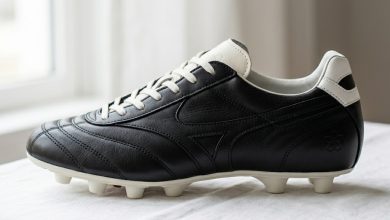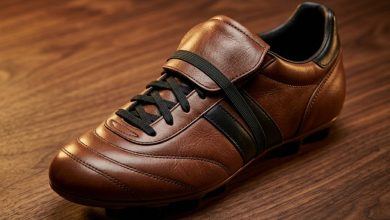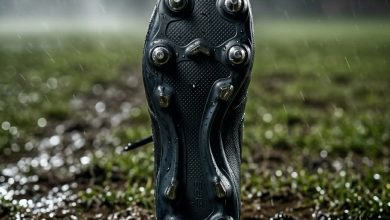
Indoor football exists in a different world from the outdoor game, and the footwear requirements reflect that difference completely. The studs that provide grip on grass and turf are useless on flat gymnasium floors and polished sports hall surfaces. They offer no traction, they damage expensive indoor flooring, and they create awkward, unstable footing that makes technical play nearly impossible.
Indoor football shoes replace studs with flat rubber outsoles designed to grip smooth, hard surfaces through friction rather than ground penetration. This fundamental design difference affects every aspect of the shoe — the outsole compound, the upper construction, the cushioning, and the weight distribution. Understanding these differences helps players choose appropriate indoor footwear rather than attempting to adapt outdoor boots to indoor conditions.
This guide covers the three main categories of indoor football footwear: true indoor court (IC) shoes, indoor turf (IT) shoes, and the increasingly popular street/cage football shoes that bridge indoor and outdoor casual play.
Indoor Court (IC) Shoes
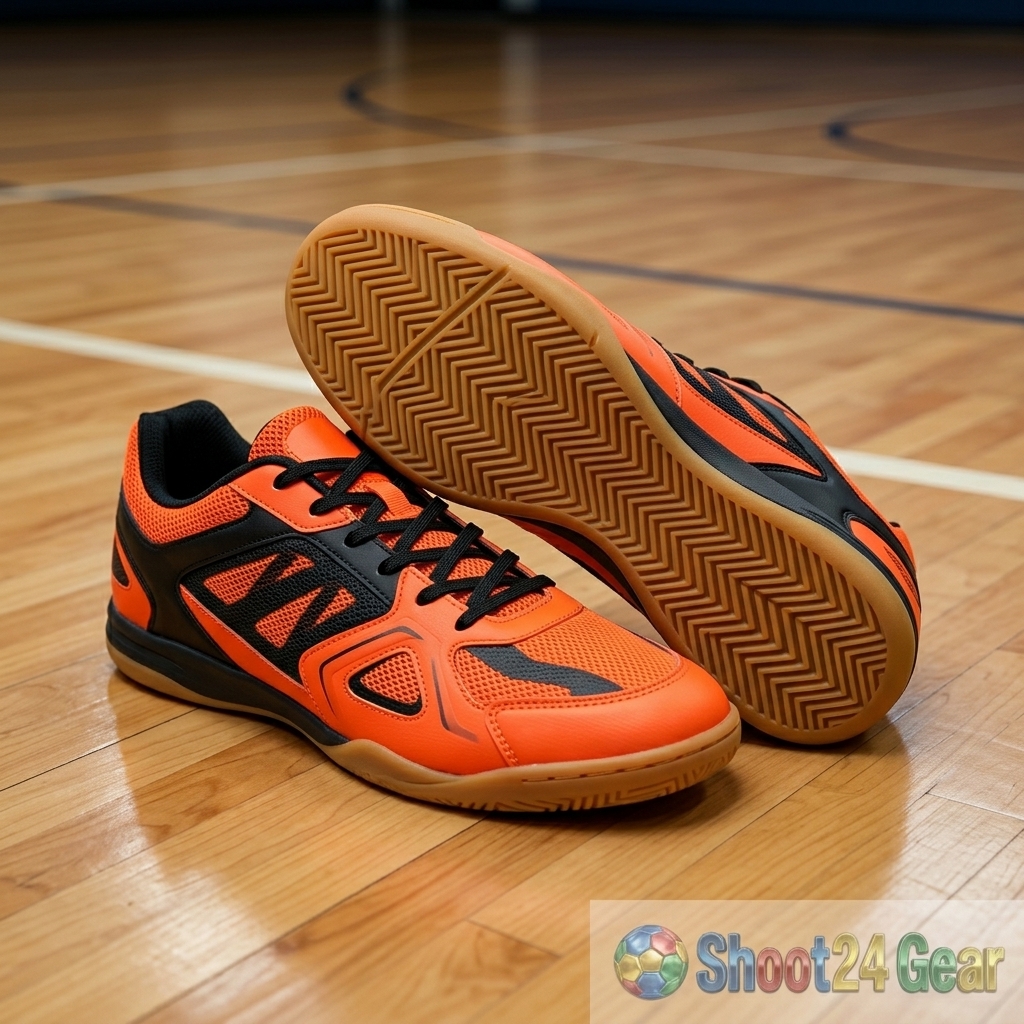
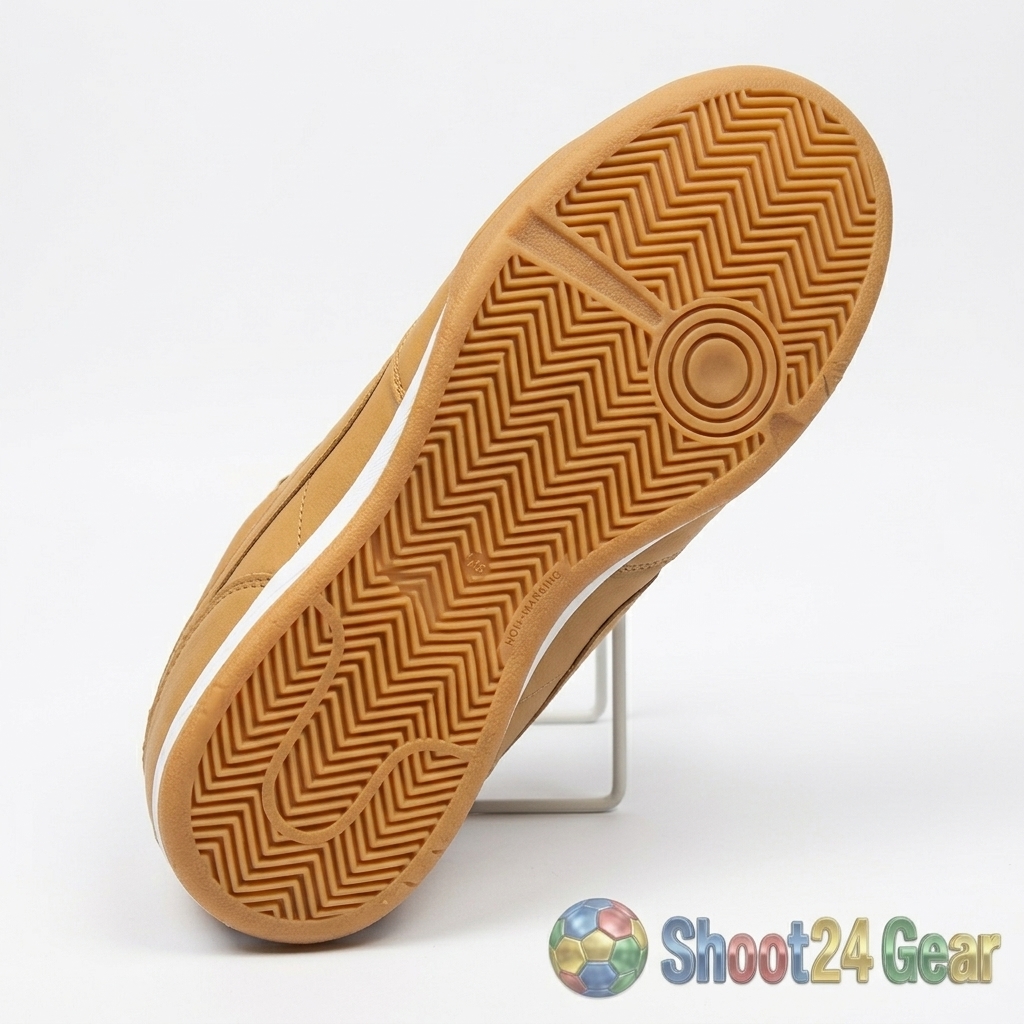
True indoor court shoes are designed for play on hard, flat surfaces — gymnasium floors, sport hall surfaces, futsal courts, and similar smooth surfaces. They use flat rubber outsoles with herringbone, circular, or geometric tread patterns that create grip through rubber-to-floor friction.
Outsole Design
The outsole is the defining feature of any IC shoe. The rubber compound must balance grip with durability — too soft and it wears out in weeks, too hard and it loses traction on smooth surfaces. Most quality IC shoes use gum rubber or non-marking rubber compounds that provide reliable grip without leaving scuff marks on indoor flooring. Many indoor facilities require non-marking soles as a condition of entry, making this a practical necessity rather than a preference.
Tread pattern matters for traction characteristics. Herringbone patterns (angled V-shapes) provide multi-directional grip and are the most common IC outsole pattern. Circular patterns offer smooth rotational movement — useful for futsal players who pivot frequently. Geometric patterns attempt to combine directional grip with rotational freedom. No single pattern is universally superior — the best choice depends on your movement style and the specific surface you play on.
Outsole flexibility is critical for indoor play. The sole must bend at the toe break point to allow the foot to flex naturally during running and push-off. Unlike some outdoor boot soleplates that use stiffness for energy return, IC shoes prioritize natural foot movement because indoor play involves constant rapid footwork that stiff soles inhibit.
Upper Construction
IC shoe uppers tend to be thinner and more responsive than outdoor boot uppers because indoor play demands more precise ball manipulation at close range. The reduced distances and faster pace of indoor football mean every touch matters more — a slightly cushioned first touch on a 30-yard outdoor pass becomes a critical control moment on a 10-yard indoor pass played at pace.
Most IC shoes use thin synthetic or suede-like uppers that provide close ball feel without excessive padding. Some premium models use leather or partial leather panels for enhanced touch. The leather versus synthetic considerations apply to indoor shoes similarly to outdoor boots — leather provides better touch, synthetic provides better durability and weather resistance (though weather is less relevant indoors).
Breathability matters more in IC shoes than outdoor boots because indoor environments are typically warmer and less ventilated than outdoor pitches. Mesh panels, perforated uppers, and breathable synthetics help manage heat buildup during intense indoor sessions where constant movement generates significant foot temperature.
Cushioning
Indoor surfaces are hard. Gymnasium floors, concrete with sport surfacing, and futsal courts transmit impact forces directly into the foot and up through the legs. IC shoes need adequate midsole cushioning to absorb this impact over extended play — a requirement that outdoor boots on soft grass do not share as strongly.
Most quality IC shoes incorporate foam midsoles that cushion the foot during running, stopping, and jumping. The cushioning is lighter than running shoe cushioning — enough to absorb impact without adding weight or raising the foot too far from the ground. Indoor players need ground feel for precise footwork, so the cushioning must balance protection with surface sensitivity.
Players who frequently play on concrete or very hard surfaces should prioritize IC shoes with visible midsole cushioning technology. Those playing on sprung sports hall floors — which absorb impact naturally — can choose thinner, more responsive shoes without as much cushioning because the floor itself provides some impact absorption.
Indoor Turf (IT/TF) Shoes
Indoor turf shoes — often labeled TF (Turf) — sit between true indoor court shoes and outdoor boots. They use short rubber studs or nubs on the outsole that provide grip on artificial turf carpet, outdoor astroturf, and rough indoor surfaces that flat-soled IC shoes cannot grip effectively.
The rubber studs on TF shoes are much shorter than AG or FG studs — typically 3mm to 5mm — and are made of rubber rather than plastic or metal. They are designed to grip the fibrous surface of artificial turf without penetrating it. This shallow grip approach works on surfaces where flat soles slide and full-length studs dig in excessively.
TF shoes are versatile. They work on short-pile artificial turf (the kind found at many 5-a-side facilities), astroturf cages, hard-packed outdoor surfaces, and some indoor facilities with carpet-style flooring. They do not work well on smooth gymnasium floors (insufficient flat contact area) or on natural grass (insufficient stud length for penetration).
For players who primarily play at 5-a-side centers on artificial turf, TF shoes are often the most appropriate choice. They provide more grip than IC shoes on the short-pile surfaces these facilities use, and they are more comfortable and appropriate than AG or FG boots that over-grip the same surfaces.
Choosing Between IC and TF
The choice between indoor court and turf shoes depends entirely on the surface you play on most frequently.
Choose IC shoes if: You play on hard, smooth indoor surfaces — gymnasium floors, sports halls, futsal courts, polished concrete with sport surfacing. These surfaces require flat rubber outsoles for adequate grip. Studded soles of any kind — including the short nubs on TF shoes — feel awkward and unstable on smooth floors.
Choose TF shoes if: You play on short-pile artificial turf, outdoor astroturf cages, or indoor facilities with carpet-style turf surfaces. These textured surfaces require some stud interaction for grip. Flat IC soles can slip on turf surfaces, particularly during quick directional changes.
If you play on both: Some players alternate between gymnasium futsal and outdoor cage football. Ideally, own a pair of each type. If budget constraints limit you to one pair, TF shoes offer marginally more versatility — they work adequately (though not optimally) on both smooth and textured surfaces, while IC shoes struggle on turf.
Fit Considerations for Indoor Shoes
Indoor football shoe fit differs from outdoor boot fit in important ways that affect purchasing decisions.
Indoor shoes should fit snugly but not tightly. The reduced impact forces compared to outdoor football mean you do not need the protective padding that outdoor boots provide, but you do need close contact between foot and shoe for precise footwork. Dead space inside an indoor shoe creates imprecise touch and delays in ball manipulation that matter at indoor pace.
The lower profile of IC shoes — closer to the ground than outdoor boots — changes the balance dynamics. Players accustomed to the raised platform of studded boots may feel initially unstable in flat IC shoes. This adjustment typically takes one or two sessions as your ankle stability adapts to the lower center of gravity.
Width considerations apply to indoor shoes just as they do to outdoor boots. The same brand width tendencies generally hold — Nike runs narrower, Puma runs wider, Adidas sits in the middle. Players with wide feet should check the specific model’s fit profile before purchasing.
Durability and Lifespan
Indoor shoes wear differently from outdoor boots. The flat rubber outsoles gradually lose their tread pattern through friction against hard surfaces, reducing grip over time. Once the outsole tread has worn smooth, the shoe no longer provides reliable traction and should be replaced.
On gymnasium floors, a quality IC shoe typically lasts six to twelve months of regular use (two to three sessions per week). The smooth surface creates less aggressive wear than rough concrete or outdoor surfaces.
On concrete or rough indoor surfaces, outsole wear accelerates significantly. Expect three to six months of regular use before tread degradation becomes noticeable. The rubber compound quality directly affects lifespan — cheaper shoes use harder, less grippy rubber that lasts longer but provides less traction, while premium shoes use softer compounds that grip better but wear faster.
TF shoes on artificial turf surfaces face outsole wear from the abrasive synthetic fibers. The rubber nubs gradually round off and shorten, reducing their effectiveness. Expect four to eight months of regular use before significant nub wear on quality TF shoes.
Position Suitability Indoors
Indoor football positions — while less rigidly defined than outdoor eleven-a-side roles — still benefit from different shoe characteristics.
Pivot/Playmaker: The central creative player benefits from IC shoes with excellent grip for quick pivoting movements and close ball feel for intricate passing. A thin upper with good ground contact is ideal.
Wingers/Flanks: Players who run the sidelines need shoes that support acceleration and sharp directional changes. Look for outsole patterns that grip well during lateral movements — herringbone patterns typically serve this requirement well.
Defenders/Fixo: Defensive players benefit from shoes with stable platforms and good traction during backward and lateral movement. Cushioning is less critical because defensive play involves less constant running than attacking roles.
Goalkeeper: Indoor goalkeepers need shoes with maximum grip for explosive lateral dives and good cushioning for landing on hard surfaces. Some goalkeepers prefer slightly larger shoes for the additional toe protection during shot-stopping, though this reduces touch sensitivity for distribution.
Brand-Specific Indoor Options
Most major football boot brands produce indoor versions of their popular boot lines, as well as dedicated indoor-specific models. Understanding the options helps navigate a category with numerous choices.
Nike: The Nike Mercurial, Phantom, and Tiempo lines all have IC and TF versions. The Lunar Gato and Nike Streetgato are dedicated indoor/street models with excellent court grip. Nike’s IC outsoles use a consistent herringbone pattern that provides reliable multi-directional traction on most indoor surfaces.
Adidas: The Predator, Copa, and X lines include IC and TF options. The adidas Top Sala is a dedicated indoor model with a reputation for exceptional court grip and close ball feel. Adidas tends to use slightly harder rubber compounds that last longer but may grip slightly less aggressively than softer alternatives on polished floors.
Puma: Puma offers IC and TF versions across their boot range. The Puma Future and King lines work well indoors, maintaining their outdoor characteristics (adaptive fit and leather touch respectively) while providing appropriate indoor outsoles. Puma’s indoor outsoles tend toward softer rubber compounds that grip aggressively.
Joma: While less known in outdoor football, Joma has a strong reputation in futsal specifically. The Joma Top Flex is widely regarded as one of the best dedicated futsal shoes available, with excellent grip, close ball feel, and purpose-built court performance. Players serious about futsal should investigate Joma’s range alongside the major brands.
Futsal-Specific Considerations
Futsal — the FIFA-recognized form of indoor football — has specific demands that differentiate it from casual indoor kickarounds and five-a-side on turf cages.
Futsal uses a low-bounce ball on a hard court surface. The reduced ball bounce means first touches must be more precise because the ball stays lower and reacts faster. Shoes with thin, responsive uppers that transmit ball feedback clearly support the rapid touch adjustments that futsal requires.
Court movement in futsal involves constant lateral shuffling, pivoting, and explosive acceleration from standing starts. The outsole needs to support all these movement types simultaneously. Herringbone patterns that grip in all directions tend to perform better for futsal than linear patterns optimized for forward movement.
Futsal courts have specific regulations regarding footwear. Most competitive futsal leagues require non-marking soles and flat outsoles (no studs or nubs). TF shoes are typically not permitted on official futsal courts. Players who compete in organized futsal need dedicated IC shoes that meet league regulations — verify requirements with your competition organizer before purchasing.
Ankle support is a consideration in futsal because the hard surface and constant directional changes create significant ankle stress. Mid-cut indoor shoes provide additional ankle support for players with ankle instability or a history of sprains. Low-cut shoes offer unrestricted movement for players with strong ankles who prioritize agility over protection.
Common Indoor Footwear Mistakes
Using outdoor boots indoors: Wearing FG or AG boots on indoor court surfaces provides no grip, damages flooring, and creates injury risk from unstable footing. This is the most common and most easily avoided mistake.
Using running shoes as indoor football shoes: Running shoes have cushioning designed for forward motion, not the multi-directional demands of football. Their outsoles often lack the lateral grip needed for quick cuts and turns. Dedicated IC shoes provide vastly better performance for indoor football.
Wearing the same shoes for indoor football and daily life: Using indoor football shoes as casual shoes wears down the outsole tread through daily walking, reducing grip performance for football. Dedicated football shoes should be worn only for playing and stored properly between sessions.
Ignoring outsole wear: Playing on worn-out indoor shoes with smooth outsoles is equivalent to playing on a slippery surface. If the tread pattern has worn flat, the shoe no longer provides safe grip. Replace worn shoes before they cause a slip injury.
Maintenance
Indoor shoes are relatively low-maintenance compared to outdoor boots. After each session, wipe the outsole clean to remove dust and debris that reduces grip. Allow the shoes to air dry if they have become damp from perspiration. Store them in a ventilated area rather than sealed inside a bag where moisture promotes odor and bacterial growth.
The non-marking rubber outsoles can accumulate a layer of floor residue that reduces their grip coefficient over time. Periodically cleaning the outsole with a damp cloth and mild soap restores the rubber’s grip properties. This simple maintenance step can extend the effective traction lifespan of IC shoes significantly.
Summary
Indoor football shoes serve a fundamentally different purpose from outdoor boots, and using the right type for your surface is one of the most impactful equipment decisions in indoor football. IC shoes for smooth hard surfaces, TF shoes for artificial turf — matching the outsole to the surface ensures adequate grip, comfortable play, and appropriate durability. The investment in proper indoor footwear pays dividends in both performance and injury prevention, making it one of the most worthwhile equipment purchases for any indoor player.
As with all football footwear, product specifications, pricing structures, and regional availability change between generations and seasons. Always verify current options on official brand websites before making any purchasing decisions for your indoor playing needs.