Heart rate monitoring provides footballers with objective insight into the internal physiological demands of training and match play — information that external metrics like distance and speed cannot fully capture. Two players covering identical distances at identical speeds may experience vastly different physiological loads depending on their fitness levels, recovery status, and individual cardiovascular characteristics. Heart rate monitoring reveals these internal differences, enabling individualized training management that optimizes physical development while minimizing overtraining risk and injury exposure.
This comprehensive guide examines heart rate monitoring technology for football applications, covering the different sensor types available, the training zone frameworks that structure heart rate-based training, practical applications for football-specific conditioning and recovery management, device selection criteria, and guidance for integrating heart rate data into football training programs at every competitive level from amateur individual monitoring through professional team-level physiological tracking systems.
Sensor Types
Chest Strap Monitors
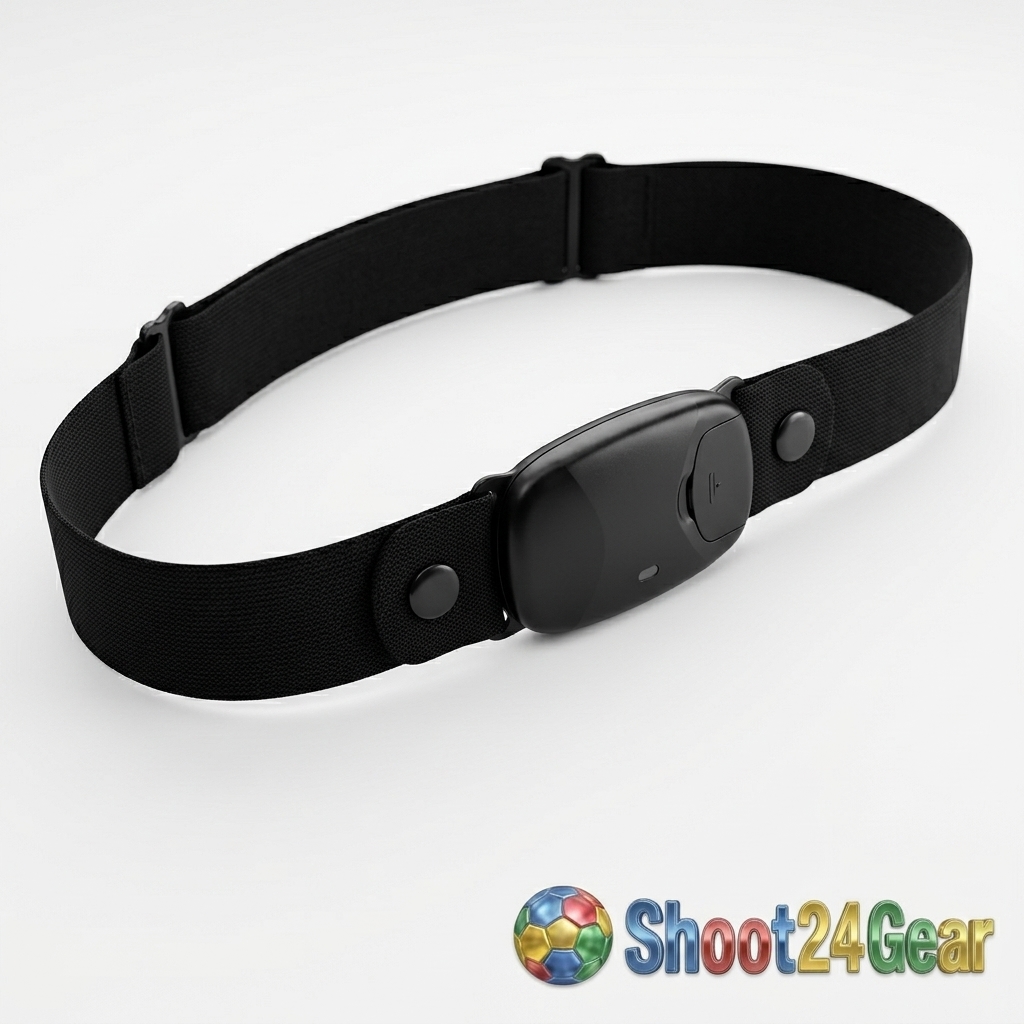
Chest strap heart rate monitors use electrode sensors positioned against the skin over the sternum to detect the electrical signals that trigger each heartbeat. This direct electrical detection method provides the highest accuracy available in wearable heart rate monitoring — approaching the accuracy of clinical electrocardiogram (ECG) measurements in controlled conditions. Chest straps deliver beat-by-beat heart rate data with minimal lag and virtually no signal dropout during intense physical activity.
The accuracy advantage of chest straps is particularly significant during football’s variable-intensity demands — rapid transitions between walking, jogging, sprinting, and recovery create heart rate fluctuations that optical sensors sometimes struggle to track accurately. Chest straps capture these rapid changes reliably, providing accurate zone distribution data even during the most intense and variable training sessions.
Chest straps transmit heart rate data wirelessly via Bluetooth and ANT+ protocols to compatible devices — GPS watches, smartphone apps, and team monitoring systems like Polar Team Pro. This wireless transmission enables real-time heart rate display on a wrist device while the sensor captures data from the more accurate chest position.
Optical Wrist Sensors
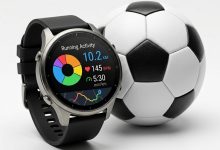
Optical heart rate sensors — integrated into GPS watches and fitness bands — use LED light to detect blood flow changes through the skin of the wrist. This technology provides convenient, always-available heart rate monitoring without the additional equipment and chest contact that strap-based monitoring requires. However, optical sensors are inherently less accurate than chest straps, particularly during high-intensity activities involving rapid arm movement, variable contact pressure, and environmental factors that affect light-based measurement.
For footballers using GPS watches with built-in optical sensors, the heart rate data provides useful general intensity information — identifying whether a session was light, moderate, or intense — but may not accurately capture the rapid heart rate changes during interval-style football training. Pairing a chest strap with the GPS watch provides the convenience of wrist display with the accuracy of chest-based measurement.
Arm Band Optical Sensors
Arm band optical sensors position the optical measurement point on the upper arm or forearm rather than the wrist. The larger, flatter contact surface and reduced movement compared to the wrist typically provide improved accuracy over wrist-based optical sensors. Arm bands offer a middle ground between chest strap accuracy and wrist sensor convenience — more accurate than wrist measurement without the chest contact that some athletes find uncomfortable during extended training sessions.
Heart Rate Training Zones
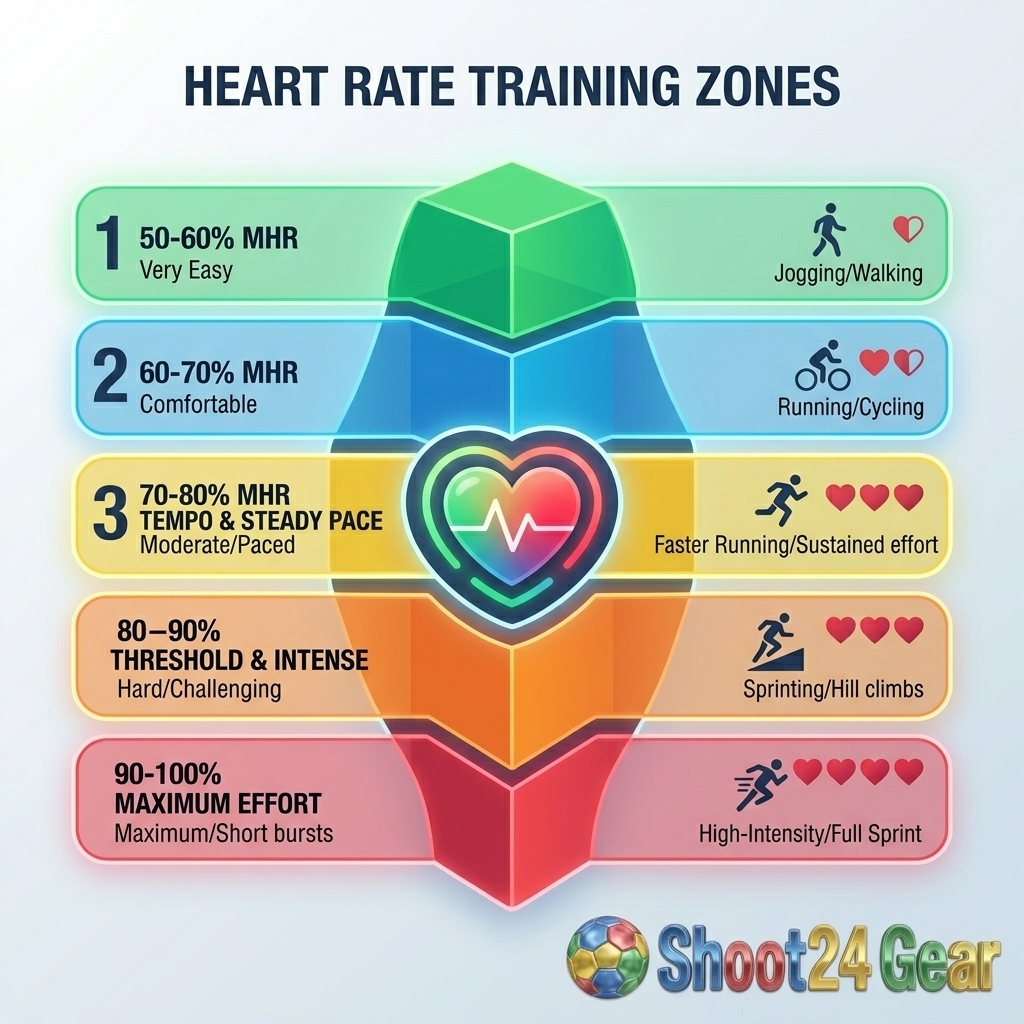
Heart rate training zones divide the range between resting heart rate and maximum heart rate into intensity categories that serve different training objectives.
Zone 1 (50-60% max HR) — Recovery: Light activity that promotes blood flow and active recovery without creating additional training stress. Football warm-up phases, cool-down periods, and light recovery sessions typically fall within Zone 1. Extended time in Zone 1 during main training indicates insufficient intensity for meaningful physical development.
Zone 2 (60-70% max HR) — Aerobic Base: Moderate-intensity activity that develops aerobic endurance — the cardiovascular foundation that supports sustained performance throughout ninety-minute matches. Jogging, low-intensity possession drills, and tactical walk-throughs typically operate in Zone 2. Building aerobic base through Zone 2 training during pre-season creates the endurance platform that higher-intensity match demands require.
Zone 3 (70-80% max HR) — Tempo: Moderate-to-high intensity that develops lactate threshold — the intensity level above which fatigue accumulates rapidly. Football training drills at match intensity, competitive small-sided games, and sustained running exercises typically produce Zone 3 heart rate responses. Improving tempo zone capacity enables players to sustain higher intensity for longer periods during matches before fatigue degrades performance.
Zone 4 (80-90% max HR) — Threshold: High-intensity effort that develops maximum aerobic capacity and tolerance of high physiological stress. Sprint repetitions, high-intensity interval training, and the most demanding phases of competitive match play produce Zone 4 heart rate responses. Training in Zone 4 improves the body’s ability to perform and recover from the repeated high-intensity efforts that football matches demand.
Zone 5 (90-100% max HR) — Maximum: Maximum effort that can be sustained for only brief periods. Maximum sprints, explosive bursts during matches, and the final stages of exhaustive fitness tests produce Zone 5 responses. Zone 5 training develops maximum cardiovascular output but creates significant recovery demands — excessive Zone 5 exposure without adequate recovery leads to overtraining and increased injury risk.
Football-Specific Applications
Session intensity monitoring: Heart rate zone distribution across a training session shows whether the session achieved its intended intensity objectives. A session designed for high-intensity conditioning should show significant time in Zones 4 and 5, while a tactical session should show predominantly Zone 2 and 3 activity. Comparing intended versus actual intensity enables coaches to adjust session design to better achieve training objectives.
Individual load management: Players with different fitness levels experience different physiological loads from identical training sessions. Heart rate monitoring identifies players whose heart rate responses indicate excessive load relative to their current fitness level, enabling individual adjustments — reduced volume, modified intensity, or additional recovery — that prevent overtraining while maintaining appropriate development stimulus for each player.
Return-to-play monitoring: Heart rate monitoring during return-to-play progressions after injury provides objective data about whether the player’s cardiovascular system is ready for full training intensity. Comparing heart rate responses during progressive return sessions against pre-injury baselines shows whether cardiovascular fitness has been maintained during rehabilitation or requires additional conditioning before full match-play return.
Match demand profiling: Recording heart rate data during competitive matches creates match-intensity profiles that inform training design. If match data shows players spending significant time in Zones 4 and 5 during specific match phases, training sessions can be designed to replicate and prepare for those specific physiological demands.
Maximum Heart Rate Determination
Accurate heart rate zone calculation requires knowing each player’s individual maximum heart rate. The commonly cited formula of 220 minus age provides only a rough population average that can be significantly inaccurate for individuals.
Field test protocol: A supervised progressive field test — starting at light intensity and increasing systematically to maximum effort — provides the most practical method for determining individual maximum heart rate. The Yo-Yo Intermittent Recovery Test serves this purpose well for footballers, as it produces maximum heart rates through football-relevant intermittent exercise patterns rather than sustained running that may not reflect football-specific cardiovascular demands.
Multiple measurement: Single maximum heart rate tests can be affected by fatigue, motivation, illness, or environmental conditions. Recording the highest heart rate achieved across multiple competitive matches and high-intensity training sessions provides a more reliable maximum heart rate estimate than any single test measurement.
Recovery Monitoring
Resting heart rate trends: Tracking resting heart rate daily — ideally measured immediately upon waking before leaving bed — provides a simple but effective indicator of recovery status and accumulated fatigue. A resting heart rate elevation of five or more beats per minute above the player’s normal baseline suggests incomplete recovery, accumulated fatigue, or early illness. Players showing elevated resting heart rate may benefit from reduced training intensity or additional recovery before resuming normal training loads.
Heart rate variability (HRV): Heart rate variability — the variation in time between consecutive heartbeats — provides a more sensitive indicator of autonomic nervous system balance than resting heart rate alone. Higher HRV generally indicates better recovery and readiness for high-intensity training, while reduced HRV suggests accumulated stress or fatigue. Many modern chest strap monitors and GPS watches now include HRV measurement capabilities, making this metric increasingly accessible for individual footballer use.
Device Selection
For maximum accuracy: Choose a chest strap heart rate monitor from established brands — Polar H10, Garmin HRM-Pro, or Wahoo TICKR — that transmit via both Bluetooth and ANT+ for universal device compatibility. These chest straps provide the most accurate heart rate data available in wearable format and are compatible with all major GPS watches and smartphone training apps.
For convenience: A GPS watch with built-in optical heart rate monitoring provides acceptable accuracy for general training monitoring without additional equipment. The convenience of always-available monitoring may outweigh the accuracy compromise for amateur footballers who want general intensity information rather than precise zone analysis.
For team use: Polar Team Pro or equivalent team monitoring systems provide simultaneous heart rate monitoring for entire squads with real-time coaching access and comprehensive analytical platforms. Team systems represent the highest investment but provide the most complete heart rate monitoring capability for organized football environments.
Common Mistakes
Using age-predicted maximum heart rate: The 220-minus-age formula can be inaccurate by fifteen or more beats per minute for individual athletes. Training zones calculated from an inaccurate maximum heart rate produce meaningless intensity targets. Invest time in determining actual individual maximum heart rate through field testing or match-data analysis rather than relying on age-predicted estimates.
Comparing heart rates between players: Individual maximum heart rates vary significantly regardless of fitness level — a player with a maximum heart rate of 195 bpm working at 175 bpm is at a very different relative intensity than a player with a maximum heart rate of 210 bpm at the same 175 bpm. Always compare heart rate data as a percentage of individual maximum rather than absolute values when assessing relative intensity between different players.
Ignoring environmental factors: Heat, humidity, altitude, caffeine intake, dehydration, and emotional stress all elevate heart rate independently of exercise intensity. An elevated heart rate during training on a hot day does not necessarily indicate higher training intensity — it may reflect cardiovascular strain from thermoregulation. Contextualizing heart rate data within environmental conditions prevents misinterpretation that leads to inappropriate training adjustments.
Over-relying on heart rate data: Heart rate is one metric among many that inform training management. Distance covered, technical quality, tactical execution, and subjective effort perception all provide complementary information. Heart rate data should inform rather than dictate training decisions — it provides valuable physiological context but does not capture the full complexity of football training demands.
Budget Considerations
Entry level (chest straps): Basic chest strap heart rate monitors that transmit to smartphone apps provide accurate heart rate monitoring at the lowest cost. These simple sensors lack onboard data storage and require a paired device for data recording, but provide the core heart rate measurement accuracy that more expensive solutions also deliver.
Mid-range (chest strap + storage): Premium chest straps with onboard data storage can record heart rate data independently, enabling monitoring without a paired smartphone or watch. These stored sessions are uploaded to companion apps after training. This independent recording capability is valuable for footballers who prefer not to carry or wear additional devices during training beyond the chest strap itself.
Premium (integrated watch + chest strap): Combining a quality GPS watch with a chest strap heart rate monitor provides the most comprehensive individual monitoring setup — GPS tracking, accurate heart rate, training load analysis, and recovery assessment in a unified data platform. This dual-device approach represents the optimal individual monitoring investment for serious amateur and semi-professional footballers committed to data-driven training management.
Chest Strap Maintenance
Cleaning after every session: Rinse the chest strap with fresh water after each training session to remove sweat residue. Salt deposits from dried sweat create inconsistent electrical conductivity on the electrode surfaces, producing erratic heart rate readings that may not be immediately obvious but degrade data quality over time. Weekly washing with mild soap removes accumulated residue that rinsing alone may not fully address.
Electrode care: The conductive electrode patches on the inner surface of the chest strap require moisture to establish reliable electrical contact with the skin. Before each use, moisten the electrode areas with water or apply electrode gel for consistent signal establishment from the first heartbeat. Dry electrode surfaces create delayed or inconsistent signal acquisition that can miss the initial minutes of a training session.
Storage: Unclip the sensor pod from the chest strap between training sessions. Leaving the sensor attached maintains battery-draining connectivity that reduces sensor battery life. Store the strap flat or loosely rolled in a dry location — avoid storing damp straps in sealed bags that promote mold growth and accelerate strap material degradation.
Strap replacement: Chest straps are consumable components that lose elasticity and electrode conductivity through regular use. Most manufacturers recommend strap replacement every twelve months of regular training use. Signs of needed replacement include inconsistent heart rate readings despite proper electrode preparation, visible electrode wear, and reduced strap elasticity that prevents secure chest contact.
Data Interpretation for Coaches
Session intensity assessment: Effective session intensity assessment uses heart rate zone time distribution rather than average heart rate. Average heart rate obscures the session structure — a session with equal time at low and high intensity produces the same average as a session at constant moderate intensity, despite vastly different training effects. Zone distribution reveals the actual intensity pattern that average heart rate hides.
Weekly load monitoring: Accumulating daily training load scores across the training week shows total weekly physiological stress. Professional sports science recommendations suggest weekly load increases should not exceed ten percent above the previous week’s total to minimize injury risk from sudden load spikes. Heart rate-derived training load provides the quantitative basis for managing this progressive loading principle.
Individual baseline comparison: Each player’s heart rate data is most meaningful when compared against their own historical baselines rather than squad averages or external benchmarks. A player whose heart rate response to a standardized drill has decreased over a training block is demonstrating fitness improvement specific to their individual development trajectory — regardless of how their absolute heart rate compares to teammates.
Youth Applications
Heart rate monitoring provides age-appropriate physiological insight for youth football development when used with understanding of the specific considerations that apply to developing athletes.
Higher maximum heart rates: Children and adolescents typically have higher maximum heart rates than adults — often exceeding 200 bpm. Youth training zone calculations must use youth-appropriate maximum heart rate values rather than adult estimates. Age-predicted formulas are particularly inaccurate for youth athletes and should be replaced with individually measured maximum heart rates.
Development-appropriate interpretation: Physiological responses in youth athletes are influenced by growth and maturation alongside training adaptation. Changes in heart rate responses during adolescent growth periods may reflect biological maturation rather than training effects. Coaches monitoring youth heart rate data should interpret findings within the context of each player’s developmental stage rather than applying adult training management assumptions.
Engagement and education: Heart rate monitoring can serve as an educational tool that helps young players understand the relationship between effort and physiological response. Teaching youth players about heart rate zones, recovery, and the importance of appropriate training intensity builds health literacy and self-management skills that benefit their athletic development and lifelong physical activity engagement.
Summary
Heart rate monitoring provides objective internal load measurement that complements external movement data from GPS tracking. Chest strap sensors provide the highest accuracy for football’s variable-intensity demands, while optical wrist sensors offer convenient general monitoring. Understanding heart rate zones, monitoring recovery indicators, and integrating heart rate data into training management enables individualized physical development programming that optimizes performance improvement while managing overtraining and injury risk effectively.
Product specifications, sensor technologies, and device capabilities evolve continuously. Verify current heart rate monitor specifications and compatibility on official manufacturer websites before making purchasing decisions for individual or team monitoring equipment.