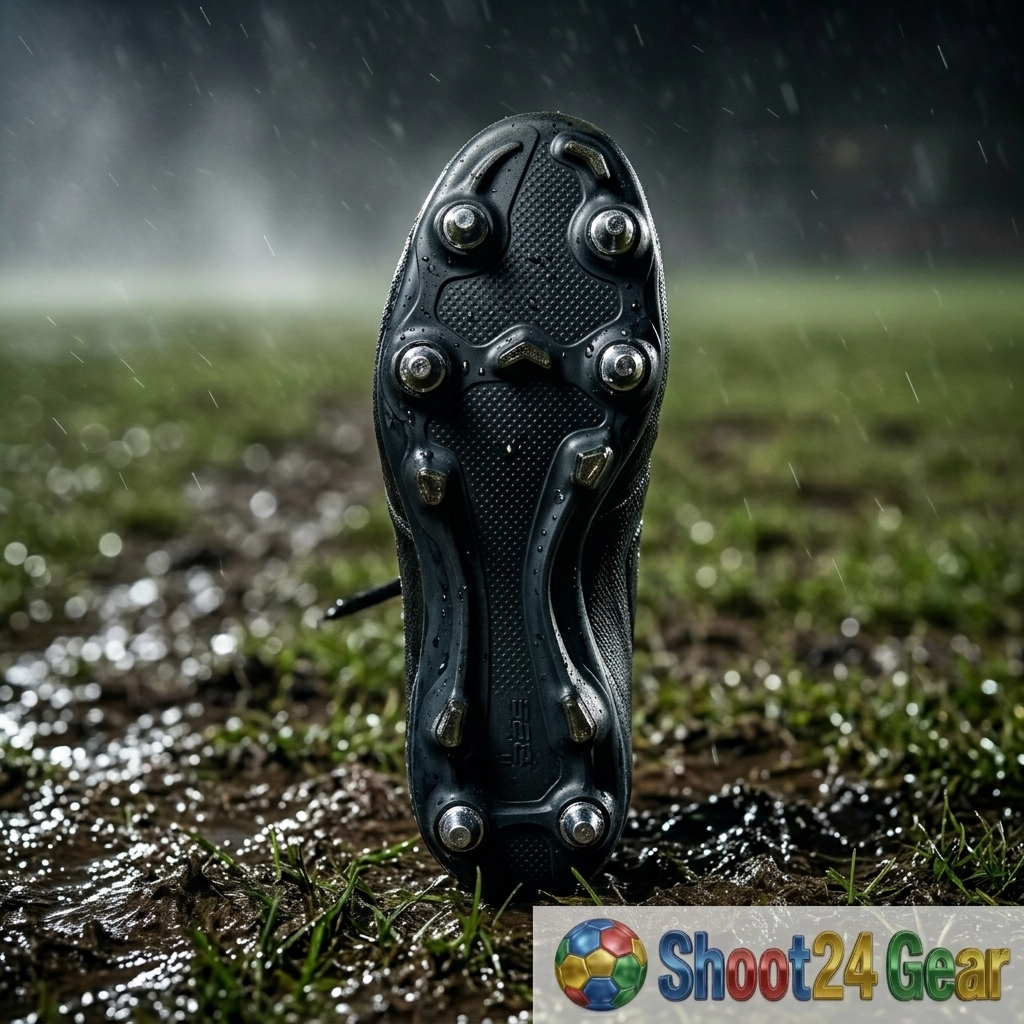
Soft ground conditions change everything about how a football boot interacts with the pitch. The firm, predictable surface that most boots are designed for disappears, replaced by mud, standing water, churned-up turf, and ground that gives way under foot pressure. In these conditions, a boot designed for firm ground does not just underperform — it becomes actively dangerous. Insufficient grip on soft ground leads to slipping during tackles, sliding during changes of direction, and the kind of unexpected balance losses that cause injuries.
Soft ground (SG) football boots exist to solve this specific problem. They use longer studs, typically with metal tips, arranged in sparser patterns that penetrate deep into saturated turf and provide grip where firm ground studs cannot. Understanding how SG stud configurations work, when to use them, and how they differ from other soleplate types helps players make appropriate footwear decisions for challenging conditions.
What Makes Ground “Soft”
Before examining stud configurations, it helps to understand what soft ground actually means in practical terms, because the term covers a range of conditions that require different responses.
Saturated natural grass: Pitches that have absorbed significant rainfall become soft throughout. The grass surface remains intact, but the soil beneath gives way under pressure. This is the classic soft ground condition that SG boots are primarily designed for.
Mud patches: Sections of pitch where heavy traffic has destroyed the grass cover, leaving exposed soil that becomes muddy when wet. Goal mouths, center circles, and touchline areas often develop these patches during winter seasons. SG studs help here, though extreme mud can clog any stud pattern.
Waterlogged pitches: Surfaces with standing water on top of saturated ground. These represent the extreme end of soft ground conditions. SG boots help but cannot fully compensate for the loss of surface friction that standing water causes.
Early morning dew: Pitches that are damp on the surface but firm underneath do NOT require SG boots. Firm ground studs handle morning dew adequately. SG boots on merely damp, firm ground create excessive grip that stresses joints.
The important distinction is between ground that is soft (the soil yields under pressure) and ground that is wet (moisture on a firm surface). SG boots solve the first problem. Firm ground boots with good stud patterns handle the second.
Traditional 6-Stud SG Configuration
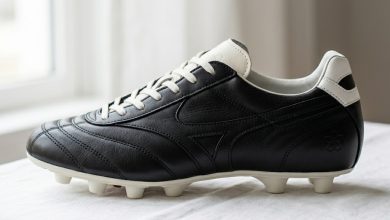
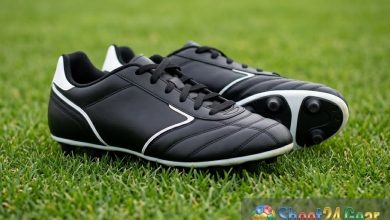
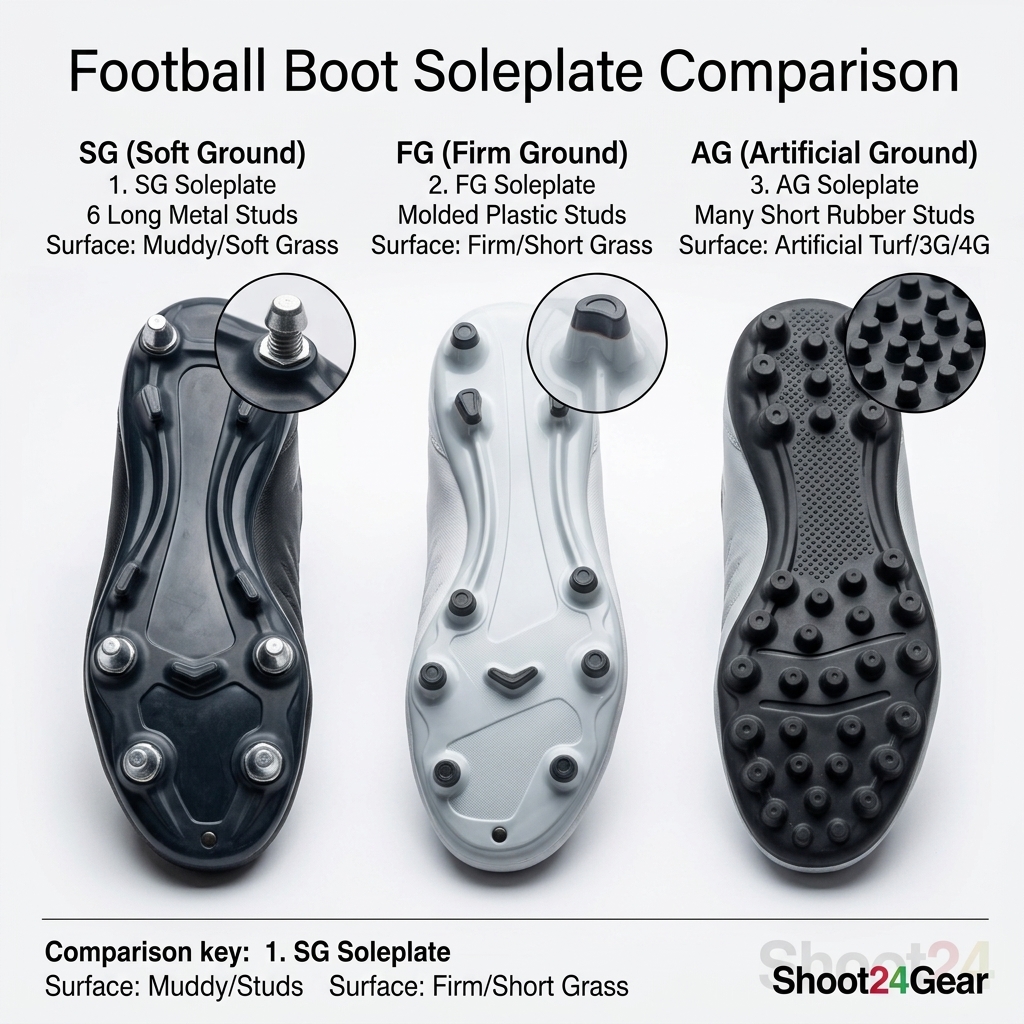
The classic soft ground stud pattern uses six metal-tipped studs — four in the forefoot and two in the heel. This sparse arrangement is the oldest and most proven SG design, and it remains effective because the physics are straightforward.
Fewer studs mean each individual stud carries more of the player’s weight. Higher pressure per stud means deeper ground penetration. Deeper penetration means the stud reaches below the soft, unstable surface layer into firmer ground beneath. Once the stud tip contacts stable soil, it provides the grip that the surface layer cannot.
Metal tips are standard on SG studs because metal maintains its sharpness and penetrating ability over time. Plastic studs deform and round off with use, reducing their ability to cut through soft surfaces. The metal tips — typically aluminum alloy — remain pointed throughout the boot’s lifespan.
The 6-stud pattern does have limitations. With only six contact points, the pressure distribution across the foot is uneven. This concentration can cause discomfort during extended play, particularly on pitches that are soft in patches but firm in others. Transitioning between soft and firm areas within the same pitch means alternating between adequate grip and excessive penetration, which feels awkward underfoot.
Mixed Stud Systems (SG-PRO)
Recognizing the limitations of the traditional 6-stud pattern, several brands now offer mixed stud systems that combine metal-tipped SG studs with shorter molded studs. Nike’s SG-PRO and Adidas’s SG equivalents typically use two or four metal-tipped studs in the forefoot combined with additional molded plastic studs distributed across the rest of the soleplate.
The mixed approach addresses the primary weakness of the pure 6-stud design: pressure distribution. By adding molded studs between the metal-tipped ones, the soleplate provides more contact points with the ground, spreading the player’s weight more evenly. The metal-tipped studs still handle the primary grip function on soft ground, while the molded studs provide stability and comfort on firmer patches.
Mixed stud systems are more versatile than pure 6-stud patterns. They perform adequately on genuinely soft ground (the metal studs provide penetration) and remain comfortable on mixed-condition pitches (the molded studs prevent the boot from feeling sparse on firmer sections). This versatility makes them popular with players who encounter varying pitch conditions within a single match or training week.
The trade-off is that mixed systems do not penetrate as deeply as pure 6-stud patterns in extremely soft conditions. On heavily waterlogged or deeply muddy surfaces, the additional molded studs prevent the boot from sinking deeply enough for the metal tips to reach stable ground. In these extreme conditions, the traditional 6-stud pattern provides superior grip.
Stud Length and Material
SG stud length typically ranges from 15mm to 18mm — significantly longer than the 10mm to 13mm studs found on firm ground boots. This additional length is what enables the stud to penetrate through the soft surface layer and anchor in the ground below.
Stud material matters for both performance and regulations. Metal-tipped studs (aluminum alloy) provide the best penetration and longest lifespan. Some competitions require referee inspection of studs before matches to ensure they are not sharp enough to cause injury — rounded metal tips pass inspection, while damaged or excessively pointed tips may be rejected.
Replaceable studs are common on SG boots. The metal-tipped studs screw into threaded receptacles on the soleplate, allowing players to replace worn studs without replacing the entire boot. This feature extends the boot’s usable lifespan and allows players to swap stud lengths based on conditions — longer studs for very soft ground, shorter for moderately soft surfaces.
Replacement studs are available from multiple manufacturers and in various lengths. Players should verify that replacement studs match their boot’s thread pattern, as different brands sometimes use different threading standards. Using incompatible replacement studs can damage the soleplate receptacles and compromise grip security.
When to Use SG Boots
SG boots are specialist tools for specific conditions. Using them inappropriately causes problems rather than solving them.
Use SG boots when: The pitch surface yields noticeably under foot pressure. When you walk on the pitch before the match and your feet sink slightly into the ground, SG studs are appropriate. Winter conditions with sustained rainfall, poorly drained pitches, and late-season surfaces that have deteriorated from heavy use all qualify.
Do not use SG boots when: The pitch is merely damp but firm underneath. On dry pitches. On artificial turf of any type. On indoor surfaces. On hard ground. In all these conditions, SG studs provide excessive grip that stresses joints, or insufficient traction on surfaces they are not designed for.
The penalty for using FG boots on genuinely soft ground is slipping, which is both inefficient and dangerous. The penalty for using SG boots on firm ground is excessive joint stress, which causes cumulative damage that may not be immediately apparent. Both mistakes have consequences, but players tend to underestimate the risk of SG-on-firm-ground more frequently.
SG vs FG vs AG: The Complete Picture
Understanding where SG fits in the broader soleplate spectrum helps players make appropriate choices across all conditions they encounter.
Firm Ground (FG): The most common soleplate type. Designed for natural grass in dry to slightly damp conditions. Uses molded plastic studs — typically 11 to 14 studs — in patterns that balance grip, comfort, and versatility. Most football boots sold are FG versions, and most pitches in reasonable condition suit FG studs. This is the default choice for the majority of playing conditions.
Artificial Ground (AG): Designed for synthetic turf surfaces (3G, 4G). Uses shorter, more numerous studs — typically 20 to 28 small conical studs — that distribute pressure across the harder synthetic surface. Using FG boots on artificial turf concentrates pressure on fewer stud points, causing discomfort and increasing joint stress. Using AG boots on natural grass provides insufficient penetration for reliable grip.
Soft Ground (SG): Designed for saturated natural grass. Uses longer metal-tipped studs in sparser patterns. Provides maximum penetration for grip on yielding surfaces. Should only be used when ground conditions are genuinely soft.
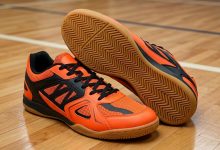
Indoor/Court (IN/IC): Flat rubber outsoles for hard indoor surfaces. No studs of any type. Provides grip through rubber friction rather than ground penetration. The only appropriate choice for gymnasium, futsal, and hard court surfaces.
Players who compete across multiple surface types ideally own boots for each surface they regularly encounter. At minimum, most players need FG boots for standard conditions and either AG or SG boots depending on whether they play more on artificial turf or soft natural surfaces. Our guide on indoor football shoes covers the IC/IN category separately.
Brand-Specific SG Offerings
Most major boot lines from Nike, Adidas, Puma, and New Balance offer SG versions of their popular models. The upper construction remains identical to the FG version — only the soleplate changes. This means you can wear the same upper (Mercurial, Predator, Future, etc.) in SG configuration without switching your boot’s fit, feel, or technology characteristics.
Availability varies. SG versions are less commonly stocked than FG versions because soft ground conditions are seasonal and regional. In climates with dry summers and wet winters, SG boots may only be needed for four to five months per year. Retailers stock accordingly, which means SG versions may require online ordering rather than in-store purchase.
Nike’s SG-PRO system (mixed metal and molded studs) is the most widely available mixed stud offering. Adidas offers both pure 6-stud SG and mixed configurations depending on the boot line. Puma and New Balance provide SG options with less consistency across their ranges.
Maintenance of SG Boots
SG boots require specific maintenance attention that FG boots do not.
After every session on soft ground, remove all mud from the soleplate and stud channels. Mud left to dry between studs creates a platform that reduces effective stud length and prevents proper penetration on the next use. A stiff brush and running water clean the soleplate effectively.
Check metal-tipped studs for tightness before each use. The rotational forces of playing can gradually loosen screw-in studs over time. A loose stud provides unreliable grip and can be lost during play, leaving a threaded hole exposed on the soleplate. A stud key (included with most SG boots) tightens studs in seconds.
Inspect stud tips for damage. Metal tips that have bent, chipped, or developed sharp edges should be replaced. Damaged studs can fail to meet referee inspection requirements and can cause injury to other players during challenges. Replacement studs are inexpensive insurance against both problems.
The upper should be dried thoroughly after wet-ground use, following the same protocols as any boot — remove insoles, open laces, air dry away from heat sources. Leather uppers on SG boots require the same conditioning care as their FG equivalents.
Safety and Injury Considerations
SG boots carry specific safety implications that players, coaches, and parents should understand.
The longer metal studs provide greater grip, but they also create greater rotational resistance at the foot-ground interface. On genuinely soft ground, this resistance is moderated by the ground yielding around the stud during rotation. On transitional surfaces — patches that are firm within a mostly soft pitch — the metal studs can lock the foot in place while the body rotates above, creating dangerous shear forces on the ankle and knee.
Players with a history of ACL injuries, ankle sprains, or meniscus problems should discuss stud choice with their physiotherapist or sports medicine provider. In some cases, using FG boots on moderately soft ground — accepting reduced grip — may be medically preferable to the higher rotational forces that SG studs create on mixed-condition surfaces.
Referee stud inspections exist for player safety. Metal-tipped studs must be rounded, not sharp. They must be firmly attached, not loose or wobbling. They must be of appropriate length for the competition level. Players should present their boots for inspection when requested without protest — the inspection protects everyone on the pitch.
For younger players, many youth leagues restrict or prohibit metal-tipped studs entirely. Junior competitions typically require molded studs only, regardless of ground conditions. Parents should verify league stud regulations before purchasing SG boots for young players. Violation of stud regulations can result in the player being prevented from participating.
Choosing Between Pure SG and SG-PRO
The decision between a traditional 6-stud SG pattern and a mixed SG-PRO system depends on the conditions you face most frequently.
Choose pure 6-stud SG if you regularly play on heavily saturated pitches where the ground is soft throughout. Matches in persistent winter rainfall, poorly drained club pitches, and training grounds that become mud baths by December — these conditions demand maximum stud penetration that only a sparse, long-stud pattern provides.
Choose SG-PRO (mixed studs) if your soft ground conditions are moderate or inconsistent. Pitches that are soft in patches but firm in others, surfaces that are damp but not waterlogged, and conditions where you might encounter both soft and firm areas within a single match — the mixed system handles this variability better than a pure SG pattern.
If you only encounter genuinely soft conditions a few times per season, investing in dedicated SG boots may not be cost-effective. In these situations, FG boots with good stud penetration or SG-PRO mixed systems provide adequate performance without requiring a boot that sits unused for most of the year.
Common Mistakes
Several recurring mistakes reduce SG boot effectiveness or create unnecessary problems.
Using SG boots on artificial turf: Metal studs on artificial turf provide excessive grip that locks the foot in place during rotational movements. This creates dangerous stress on ankles and knees. SG boots should never be used on any artificial surface.
Using SG boots on firm natural grass: On dry or firm pitches, SG studs penetrate too deeply and create excessive traction. The result is reduced mobility and increased joint stress. If the pitch is firm, use FG boots regardless of the weather forecast.
Not tightening studs: Loose metal studs wobble during play, reducing grip effectiveness and creating a risk of stud loss. Check stud tightness before every session.
Using worn studs: Metal tips that have rounded off from use provide significantly less penetration than new studs. If your SG boots are slipping on soft ground, check whether the studs need replacement before blaming the boot design.
Wearing only SG boots: Some players buy SG boots and wear them year-round. This is inappropriate for the majority of conditions. SG boots are specialist equipment for specific situations, not everyday footwear.
Summary
Soft ground boots solve a specific problem: providing reliable traction on yielding, saturated natural turf where standard studs cannot penetrate deeply enough. The 6-stud metal-tipped configuration and mixed SG-PRO systems both address this problem effectively, with trade-offs between maximum penetration and everyday versatility.
The key to using SG boots effectively is using them only when conditions genuinely require them. On firm ground, they create more problems than they solve. On genuinely soft ground, they prevent the slipping that makes playing difficult and dangerous. Matching your soleplate to your surface is one of the simplest and most impactful equipment decisions in football.
SG boot availability and stud configurations vary between brands and models. Check official brand websites for current SG options in your preferred boot line before making any purchasing decisions.